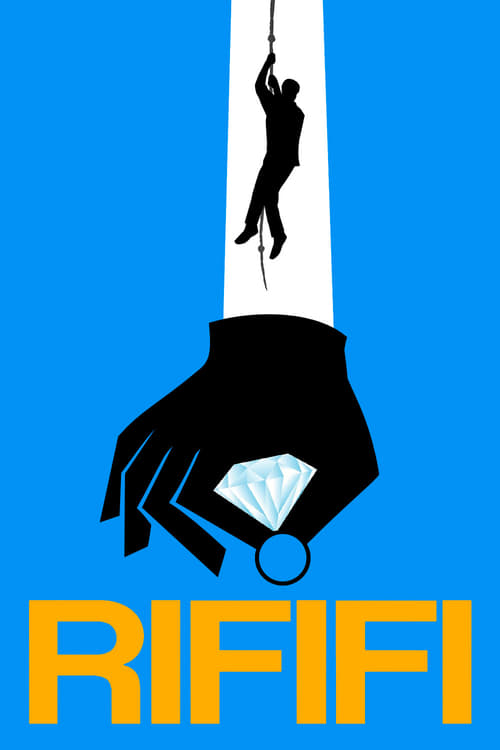
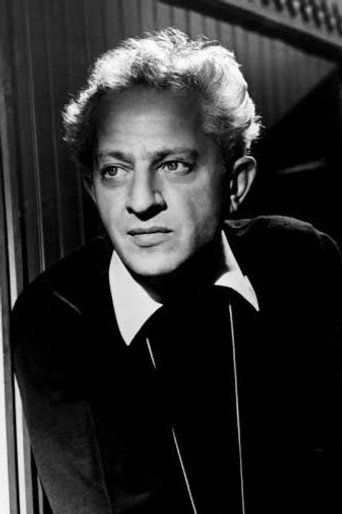
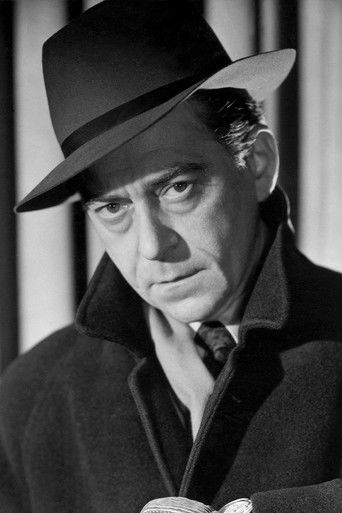


There is a scene in this film towards the end where the son of a criminal accidentally loses his grip on his helium balloon. As it gets away from the little boy and floats up into the sky, director Jules Dassin switches to the perspective of a father and his kid sitting at the back of the bus looking out the window at what just happened. The father takes a moment to lecture his own son on the consequences of carelessness.This single moment, a seemingly unnecessary insert into the rest of the plot, illustrates both Dassin's artistic predilection for visual lyricism and his capacity for narrative poetry. The shot provides a perspective outside of the main story that comments on an important theme of the film, the ultimate price of the choices men make to operate on the wrong side of what is right and the inadvertent impact these decisions can have on others.The film focuses on a group of four men that have made that decision. They are career criminals and by all accounts their actions are illegal, unethical and would be largely considered immoral. Nevertheless, Dassin draws a complex portrait of these characters that questions our attitudes in relation to good and evil and right and wrong.When we are initially introduced to Jo, he is young, handsome and naturally charismatic. While trying to read the newspaper he is not bothered when his son disturbs him and instead responds to him playfully. He is patently a good father and it is hard to not like to guy. Likewise, Dassin successfully renders the other characters as very likeable as well.But Dassin does not let us off the hook. Although they might be out to pilfer some diamonds, this is not a rosy band of altruistic Robin Hoods. These guys are ruthless criminals and this is not a victimless crime. Whether it be police officers, completely innocent people, or their own families, whoever gets in the way or could be used to get what they want pays a price.Tony is the most challenging character of them all. He could be a successor to Jean Gabin in a Poetic Realism pre-noir film from the 30s. He is a man's man, the principled criminal who subscribes to a code of honour and understands the rules of the game. He has a taciturn dignity and Dassin leads us to grant him an underlying level of respect. At the same time, as the film progresses, we see just how vicious Tony can be. These rules that govern his life are inevitably inescapable and they result in a cruel and merciless logic. To survive the web of violence they engender, one must be at least part sociopath, irrespective of any love they might try to hold onto between themselves and their loved ones. Instead, they are sucked into a destructive vortex that inexorably results in a scorched earth tragedy.Speaking of violence, we are told during a musical interlude (accompanied by a shadow pantomime, which is an inspired touch of its own) that Rififi means rough and tumble. But that makes the violence in this film sound almost kind of quaint. But this is no Fifty Shades of Grey with accompanying fluffy handcuffs. This film is ferociously brutal. People have their heads bashed in, they are shot repeatedly in cold blood, and bullets are pumped into corpses for no good reason other than for pure unadulterated hate.Being put on the Hollywood Blacklist by the House Un-American Activities Commission (HUAC), Dassin was like a tiger that had been poked in the eye, angry and ready to strike. Moving to France to get out from under their indictment also meant leaving behind the strictures of the Hays Code. Rififi was the result, a screaming howl of fuck you violence that spat contemptuously in the face of the American government's arbitrary witch-hunt and the ridiculous cultural cul-de-sacs it was dead-ending itself into.By the way, It is criminal not to talk about the women in this film. There characters are not given anywhere near the screen time as the men but the depth of their motivations and predicaments is just as fascinating but beyond my capacity to talk about with any authority. Unfortunately, their stories are not told often enough and rarely commented on without a political agenda. The admixture of plight and agency between each of the female characters in this film is worth exploring in an entire review of it's own by someone with a greater understanding that me.Add all of this up and you get a mighty fine film. Even so, I believe there is a very good reason that this film has the Classic or Masterpiece label affixed to it. The film really packs an emotional wallop. Insidiously, Dassin makes us like these characters, introduces us into their world, guides us to become friends with them. And then he demolishes everything he set us up to feel about them. I was left shuddering, hurt and confused. In short, this film will leave an indelible mark on you, like the bullet hole scars of a pistol that was unloaded across your chest.Oh, and I haven't even mentioned that forty minute procedural heist sequence! Anyway, the most sophisticated safe cracking going on here is the one where Dassin breaks into our soul and gives it a tight squeeze.