

Just a moment...Enable JavaScript and cookies to continue
Geregisseerd door William Greaves
Een realistische, sfeervolle documentaire.
A movie about making movies about making movies. In 1968, William Greaves shot several pairs of actors in a scene in which a woman confronts her husband and ends their relationship. In "Take 2 1/2," Greaves starts with 1968 takes of one of these pairs of actors plus footage of the crew discussing the film's progress. Then, 35 years later, Greaves brings back to Central Park those actors and some of the original crew (plus others) to film a reunion of the characters Alice and Freddie. We watch scenes of these characters and discussions among the actors and crew. Greaves explores and dramatizes the dialectic in the creative process.
Symbiopsychotaxiplasm: Take 2½ draait in 1 bioscoop in New York City - eerstvolgende voorstelling zondag 25 oktober om 20:55 in Film Forum.
Volgende voorstellingen: zondag 25 oktober.
Alle 2 dagen & tijdenPast deze dag niet?
Alle 2 dagen & tijden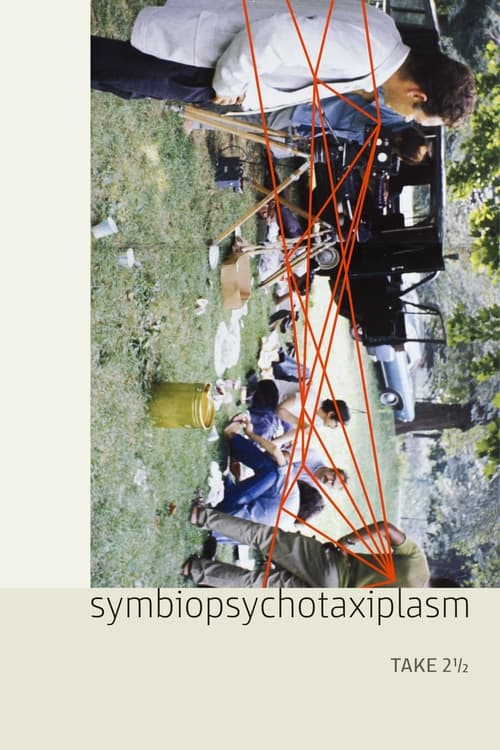
Speeltijden van Symbiopsychotaxiplasm: Take 2½, elke ochtend ververst
Kies je bioscoop en krijg een seintje voordat de film van het doek verdwijnt.
Just a moment...Enable JavaScript and cookies to continue

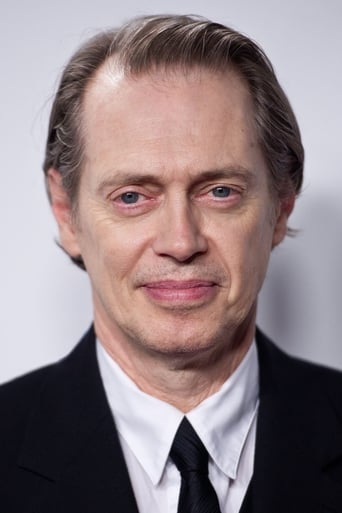
The magic from Take 1 is gone. This time we know what we're in for, and instead of changing it up, William Greaves keeps it all the same and focuses on the least interesting part in this Take, which is the storyline. I loved the drama it caused in Take 1, but here it's played safe, probably because everyone knows what Symbiopsychotaxiplasm is now. I just wanted some more drama, and having Steve Buscemi there was fun, but he didn't add to much.

More of an intellectual exercise in reiteration rather than an exponential growth of the quality of the original statement of 35 years before, Greaves releases his second (and a half) take, paralleling the context of the 1960s with our perception of the previously discussed levels of reality and suprarreality in a metafilm world seen through multiple lenses: film fiction and documentary reality, with the "psycho" process stuck in between. Remember that, according to Arthur F. Bentley, the term "symbiotaxiplasm" is a reference to the events surrounding a person's life that have a direct impact over the person, but this person also has an influence over his/her surrounding environment, culminating in an interchange that forms life. Greaves was the one that coined the term "psycho" to allude to the mental processes involved in this interchange, and mirrored it with the process of filmmaking. He does it again, actually.How unfortunate that the first half is the one that keeps your interest more than the second half, even if the ideas in both episodes remain to be psychologically fascinating. There was a good reason why the footage of the 1960s was never included in the first take, however, so seen from the perspective of today, it only seems to evoke nostalgia and irony. They are perceived as "deleted scenes" of the original take, rather than a complement of the opportunity we as viewers receive to watch the old crew come back with Soderbergh and Steve Buscemi producing. Half through this "documentary", we arrive to a present "reality", once again employing the same 3 levels explained in my past review. There is an issue, however. The intention remains unclear.Nevertheless, it is still incredible how the crew of the present day discusses the first Symbio and how both the past and the real-life contexts differ and affected the execution of both Symbios. There were transgressive intentions in the original crew to break the boundary between director and crew that should remain intact in any film production. What's so incredible, then? They point out the origination of a conflict in the original Symbio that, unbeknown to everybody, was a passive conspiracy orchestrated by Greaves to release a film, so they question themselves what would the original intentions of Greaves today be if there is already a 35-year-old Symbio in existence. They perceived the probability of a conflict as diminished. And it wasn't. A conflict indeed ensues.The message is clear to us already: this could be done an infinite number of times, provided that there is enough footage from today and from back then, and if it isn't, the editing possibilities are endless. I just cannot grasp the intentions to do this today. It felt more like Greaves wanted to reappear out of nowhere with a somewhat naive hope that modern audiences would have a clearer comprehension of what the original Symbio represented, and of what is the relevance of social sciences studied from a scientific method perspective, and to mimic the life process with a film process. Spoon-feeding is something I don't like to be done to me.66/100
William Greaves bezoekt 35 jaar later zijn legendarische experimentele filmproject uit 1968 opnieuw, brengt originele castleden en een nieuwe crew terug naar Central Park om het creatieve proces te verkennen.
William Greaves regisseerde de film in 2005 als een begeleidend stuk en meta-sequel op zijn baanbrekende experimentele documentaire uit 1971.