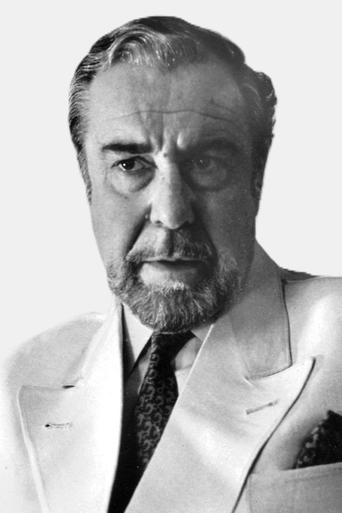


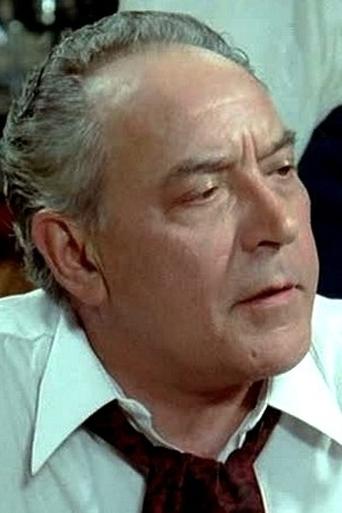
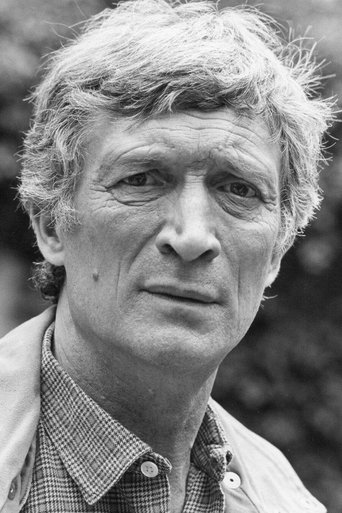

Roses are redMathieu's balls are blueAt first I was confusedWho the fuck was who35mm. Metrograph.
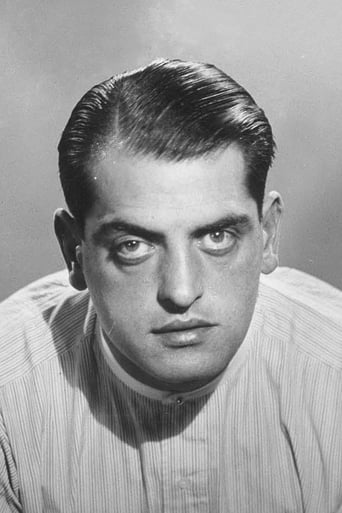
Geregisseerd door Luis Buñuel
Cet obscur objet du désir
Een door critici geprezen komedie.
Een man die zojuist op de trein is gestapt, gooit tot verbazing van zijn medepassagiers een emmer water over een jonge vrouw op het perron heen. Eenmaal in zijn coupé legt hij aan zijn medepassagiers uit waarom, en vertelt daarbij over zijn historie met de vrouw, die Conchita blijkt te heten, en hoe hij langzaam geobsedeerd met haar raakte.
That Obscure Object of Desire draait in 1 bioscoop in London - eerstvolgende voorstelling dinsdag 20 oktober om 20:55 in The Nickel Cinema.
Volgende voorstellingen: dinsdag 20 oktober.
Volledig programma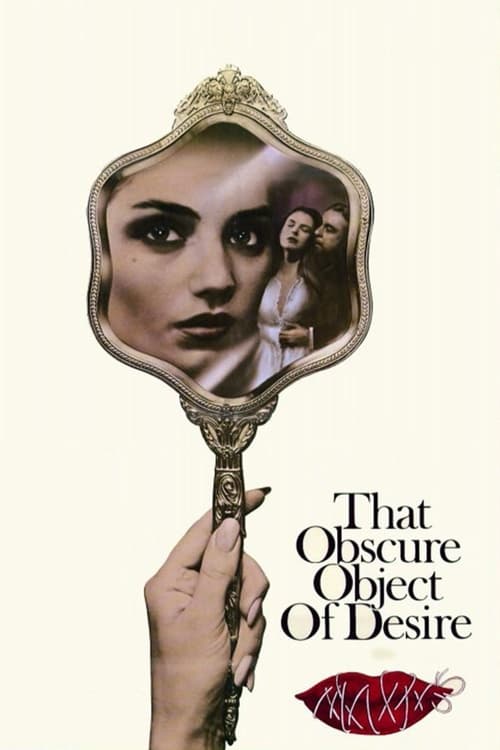
Speeltijden van That Obscure Object of Desire, elke ochtend ververst
Kies je bioscoop en krijg een seintje voordat de film van het doek verdwijnt.
Roses are redMathieu's balls are blueAt first I was confusedWho the fuck was who35mm. Metrograph.

Lana Del Rey's favorite movie, probably.

"If I gave you what you wanted now, you'd stop loving me."So says Conchita, the mercurial-virginal Spanish dancer mysteriously played by two women in Luis Buñuel's final masterpiece Cet Obscur Objet du Désir. When Conchita says this, she's played by the frigid French actress Carole Bouquet. (Without a warning, Coach Buñuel will substitute spicy Spanish senorita Angela Molina in for QB Bouquet.) Bouquet/Molina teases the hapless Mateo (Fernando Rey) all throughout the picture with their unspeakably abstract beauty. But in this one line, we get a sense that the teasing is for a reason. Here, Buñuel taps into a universal truth: the tensions that exists between idea and practice, between the conceived image and the tangible reality, between the abstract and the concrete. Paradoxically, if Conchita ends up giving herself to Mateo, he will most likely immediately stop caring for her. What he's in love with is a projection of Conchita--an unquenchable, independent, sexually potent virgin whose cherry is waiting to be plucked--and not at all who she is as a far more interesting being: a mercurial, tempestuous, two-sided walking contradiction.When we fall in love, we fall in love with an idea of a person, and not necessarily who they are as a complex, living human being. It's the way humans have worked for millennia, and the way humans will continue to work. We simplify our "objects of desire" not because we consciously want to, but because we cannot deal with our own tumultuous and oft-complex passions without simplifying. That's why Mateo beats Conchita to a bloody pulp in the film's gruesome climax, and why he gets so angry at Conchita's wild mood swings (willing sexual partner in one scene, cold virgin in the next) that he throws a bucket of water on her face. We try to tame our loves, but they will inevitably end up escaping us. Why? Because, as Buñuel so provocatively and powerfully demonstrates in his "two-actresses-one-woman" metaphor, we are mercurial creatures hard to pin down.Mateo is a snide, privileged bourgeois who piggishly thinks men should "own" women. He is also hopelessly, admirably in love with Conchita--the first time he's felt love in his life. Such outrageous contradictions exist comfortably in the Surrealist Buñuelverse.The "2-girls-1-character" metaphor is only one extension of Buñuel's assault on our normal conceptions of reality.We have terrorist attacks going on at the periphery of the film, which catch up to our characters in its shockingly explosive finale. (Buñuel's friend and fellow Surrealist André Breton once noted that "the simplest Surrealist act would be to go into the the street and shoot indiscriminately at the crowd.")We have a mysterious burlap sack that all the characters--a servant, a chambermaid, a seamstress, and Mateo himself--seem to carry around with them. (The mystery of what's in the sack is, frankly, more intriguing to me than "What's in the box?" in Belle de Jour.) And, perhaps most subtly, we have two men playing the role of Mateo. Wait...what the what?! Yes: Fernando Rey provides the body of Mateo, but ardent eagle-eared followers of French cinema will immediately recognize the voice of none other than Michel Piccoli coming out of Rey’s body, his droning, soothing timbre. It's a surrealist gesture unlike any other: a seemingly cohesive reality is presented before us (one man, one voice). But this reality is revealed as highly unreal, constructed and false. It's an unnerving feeling, one that the Master of the Seemingly Mundane Luis "Bunny" Buñuel was brilliant at provoking.When we talk of "surrealism", we often forget the Surrealists' original intention of the word. We think it means "so crazy that it couldn't possibly be real." But the Surrealists (Breton, Dali, Buñuel, et al.) conceived their movement as promoting art that was "beyond the real," or, more provocatively, "more real than real." What does that even mean? Bunny's Cet Obscur Objet du Désir helps us understand. A cinematic world is presented to us in the most mundane, straightforward manner: no fancy camera angles, high-key lighting that resembles a sitcom, flat voices and plateau-like performances of no note. But during the course of 100 minutes, this mundane reality (i.e., what human beings conceive as "reality") is subtly subverted by Buñuel. It starts with the "2-girls-1-character" hitch, but it continues on and on with the sack, with Piccoli's voice impossibly tacked on to Rey's body, with terrorists (whose entire modus operandi is to disrupt the normal and strike fear into a populace's soul in places where fear shouldn't be felt), with more and more bizarre camera movements. The most wonderful moment in a Buñuel comes when he's following a main character....and his camera will suddenly and fetishistically focus on an element that seemed innocuous but has now become an object of unwarranted attention. It occurs in Belle de Jour (when Bunny tracks the feet of Catherine Deneuve for no apparent reason) and occurs here when the camera stops following our lead characters, pans right, and follows a random passerby carrying a sack walking down the street. The camera lingers on this normal image for an abnormal amount of time. Cut to next scene. What we've experienced is that queasy sensation that Freud dubbed "the uncanny", that strange feeling you get when something totally normal and innocuous becomes weird and distant in an instant. Why do we follow this passerby? What could be in this sack that, for all intents and purposes, is a mere sack? These are the questions that keep me up at night. In short, what we have in That Obscure Object of Desire is a haunting paradox: Buñuel taps into a reality we all experience (i.e., that disjunct between projected image and concrete reality), but does it in a singularly offputting, bizarre, jarring, unsettling, and Buñuealian way. I don't know how Buñuel does it, but he once again upends my entire concept of reality with the nonchalance of a cool-cucumber grandpa.
De film volgt een vermogende Fransman die aan medepassagiers in de trein vertelt over zijn tumultueuze en obsessieve relatie met een onvoorspelbare jonge danseres.
De film werd in 1977 geregisseerd door de Spaanse surrealistische filmmaker Luis Buñuel als de allerlaatste speelfilm van zijn roemruchte carrière.
De film ontving lof van critici en werd genomineerd voor Academy Awards in de categorieën beste niet-Engelstalige film en beste bewerkte scenario.