
cold as Stalins carcass, dry as the soil beneath Hitlers bunker.
In 1930 in Moscow, USSR. the Soviet government puts a group of top rank economists and engineers on trial, accusing them of plotting a coup d'état. The charges are fabricated and the punishment, if convicted, is death.
The Trial draait in 1 bioscoop in New York City - eerstvolgende voorstelling dinsdag 24 november om 16:00 in The Museum of Modern Art.
Volgende voorstellingen: dinsdag 24 november.
Volledig programma
Speeltijden van The Trial, elke ochtend ververst
Kies je bioscoop en krijg een seintje voordat de film van het doek verdwijnt.
cold as Stalins carcass, dry as the soil beneath Hitlers bunker.

Very straightforward in nature, it presents a trial, the accused, the judge, and the people. It unfolds almost like it is real life but the parts that don't matter to the event are sped up. It is historically important, we can almost see the fakeness of everything and how political ideas and power abuse play when it comes to maintain appearances. As a cinematic experience, it does exactly what it sets out to do, but without charm and doesn't use the elements of cinema to create something that feels more real than reality.

MIFF 2019It's no secret Stalin was big on making people stand in the dunce corner to set an example for anyone with the faintest ideation to interrupt Socialist progress, even if it meant making up a bunch of stuff, a factoid this film seeks to reiterate. In making a spectacle of the spectacle made of dissidence, the phenomenon of the 'show-trial' is here repurposed as show show-trial, and it is with precisely this conceptual thrust the film becomes most effective. Since his minimalist beginnings, more in the wheelhouse of Stonys, Bartas or Pelechian, Loznitsa's work has bifurcated into prestige arthouse (A Gentle Creature) and theoretical exercise (Austerlitz), consequently less to my taste. As a viewing experience, archive footage of an inquest into completely fabricated charges for a clutch of outed officials whose penitence and remorse feels just as phony is as thoroughly turgid as it sounds, but one can't help but applaud Loznitsa in his efforts to defang propaganda and demonstrate the way in which hegemony survives through duplicity. The idea of 'fake news' amuses me, as if to suggest that The News has ever been anything but another teevee show, a pantomime, and that such a thing as the non-fictive even exists. While an ontology of 'truth' is a tradition built on the logic of a priori 'first principles' that necessarily agree, the human experience is one whose 'truth' is derived from affect rather than the argued validity of external stimuli. I think this film has merit in that it negates the privilege extended to 'information' and invokes an originary state of wonder toward historiography, when all we've ever known is bedtime stories by bullies in uniform. Also, nice titular shout-out to my main man Franz.
In 1930 Moskou, brengt de Sovjetregering een groep hooggeplaatste economen en ingenieurs voor de rechter, waarbij ze valse beschuldigingen verzinnen dat ze een staatsgreep beraamden.
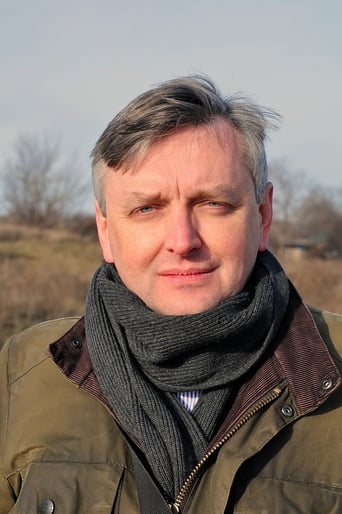
The Trial werd in 2018 geregisseerd door Sergei Loznitsa, een Oekraïense filmmaker bekend om zijn archiefdocumentaires en historische films.