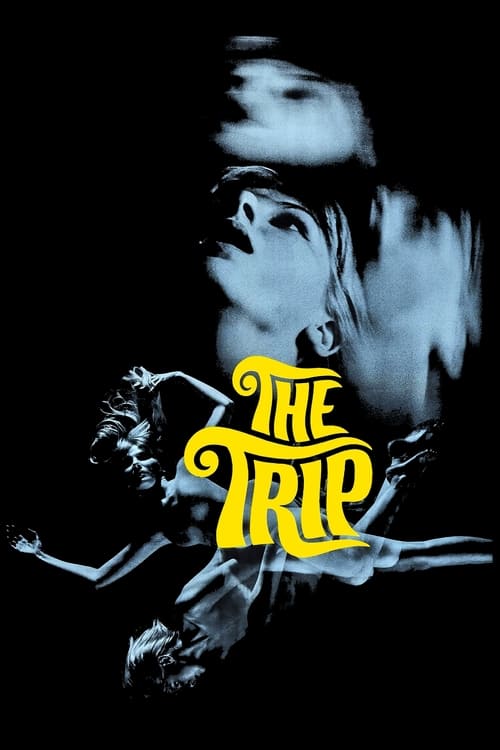
Paul Groves is een regisseur die na een scheiding met zijn vrouw in een dusdanige depressie geraakt, dat hij besluit om LSD te gaan gebruiken. Hij hoopt hiermee beter grip te krijgen op zijn vertroebelde geest. Tijdens zijn 'trip' ervaart hij echter voornamelijk vreemde voorvallen.
“I wanted the picture not to be a pro-LSD picture and not to be an anti-LSD picture because my trip was very good, I had no bad effects in my trip at all. It was wonderful. Yet I felt I really shouldn’t be accused of proselytizing for LSD, and at the same time I knew people had had bad trips, so I was trying to be neutral, and I had to ask people what had happened on their bad trips, and incorporate some of what they had experienced into it to make it neutral.”— Director Roger Corman Paul Groves (Peter Fonda) is going through a dark time. His adulterous wife wants a divorce. He decides to take LSD under the watch of his friendly guide John (Bruce Dern). Soon, he finds himself dropped into a fractured and colorful kaleidoscope version of his own life. Any movie that has Dennis Hopper and Peter Fonda riding around on a psychedelic merry go round with a dwarf dressed in medieval clothes can’t be all bad, right? This is a mesmerizing time capsule of hippie drug culture from director Roger Corman. It plays out like a 90 minute version of the acid scene from Easy Rider (1969).The screenplay is written by Jack Nicholson. Corman enlisted him because he knew that he had experience with LSD and he was going through a dry spell in his acting career.Corman also dabbled with the drug . He didn’t want to make a movie about LSD without actually experiencing it. He reported that he had a good trip. Roger Corman employs a huge variety of camera and psychedelic lighting tricks. There are times when this film literally feels like the work of Ingmar Bergman or a crazed Jean Cocteau. He had also learned a few horrific tricks from his various Poe adaptations with Vincent Price.Peter Fonda isn’t the best actor and his performance in this is spotty. However, it doesn’t matter at all because what he provides is a whole vibe. He’s teamed here with Dennis Hopper (in a small part) who plays a kind of psychedelic priest. Factor in Jack Nicholson’s touch on this film and you have a whole Easy Rider thing going on two years before it was even made.Though this is a lesser counter culture touchstone than Easy Rider, it was actually a huge box office hit. Young hippies flocked to it, filling theaters with the smell of marijuana smoke. This film isn’t for everybody. There is literally no plot. It’s basically just Fonda wandering around 60’s Los Angeles while high as fuck. Many will find it tedious. I found it a fascinating time capsule into an era that will never be replicated.Recommended. Some of you out there will love this. I watched it in 4K and the colors really pop with such clarity.
WraithApe3.5
"It's beautiful, man. There's some real stuff happening."When it started out it seemed like this was gonna be the typical depiction of a trip seen through the eyes of someone who's never actually tripped - all kaleidoscopic lens effects and realistic hallucinations - but given that Jack Nicholson wrote the screenplay and Corman directed the thing, that would be an anomaly to say the least. In fact, it's pretty authentic, just that it mostly operates on a symbolic level. The moments of zen calm and free love are the highs; the Nazgûl and the cops... well, they represent the dark side - how a trip can quickly disappear down the wrong rabbit hole, man.When Paul (Peter Fonda) decides the best way to handle his impending divorce is to drop acid for the first time, he seeks out personal trip coach (a fantastically hirsute Bruce Dern) and goes on his own odyssey, meeting various far out characters along the way - most memorably Dennis Hopper's beneficent drugs guru/wiggy judge, Max. It's not clear how much of what happens is happening in Paul's head and how much really transpires. He definitely leaves John's split-level stobe-lit pad at some point (an amazing place with its own indoor/outdoor swimming pool) and runs from one bugged out scene to the next, pursued by angular Bebop saxophones. He definitely leaves John's place, it's just that wherever he goes, he isn't seeing what everyone else is seeing most of the time. And in my experience, that's kinda what it's like - not so much another world, just reality viewed from a different angle.There's a lot of typically druggy imagery - multiple exposures, kaleidoscopic contortions and a fairly unnecessary 'trippy' montage recap sequence towards the end, scored by comedy music - but for capturing the ups and downs of a trip symbolically, you could do worse. One of my favourite scenes was at the launderette, where Paul stumbles in, and to the obvious bafflement of a patron, is transfixed by a tumble dryer as if it was a thing of transcendent wonder. Psychedelics do have a (de)mystifying effect, where everyday objects suddenly seem absurd and take on a totemic significance, their function forgotten. I remember a bunch of us spending hours one time laughing hysterically over a box of wires and cables. At least it seemed like hours, it was probably only a few minutes...Also, interesting to find out where the sample at the end of Skinny Puppy's Shore Lined Poison comes from... "It gives off an orange cloud of light that just flows right out over the sea". Yeah, man.
Darren Carver-Balsiger4.0
The Trip is just a film about a guy taking LSD and tripping. That is the entire plot. But it's really compelling oddly enough. Roger Corman was at his most experimental here, layering the film with a psychedelic atmosphere and hallucinogenic visuals. It is incredibly impressive what he achieved on a low budget. The cool, disconnected imagery and rapidly edited montages are very evocative. They're boosted by the colourful sets and great re-use of old material to make the journey feel larger. The Trip is very 60s, capturing the zeitgeist of drugs and hippies, and embracing that trend. It's also very funny and a fair depiction of drug taking which neither glamorises or demonises drug use. It's a groovy film.
More like this
Veelgestelde vragen
Waar gaat The Trip over?+
Nadat zijn vrouw hem verlaat, duikt een gedesillusioneerde regisseur in de drugsscene en probeert hij alles wat zijn vriend suggereert.
Wie regisseerde The Trip?+
Roger Corman regisseerde het counterculture-drama uit 1967.
Wat is de leeftijdsclassificatie van The Trip in Duitsland?+
De film is geclassificeerd als DE 18 in Duitsland.
Wanneer werd The Trip uitgebracht in de Verenigde Staten?+
The Trip werd uitgebracht in de Verenigde Staten op 23 augustus 1967.