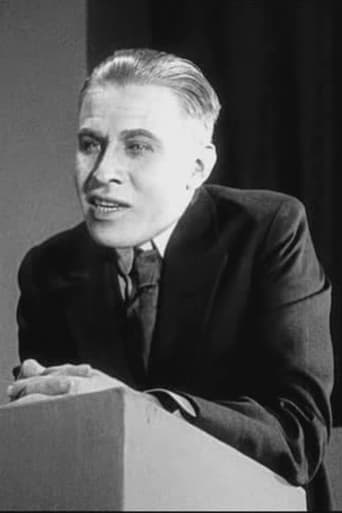

I will probably have one of the grandsons’ faces will be in my nightmares for ages, his emoting was almost terrifying. I sort of grasped what was happening at the beginning, and then the haunting figure came out of the ground, and it lost me.
Geregisseerd door Alexander Dovzhenko
Звенигора
Een sfeervol, rauw drama.
An old man tells his grandson of a legendary treasure buried beneath the hills of Zvenigora, setting in motion a sweeping cinematic poem that intertwines Ukrainian folklore, history, and revolution.
Zvenigora draait in 1 bioscoop in New York City - eerstvolgende voorstelling zaterdag 17 oktober om 12:30 in Metrograph.
Volgende voorstellingen: zaterdag 17 oktober.
Volledig programma
Speeltijden van Zvenigora, elke ochtend ververst
Kies je bioscoop en krijg een seintje voordat de film van het doek verdwijnt.
I will probably have one of the grandsons’ faces will be in my nightmares for ages, his emoting was almost terrifying. I sort of grasped what was happening at the beginning, and then the haunting figure came out of the ground, and it lost me.

I feel like I need to re-read Deleuze, find a good score and better subtitles, grow up, draw some diagrams, cultivate a warming mustache, drink a pleasant amount, and then begin to meet this movie on its plane. I don't think I've ever felt so much that a film was keeping me at arms length, or simultaneously pushing sensuously through two incomparable dreams. "There is fluidity in the crystal that means its parts cannot be demarcated."

Some countries are placed in the most disadvantaged of places; and Ukraine seems to have been surrounded by and in dispute with larger powers for most of its history – whether that was Poland in the 14th Century, Cossacks and Tatars in the 16th and 17th, the Ottomans, Austria-Hungary, Germany and of course Russia in more recent times. This is a land in which much blood has been spilled on its fertile soils.Zvenigora is a tremendous work of imagination. It tells the thousand year “history” of Ukraine through the eyes of an Old Man (Nikolai Nademsky) and his grandson (Semyon Svashenko) who seek a “treasure” in the mountain forest. The film’s visuals and compositions are astonishing. This is a beautiful film. It is, of course, a war film - but it is unusual, expressionist and faintly avant-garde too.What I love most about the Soviet montage films is not so much the kuleshov editing (and you get that here in abundance), but the use of Casting to convey character – typecasting is used not to be lazy but to create an instantaneous sense of personality. In Soviet montage, the eyes really give you access to a character's soul. There are some simply astonishing faces in this film: the Old Man himself, the Polish cavalry with their skull like appearance, the General who stands astride the earth in full force; the fantastic monk – straight out of Bergman, and the crazed decadent look of the men in the West. It feels like a walk through a portrait gallery – a smorgasbord of humanity and visage. Soviet montage contrasts with how constrained Western cinema has become in the depiction of human beauty: Hollywood very much narrowed the range of body types and faces allowed up on big screen. And so to go back at time to 1928 and see such a potpourri of profiles is beguiling: faces cast to reveal.This film is unique. It is sometimes baffling and always mysterious. The six episodes move from the rural to the Industrial age. Montage draws parallels between the workers in the fields and those building the new powerful age of the Machine. There is always conflict too: there is the rhythm of the scythes cutting the Wheat and the bang, bang, bang of the guns. It throws up some unusual associations. Eisenstein obviously, but also Dreyer – some of the imagery was so unusual and unsettling that Joan of Arc came to mind. And Fantasia too – those separate chapters build into something consistent and bold.Ukraine is a land under constant invasion and threat. There are always outsiders in search of the treasure in the Forest. There are always forces to be repelled. No doubt this was Propaganda too – but it was done with such panache and spectacle.Watched as part of the 2016-17 Film School Drop Outs Weekly Challenge.
Een oude man vertelt de legende van een begraven schat onder de heuvels van Zvenigora, wat de opmaat vormt voor een cinematografische reis door de Oekraïense folklore, geschiedenis en de revolutie van begin twintigste eeuw.
Zvenigora werd in 1928 geregisseerd door Alexander Dovzhenko en geldt als een fundamenteel meesterwerk van de Oekraïense en Sovjet-stille film.
Hoewel de film van vóór het hedendaagse festivalcircuit stamt, wordt hij wereldwijd geprezen als een mijlpaal van de Sovjet-avant-garde.