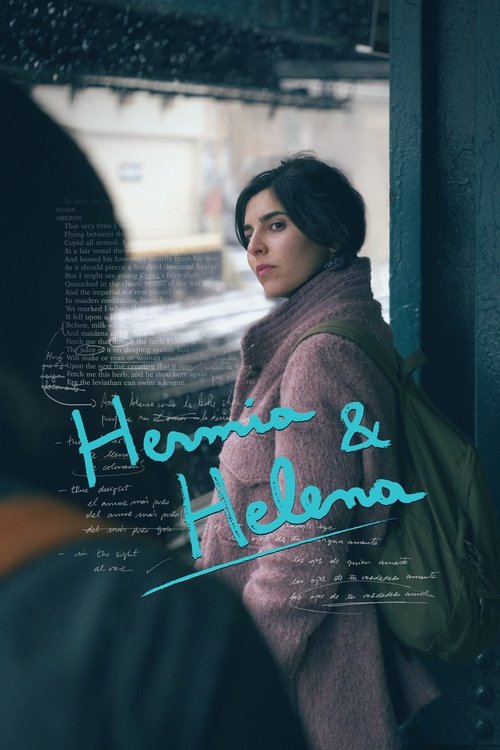
Hermia & Helena was so full of interesting things that I think it would be great to re-watch it at some point. Informed by Shakespeare and set against minimalist piano renditions of Scott Joplin and Beethoven pieces, it has a beautiful feel. It goes backward in time not unlike François Ozon's 5x2. I was hoping for a big reveal which would have pushed the rating even higher. However, maybe it's just good enough to have interesting characters and actors with beautiful cinematography. In addition to lead actress, Agustina Muñoz, who plays Camila, we have Mati Diop appearing in the film once in awhile as Danièle. I saw it on MUBI, but it's also available on Kanopy.Click here to receive 30 free days of MUBI:mubi.com/t/web/global/3m4uuw2
42/100Would have given up on Piñeiro by now, but I'm an NYFF completist* and they keep selecting his films. As I've admitted before, he's an auteur with whom I have virtually no points of connection—the aspects of human behavior that apparently fascinate him strike me as mundane bordering on actively tedious. Nor have I yet observed him to do anything truly interesting with Shakespeare, whose work he seems to incorporate in every film primarily as a means of creating a unifying "project" with a readymade patina of respectability.** (Especially true in this case—someone will have to explain to me what would be lost here were all references to A Midsummer Night's Dream elided.) Woke up for the scene in which Camila meets her dad for the first time, but I'm not sure whether that's because their round of alternating questions serves as a productive structural gambit, or simply because Dan Sallitt, who plays the father, is a friend of mine and it was fun to see him onscreen. Most likely the latter, since the film's other structural gambit—its weird stuttering-flashback chronology—seemed pointless to me. Anyway, just file Piñeiro under Not For Me, and understand that at this point I see his films strictly in order to stay conversant with what the tastemakers consider important. We don't always have to agree about that.* "Main Slate" only, because when I first started attending, over 20 years ago, what is now called the "Main Slate" constituted the festival's entire program, apart from one big annual retrospective. ** Out of curiosity, I read a couple of recent interviews with Piñeiro, and discovered from one of them that my supposition really isn't far removed from the truth:Shakespeare helps me to write. It helps me to avoid the white page. It puts the machine in motion. For instance, it gives me the titles of the films. Now I don’t know much about my next film, but I know it is called Portia and that I will work around The Merchant of Venice, with the coffins scene in particular.With all due respect, I submit that this is undergrad-exercise stuff—useful when you're young and still struggling to find your voice, but kind of embarrassing as the primary creative strategy for a mature artist. "Next up—Merchant of Venice! It'll be called Portia. Something about the coffins. Hmm, let's see..."