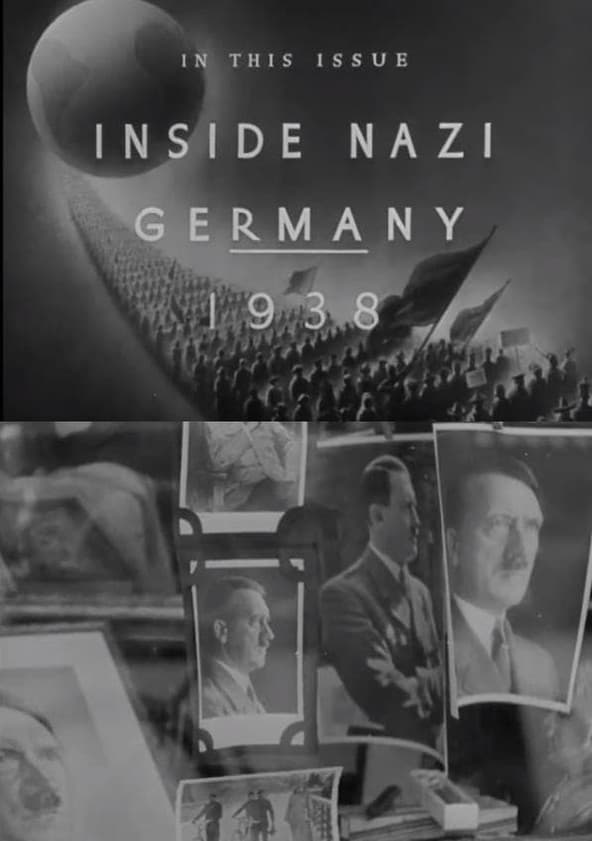


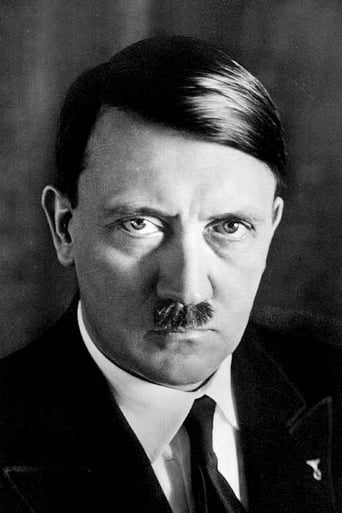

The Movies March to War“Inside Nazi Germany” is a landmark newsreel, or “screen magazine,” from the “March of Time” series in that it’s credited with being the first anti-Nazi Hollywood newsreel—and although there were anti-Nazi films made outside of the major Hollywood studios before it, such as for example “Hitler’s Reign of Terror” (1934). But, this was before the likes of Warner Bros’ “Confessions of a Nazi Spy” (1939) and Charlie Chaplin’s “The Great Dictator” (1940). Life magazine proclaimed it the “movie of the week” and says it was temporarily banned in Chicago. This was a time when, as the PBS–Ken Burns documentary three-parter “The U.S. and the Holocaust” (2022) suggests, other newsreels shown in the U.S. were basically Nazi-approved propaganda. So, it’s significant that this is decidedly not that, and, thus, it was rightly added in 1993 to the U.S. National Film Registry.While the message of the film—twice calling Hitler a demagogue, outlining Goebbels’s propaganda and censorship regimes, the indoctrination of German youth and the state control of the economy, the industrial preparations for war, the dangerous nationalism and Nazi plans of expansion, the persecution of Jews, and denouncing the American Bund—is in line with the march of the Roosevelt administration at the time in increasingly aligning itself against Nazi Germany, the documentary style likewise fittingly takes it cue from the founding in Britain of documentary principles by the likes of John Grierson. So, there’s the voice-of-God narration in the expository mode and the use of the form in an attempt to didactically solve political and social problems. As Ramon Gironaa and Jordi Xifra point out in their essay on the title, the declared principles of “The March of Time,” and this particular newsreel of filmmakers Jack Glenn and Louis de Rochemont’s, was a defense of American liberalism against the threats growing in Europe of fascist and communist totalitarianism.Of particular interest is the media-reflexive way it goes about exposing the fictional narrative, the selective stagecraft and images presented by Goebbels’s propaganda regime. “A new kind of pictorial journalism,” indeed—deconstructing propaganda with its own weapons, a world war already breaking out on movie screens.Works CitedGirona, Ramon and Jordi Xifra. “Inside Nazi Germany and PR War Films in America.” Public Relations Review 39:5 (2013): 514-520. doi.org/10.1016/j.pubrev.2013.06.004Life. “Movie of the Week: The March of Time.” 31 January 1938. books.google.com/books?id=yUoEAAAAMBAJ&pg=PA24#v=onepage&q&f=false