And that is why God made the telephoto zoom lens
We use cookies to personalize your experience and analyze traffic. You can opt out at any time.

Σκηνοθεσία Zhou Tao
The Periphery of the Base
Ατμοσφαιρικό, αργό ντοκιμαντέρ
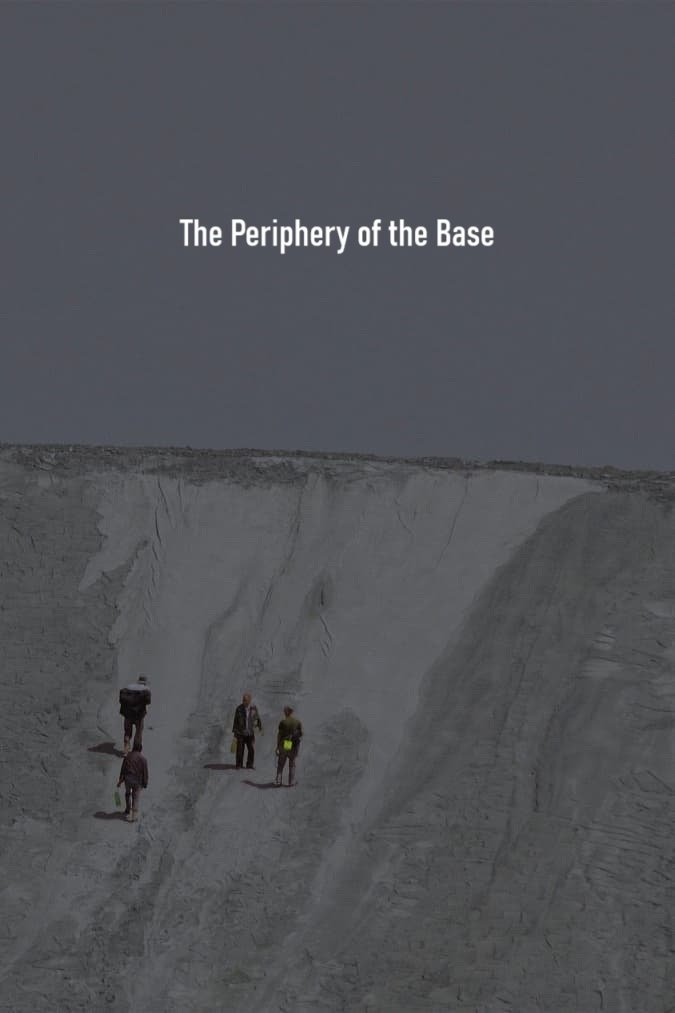
Στην καυτή έρημο Γκόμπι, ένα τεράστιο έργο υποδομής ξεδιπλώνεται μέσα στο αφιλόξενο φυσικό περιβάλλον, όπου οι άνθρωποι που εργάζονται εκεί μοιάζουν μηδαμινοί μπροστά στο μέγεθος της κατασκευής.
Δεν υπάρχουν προβολές της «Η Περιφέρεια της Βάσης» στην πόλη Λος Άντζελες σήμερα.
Προβολές για Η Περιφέρεια της Βάσης, ενημερωμένες κάθε πρωί
Διάλεξε σινεμά και πάρε υπενθύμιση πριν κατέβει.


And that is why God made the telephoto zoom lens

[❤]working hard or hardly working? in a paradoxical nutshell, periphery is a film just as concerned with depicting the matter of labor as it is unconcerned depicting any labor at all. do we even know what these workers are working on? the letterboxd description says the doc documents the unfolding of an infrastructure project in the gobi desert; yet, to me, zhou's montage presents wholly an anarchic procession of dust-faced lost souls wandering apart—in washed-out civilian clothes and drab military uniforms, in yearning an escape from the inconsolable in-between of labor surplus exploitation. for 50 minutes, the tangible work of the infrastructure project evades the viewer's pov as the camera looks constantly afar, capturing everything from masterfully framed landscapes, to laborers chatting on their breaks, to claustrophobic makeshift sleeping tents, to, finally, nothing at all—sweet nothingness. it's a sentimental consideration of the camera/watcher vis-à-vis the subject/watched, entangling the mechanical subjectivity of the movie-edit with the contradictions of china's BRI. birdz :)

Documentary filmmaking that turns its own ostensible subject – some sort of massive infrastructural project in the Gobi Desert – into an unknowable impossible object; the men we see at rest from their labor as if working on the edge of a void. If anything, the film’s sense of scale conveys only the fact that we don’t even yet have the technology to convey just how massive whatever this unseen project really is. “I can’t keep up. I really can’t bear it.” A film that gradually gives itself over to the study of texture and light, as if trying to capture something of the disorienting materiality of post-industrial industrial labor, the surrounding landscape itself seeming to dissolve into shimmering abstraction; a final shot looking at the vast empty blue of the sky like finally holding on to something undeniably real.
The film observes the construction of a large-scale infrastructure project within the harsh environment of the Gobi Desert, focusing on the relationship between human labor and the vast landscape.
The film was directed by Zhou Tao, a Chinese artist and filmmaker known for his focus on landscape and environmental imagery.