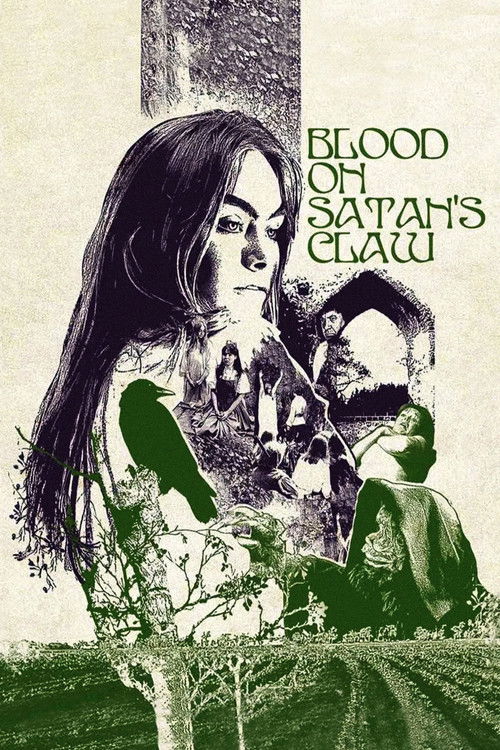
CW: rapeOne worst parts is the false rape accusation. Statistically, these are rare and narratives that use them to demonize women are especially hurtful, promoting a fiction that has rooted itself so firmly police often refuse to even investigate rape claims. The actual rape scene is brutal, sickening, disturbing, and by all standards, should be the moment the devil-worshipers are irrevocably cast as the villains in this story. And yet, the way the story is built, and the figures it uses, make it hard to hate them.It is a common enough narrative that witches were falsely persecuted women, killed for anything from sexuality to political opposition to simple misogyny; films featuring witches, devil-worshiping or not, tap into that narrative when they engage with narratives of rape, sex, and religion. Almost all of the "heroes" are men of power, and that makes them hard to accept as heroes when similar films (Witchfinder General) cast them as abusers of that power and history shows the same. It's as if they are playing against type, if the whole context is understood, but even without it, the film spends much more time showing the ostensible villains and their victims than those who end up fighting them in the end. It pointedly shows the judge leave and note that he was, essentially, abandoning them until it got much worse. This in and of itself casts him as at least a grey protagonist, and the manipulative nature of the villains makes it uncertain just how many are willingly part of their cult. For that matter, it's unclear how much power the resurrected devil seems to have in warping these children into his servants.And that ambiguity makes the film effective. It's eerie, disturbing, and violent. The surgery scene is stomach-churning, and its medieval application makes it even more so. It wields its setting, specifically the temporal setting, with the full force of the context of that era. It knows that we know this era was one of superstition (see the witch-hurling scene), and it engages with that to make the film more oblique and mysterious. The Satanic rituals are intentionally transgressive, and the presence of the infernal monster is powerful not just because it is a vision of demonic uncanniness, but also because it is contrasted with the ignorance, arrogance, and strictness of those who oppose it. There is no safe ground here. October count: 15/31
Hoop-Tober #11Instantly a central touchstone for my movie mythology. The ultimate in a kind of cosmic evil. Some malevolence, some malignant elemental force spread across the land, living in the land, permeating, haunting, waiting. Nothing is creepier, for me, than the sheer mundanity of Evil's unleashing in this film. Nothing as eerie as that evil eye in the soil. Just that bizarre unearthing conjures something inscrutable. But the eye is just a symbol of some nameless and horrible opening,I love that the film does not truly have a central protagonist. And I love that it let's its mystery remain a haunting abstraction and open question. What is happening, who is doing it, where did it come from, why?The manifestation is given various names. (Are they chanting Behemoth in the ruined church?) But calling it Satan is just the merest veneer of order. It is some nameless eruption of cosmic evil. It is profoundly alien.This is deeply Lovecraftian evil. Evil that enslaves and enthralls minds. Evil that spontaneously corrupts the body. Evil as an unseen psychic miasma and blight. Where humans are pawns to summon it into corporeality.It seems like a kind of sublimation of the Gothic impulse, reaching the height of incorporeal evil, the evil cosmic twin of Last House on the Left and Texas Chain Saw Massacre.I am fascinated by the currents of evil psychic mind control and possession running through my recent '71 watches. In true Lovecraftian fashion, mindloss is a living danger. Slowly, the children are possessed or transformed. The evil force invades and corrupts body and mind, long before it appears in any physical form. It moves beyond Lovecraft too, channeling the lurid spirit of early 70s comedown grimness: this is about bodies too. Erotic bodies, animalistic bodies, those spontaneous corruptions of the flesh -- Satan's Skin. Part of the sheer rawness of the evil is the centering of cosmic malevolence in the concrete specificity of this lonely, rural locale, in these specific bodies. (This and the centering of children as both victims and perpetrators.) The cosmic evil commands where it will.It works so well for me because it has that quality of suggestion that I look for, that I love. It isolates the action to this village and a small set of characters, but despite the small scope, it manages to suggest that this eruption is just one instance. It has been going on and on and on. And it can happen anywhere and everywhere. And it has happened, and it will happen. Laying bare that eerie eye is laying bare some fundamental chaos at the heart of things.And it especially works because it refuses to suggest that any human order can thoroughly contain, understand, or combat it -- new or old. The children are a kind of revolutionary energy, but they are being consumed in their self-destructive, hedonistic death cult (the death of the hippie dream?). And society is too slow, too far behind, too outdated, too impotent, too overconfident, drunk on its own self-importance. In the end, it too must turn to primitive destructive impulses. The town is being torn apart by unseen forces. There is little mitigating the damage.The satanic body dies, but the evil remains. The veil is torn.
Primo spooky folk horror where a bunch of rebellious 18th-century adolescents try to rebuild the devil piece by piece with parts of their own bodies like he’s a hairy ass Frankenstein’s monster. The vibes are outstanding, as if there’s a permanent brooding mist of demonic whispers and strict religious oppression enveloping the whole village at all times. Probably could do without the extremely uncomfortable ritualistic rape scene, though. Still, this and The Wicker Man would make a pretty nice double header on a brisk autumn afternoon.