
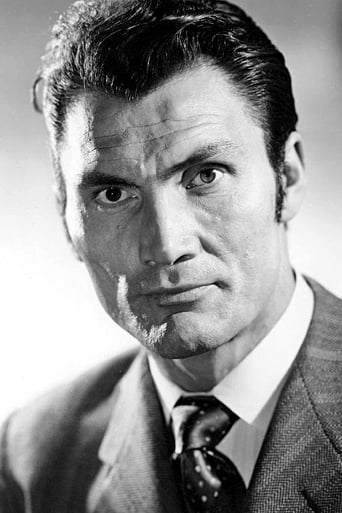



IF I HEAR THAT MAIN THEME ONE MORE TIME IM GONNA RIP MY HAIR OUT.
We use cookies to personalize your experience and analyze traffic. You can opt out at any time.

Art film producer Jeremy Prokosch, unhappy with the work of his director, hires Fritz Lang (as himself) to direct an adaptation of The Odyssey, but when it seems that the legendary filmmaker is making a picture destined to bomb, he brings in a screenwriter to energise the script. The professional intersects with the personal when a rift develops between the writer and his wife.
Contempt isn't screening in cinemas right now.
Follow the film in the app to get notified when showtimes are added.
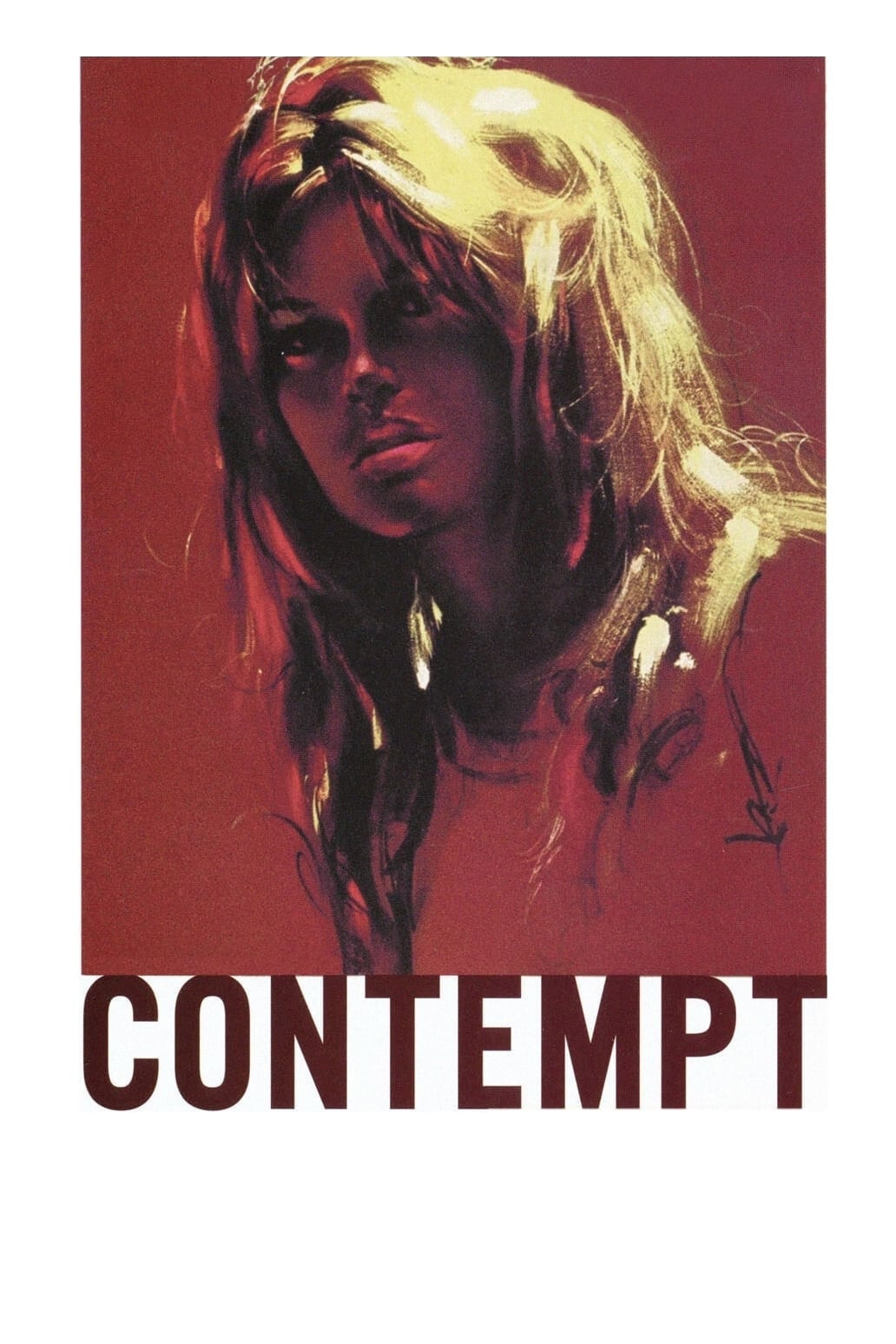
Contempt showtimes, refreshed every morning
Pick your cinema, get a nudge before it leaves screens.


IF I HEAR THAT MAIN THEME ONE MORE TIME IM GONNA RIP MY HAIR OUT.

Don't forget: the Gods have not created men. Men have created Gods.

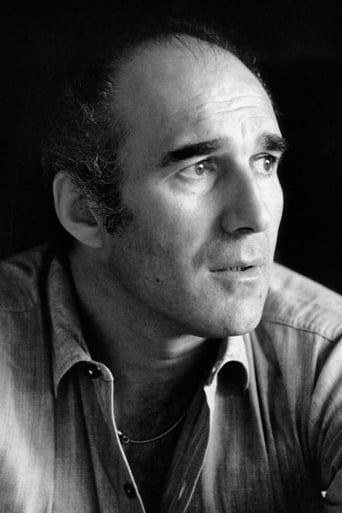
There seems to be a prevailing, dual impression of self-therapy at play in Jean-Luc Godard’s Contempt, which on the surface is a backstage tragedy about the simultaneous strife on the set of a multinational film shoot and the disintegration of the marriage of the film’s new screenwriter. I wondered how much to believe my boyfriend when he assured me that Contempt was Godard’s “most commercial” film (a big-budget production starring international superstar Brigitte Bardot); and although it is commercial in a sense, the accessibility I scarcely dared to anticipate was cannibalized by an exploration on making the scope of picture befitting Godard’s American idols (Howard Hawks, Nicholas Ray, and Vincent Minelli are mentioned in the movie, along with the presence of Austrian-American director Fritz Lang portraying himself) and the conflict of ideals between the maverick artistry of his heroes and his apparent disgust at American commercialism of the cinema and its propagation of a hyper-sexualized, consumerist agenda to the masses. The notion of a traditional benchmark, ‘The American Dream’, feels staunchly antithetical to his ideals as a New Wave filmmaker and then-burgeoning Marxist, and is an aspiration that he seemingly considers to be dangerous, even lethal. Godard displays in Contempt the sentiment he would later articulate some 25 years later at the 1988 Cannes Film Festival: “I have always detested America and adored the American cinema.”This commentary on agency within the studio system and its inherent corruption of art (and therefore life) integrates itself into the destruction of the central romance. Paul (French stage actor Michel Piccoli) and Camille (the eternal Brigitte Bardot) succumb to the allure of material achievement at the expense of their emotional, moral, marital, psychological, and physical wellbeing. Despite his relative faithfulness to the film’s source material, Godard overlays his own traumas atop the characters, a lacquer that is a trademark I’ve come to recognize and forecast in my still-limited experience with his work. At the opening, Camille is naked in bed with a fully-clothed Paul, not engaged in the physical act of love, rather another style of lovemaking anyone with low self-worth will recognize: reassurance seeking. Camille fires through a list of her body parts, asking Paul to approve of each one; despite her obvious beauty and physical attraction to the onlooker, Camille is unable to reconcile her own allure within and for herself. After this edification exercise we experience the currency exchange for such a deposit, and Camille offers to fellate Paul as a thankful payment. She understands the nature of reciprocity in love, despite her maladaptive coping strategies. She challenges Paul, ominously, ironically, “then you love me totally?” He again placates her reassurance-seeking by offering an assent and a vulnerability of his own: “I love you totally, tenderly, tragically.” We see the framework of unhealthy obsession and dysfunctional codependency being fleshed out in Cinemascope, and it’s a foreshadowing to their fate within the narrative.Paul, unable to connect with Camille in his work (which is art, and to Godard, art and life are inextricable), seems to only relate to Camille in the bedroom (evidenced by the scene where Camille claims she wants to sleep in the living room, Paul’s first response being, “you don’t want to make love?”). But what Paul refuses to acknowledge is that he exploits Camille’s beauty as his own personal bargaining chip, minimizing her to a possession, and mutely pimps her out to sleaze-ball American producer, Mr. Prokosch (in a repugnant turn by Jack Palance). All of Camille’s insecurities manifest through her physicality (not only in the opening sequence, but also when she covers her long, blonde locks—a symbol of her status as a bimbo—with a short, brunette wig), and it’s exactly that sexuality which Paul tries to extort to his advantage, in both his professional ambitions and his own carnal desires. He continues to gaslight Camille and feign victim in his cowardice; so obviously the de facto “head of the household”, he continually foists the responsibility of choice onto Camille as a way of obfuscating his duty as the role of protector and cites Camille’s material needs as the motivation for his hypocrisy.Camille, in turn, abuses Paul’s self-image as a capable, virile, masculine character by debasing him after his initial sin. She jeers that he’s an ass for wearing a hat to make himself appear more confident, “like Dean Martin in Some Came Running”, degrades his mental prowess by challenging, “why not look for ideas in your head instead of stealing them?”, and eventually cuckolds him out of spite at their mutual, willful miscommunication.The resemblance to Godard’s own relationship with on-again-off-again wife and muse, Anna Karina, is not hard to perceive. Godard reportedly had Piccoli wear Godard’s own hat, tie, and shoes during filming, and the wig that Bardot dons is the same one Karina wore in Vivre sa vie. The fanatic director also tried multiple times, failingly, to have Bardot walk in the manner of Karina during the domestic dispute scene. Plenty of the dialogue is extracted directly from personal conversations, as is his custom. All the minutiae that is so painstakingly woven into the fabric of this inevitably unraveling union represent personal effects from his marriage, and the film a time capsule in which to seal them—his refusal to separate his private life from his work, Karina’s infidelities, Godard’s entitlement for providing a material life for Karina (and his professional sacrifices to make that happen), all tinged with an obsessive love he couldn’t civilize. The fate of Paul and Camille are not dissimilar from Godard and Karina, she flees (though Karina doesn’t meet Camille’s tragic end), and Godard/Paul is left to patch the wound with the only dressing that he has, and the one that proves over his career to be the most potent balm—his art.
A screenwriter's marriage gradually dissolves while he navigates professional conflict on the set of a production based on Homer's Odyssey in Italy.
Jean-Luc Godard directed this 1963 film, representing a central work of the French New Wave movement.
Watch Contempt on Mood.