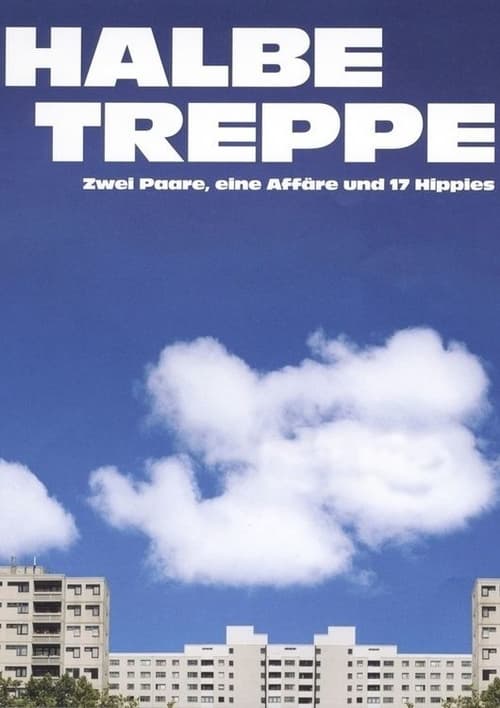
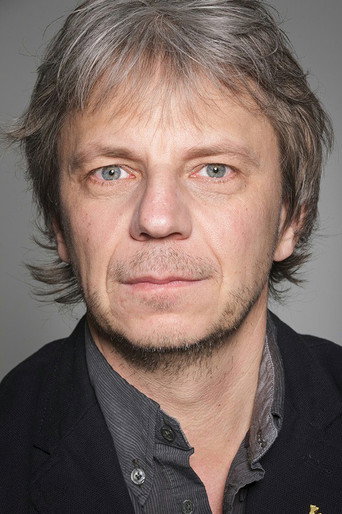
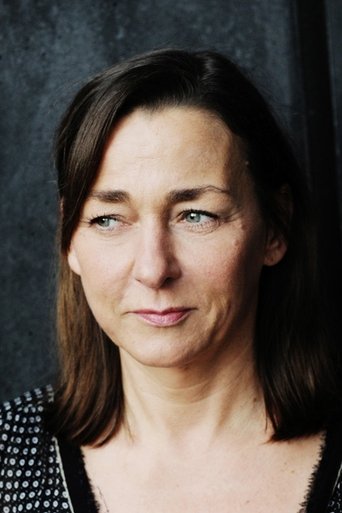
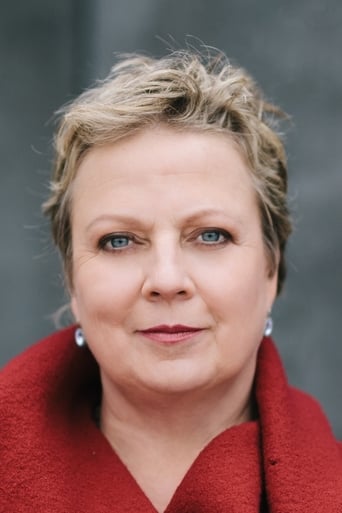
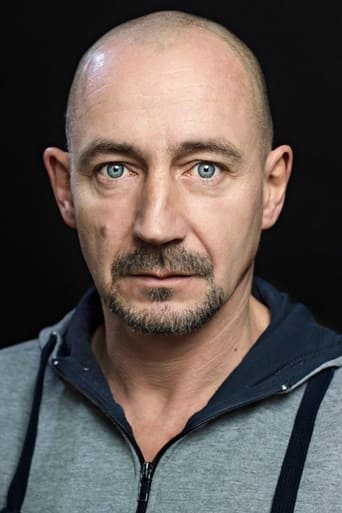
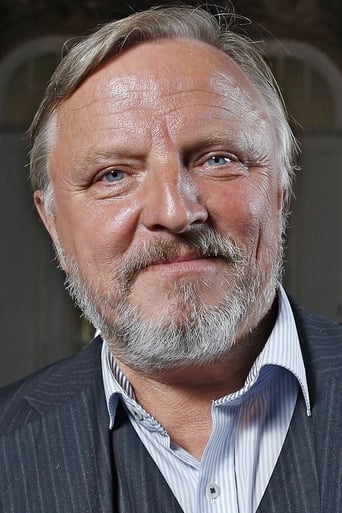

As much as I hate calling a film that I have seen in its original theatrical run a classic (because, well, it ages me terribly), Halbe Treppe is very much a modern classic of German cinema, and one that turned out to be a breakout vehicle for its director Andreas Dresen and its four leads, especially Axel Prahl, who subsequently became one of the most ubiquitous and popular German actors of his generation (I wrote more about him here, in a review of another film by Dresen, in which I gush about his performance quite a bit).The film follows two middle-aged working class couples, one with two kids and one childless, each in ordinary jobs: Uwe owns a snack bar, his wife Ellen sells perfumes, Katrin is an attendant on a parking lot near the German/Polish border, and while her husband Chris is a radio DJ, his job as "Magic Chris" is much less exciting than it might initially sound when you know that it is the cheesiest local radio station you can imagine (but at least if it gives him the opportunity to send out coded personal messages when he is reading out horoscopes). The couples' friendship is thrown into turmoil when Ellen and Chris embark on an affair, and Katrin surprises them making out in the bathtub. What ensues might not be spectacular, and maybe not even entirely unexpected, but it avoids clichés and contrivances, and rather presents its characters as nuanced individuals who make organic choices that stem from their history, their personality, and their complex emotional state.Halbe Treppe was shot with handheld cameras and no artificial lighting throughout (which gives it a bit of a Dogme 95 vibe), and the actors improvised almost all of their dialogue, as the screenplay gave them merely an outline of the plot. All this leads to a highly naturalistic film, in which the simple and mundane things we witness take on importance because they matter to the characters. The film also intermittently includes brief scenes in which the characters are interviewed about their day-to-day life in the style of a documentary (and not just the main characters, but also incidental characters they encounter, like a salesman in a furniture shop, or an aerobics intructor), which further helps to make everything relatable and real.The four lead actors (Axel Prahl as Uwe, Steffi Kühnert als Ellen, Gabriela Maria Schmeide as Ellen, and Thorston Merten as Chris) are all great, and while Prahl stands out among them, I am not entirely sure if it is because Uwe is the loudest character in the film, or because Prahl is the most attention-grabbing performer in the cast (however, considering how much of the film is improvised, the two things probably go hand in hand). He is also the film's primary source of both warmth and humour, of which the film has much more than my plot description probably makes it sound like.As so often when writing about German films, I have no idea if they are available outside Germany. But also, as so often, my recommendation: Seek it out if you have the chance.Andreas Dresen films ranked130 Essential German Films - A Personal Canon