
need to see the blooper reel for this
Directed by Viktor Kossakovsky
An atmospheric, grounded documentary.
Το ανθρώπινο είδος, έχοντας υιοθετήσει μια εγωκεντρική κοσμοθεωρία, θεωρεί πως τα ζώα δεν διαθέτουν την παραμικρή ικανότητα να αναπτύξουν συναισθήματα, συνείδηση ή βούληση. Ωστόσο, η γνωριμία με μια αξιαγάπητη γουρουνίτσα (την Γκούντα του τίτλου), δύο τετραπέρατες αγελάδες, αλλά και ένα μονοπόδαρο κοτόπουλο που κλέβει την παράσταση, φτάνει και περισσεύει για να επαναπροσδιορίσετε την ηθική σας στάση απέναντι στα ζώα. Ένα τρυφερό ντοκιμαντέρ που κατεδαφίζει κάθε υπόνοια μοναδικότητας του ανθρώπου, υπενθυμίζοντάς μας την αυταπόδεικτη αξία κάθε ζωής σε αυτό το σύμπαν.
Find more films like Gunda
Showtimes in your city.


need to see the blooper reel for this

Bela Tarr’s Babe

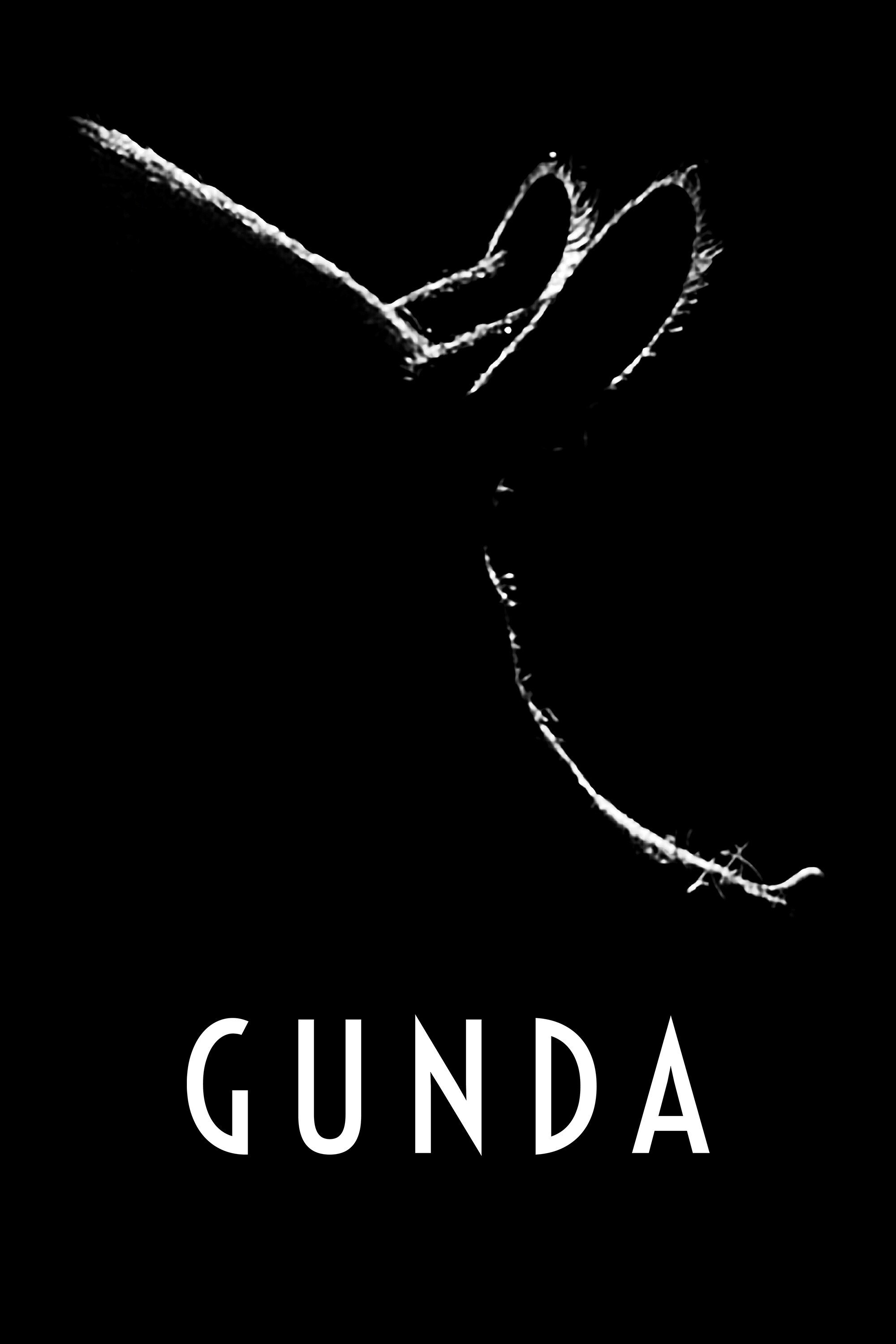
Where most nature documentaries focus on anthropomorphising their subjects, Gunda instead zoomorphises the viewer. This is a black and white documentary that purely observes. We watch farm animals (limited to pigs, chickens and cows) and there is no music or voiceover. It is just animals in their given environment. The shooting style is uniformly immersive, oscillating between poetic wide shots – in which the black and white photography foregrounds impressionistic moments of lighting (beautiful silhouetting or wonderful halos of light) – and mobile cameras that give us an animal’s-eye view.The poetic side of the film establishes the atmosphere and the overall approach. The focus here is to present an animalised perspective (again, zoomorphising the viewer) and this is greatly facilitated by conventionally cinematic moments. It is in these moments that we revel in beauty, a quality cinema (especially black and white cinema) is so great at evoking. Beautifying these animals and their surroundings thus immerses us emotionally in their quotidian existence, before the film physically immerses us by approximating their lens.The animal’s-eye view footage is absolutely stunning. The camera movements are fluid, following the animals, and the angle is kept to the height of the animal: our viewpoint in the film is inexorably tied to their viewpoint. The fluidity of movement lets the filmmaking blend into the background, further facilitated by frequent use of long shots. The cinematic grammar is tied to the animal and this is the way in which their viewpoint is highlighted. The result of this is often really transcendent. We gain a new viewpoint on the world and look at these animals in a different way.One of the most impressive examples of this is when we follow some chickens. We know of links now between dinosaurs and birds, but in an everyday sense, that seems very abstracted. What this film does is capture chickens like they are dinosaurs. We have a close-up on a chicken’s foot coming down, seeing it in its scaly glory (the black and white aesthetic highlighting texture and textural change). It is very reminiscent of a the t-rex’s foot in Jurassic Park, facilitated by how the angle of the camera has established a new perspective. We see these chickens in a new light and gain a different appreciation for them. We then follow them around, still seeing the world from their height, and things start to feel alien. Small plants that tower above them look like trees – the trees and larger plants are locked off from us due to how low down we now are. What this means, in effect, is that chickens now look like a default size as opposed to small by comparison. We reorient our view of their world in line with their perspective and, through this, they gain an increased sense of presence and importance. It is only by taking our human perspective, and ourselves as a reference point, out of the equation that we can see things for how they really are.When you know the film has worked is when you start to see signs of human intervention. To begin with, the new perspective on animals makes them seem alien. We see them in a new way, and this is a wonderful experience: to reconsider things we are so used to and rarely think of beyond a passing glance. However, soon we become attuned: the animal perspective becomes normal. Ultimately, this means that the signs of humanity become alien. We see a chicken walk through their domain only to be greeted with a giant metal barrier (in reality, a small wire fence) that juxtaposes everything around. What would seem like a simple and sensical pen now seems like some kind of deeply unnatural and immoral barrier. We see it from the chicken’s perspective, from which it can never make sense, and these markers of domestication suddenly stick out as invasive. This is more sharply shown when a pig interacts with an electric fence. It is a really alarming sequence and we start to understand the confusion and horror this interaction must have caused.This all comes to a head towards the end, where we see more signs of overt human intervention – but we never see the human. This makes us reflect on our positioning and our existence as observers, and again makes us consider the world from an animal’s point of view. In general, this is a remarkable achievement. It is a very simple idea: just film animals from their perspective. This is then complicated by aspects that eschew expectation and may make it seem arch or alienating. We expect there to be voiceover and music, and films that employ these to present nature often do so with consummate skill and to great effect. However, these elements do not fit the intent, and are therefore excised. This makes the film feel cohesive and gives it an impressive purity. It also makes it more immersive and more animal. As mentioned earlier, outside of the poeticising (which is a necessary emotional gateway) the camera does its best to seem unobtrusive. This means that the trappings of humanity feel absent from the film, which greatly aids it. Of course, the black and white does make it feel cinematic, and is an obtrusive element – one easily dismissed as pretentious or arch. Fortunately, this aesthetic ultimately feels completely necessary. The black and white photography already creates the idea of seeing the world in a different way, which the film relies on, and monochrome highlights textural detail so well. This makes the intersections of the natural and the unnatural incredibly pronounced and really brings out the intricacy in the animals we are observing, or – as it feels like – living amongst.It is tempting to dismiss Gunda as gimmicky or pretentious. To do so is to miss out on a very well realised and effective experience. It is a film with a singular focus in which everything works together wonderfully to achieve it. In terms of a viewing experience, it gives you something you really can’t get elsewhere. It certainly is not for everybody, and it does meander in places, but it is undeniably impressive and a special piece of filmmaking.
Gunda is a wordless, observational documentary that chronicles the daily life and behavior of a mother pig, a herd of cows, and a one-legged chicken on a farm.
Gunda was directed by the Russian filmmaker Viktor Kossakovsky in 2021, known for his distinct, visually-focused style of non-fiction cinema.
We use cookies to personalize your experience and analyze traffic. You can opt out at any time.