


the movie was black and white so I unfortunately couldn’t see how green his valley was :/
Huw Morgan, the academically inclined youngest son in a proud family of Welsh coal miners, witnesses the tumultuous events of his young life during a period of rapid social change. At the dawn of the 20th-century, a miners' strike divides the Morgans: the sons demand improvements, and the father doesn't want to rock the boat.
How Green Was My Valley is showing in 1 cinema in Berlin - next screening Sunday 25 October at 11:00 at Zoo Palast.
Next screenings: Sunday 25 October.
Full schedule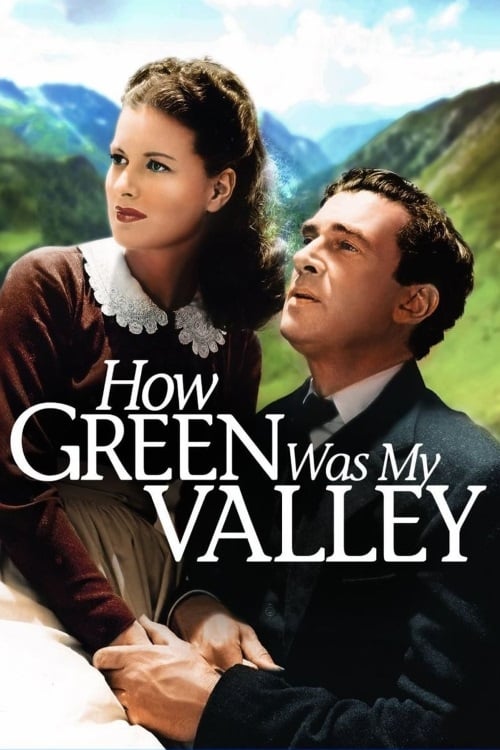
How Green Was My Valley showtimes, refreshed every morning
Pick your cinema, get a nudge before it leaves screens.
the movie was black and white so I unfortunately couldn’t see how green his valley was :/

No greater film was made under the classical Hollywood production model - it's always been easy to talk about Ford's compositions but what of his montage? We know that well until Ford had Argosy Productions in 1947 that he would cut his sequences within the camera - for example if, in the middle of a master shot Ford knew he would need a close-up, he would place his hand in front of the lens until the specific reading was complete, removing it again once he knew he would cut back: this was to prevent studio editors from meddling with the footage as directors often were not let into the cutting room, either because of studio regulations or because that director would have been placed on another project by the time of post-production. This makes the actually rather elaborate flashback structure all the more astonishing: it's no wonder Ford was among Eisenstein's favorite directors, as here we see achieved a kind of 'lyrical montage,' where juxtapositions progress ideas but never to the point of disconnecting emotional investment.Getting here on Ford's part, I imagine, is a matter of precision: it's not quite the matches between compositions on a shot-to-shot basis but the spacial, geometrical harmony in regards to the camera's placement between one shot to another within a given space. There is never a shot that feels 'wrong' or misplaced, furthermore each shot appears to be the only possible one that could have come after the last, with the kind of accuracy one might expect from a mathematical formula. In this regard, the emotionalism Ford succeeds at is a testament to the stupidity of the myth that logic is cold; this is art and this is technology, you cannot expect it, as though mystic, to create itself, and it's Ford's genius that he can so easily transmute his rational decisions into clear emotional responses - after all, that is what engaged people to cinema in the first place. Hell, Young Mr. Lincoln is basically about this.As for the film itself - maybe I'll get to it next time!

A wonderfully told narrative about working-class perseverance, yes but I was absolutely floored by the images. Just gobsmackingly beautiful compositions of men populating the 80-acre Welsh town set with their bodies (songs, lives), gorgeous mountain landscapes and sky as frequently admired by the camera as infected by the black smoke of the mine, richly-lit interiors where the harsh realities of work and familial duty push and pull at the characters until memory and flesh, the emotional and material are one and the same. Unbelievable.
It follows the young Huw Morgan as he grows up in a proud Welsh coal mining family facing social upheaval at the dawn of the twentieth century.
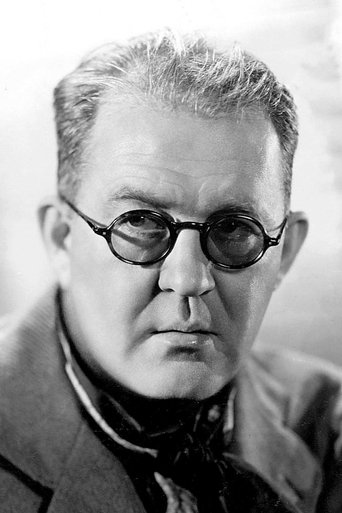
John Ford directed the 1941 classic drama, winning the Academy Award for Best Director.
Tickets on Mood.