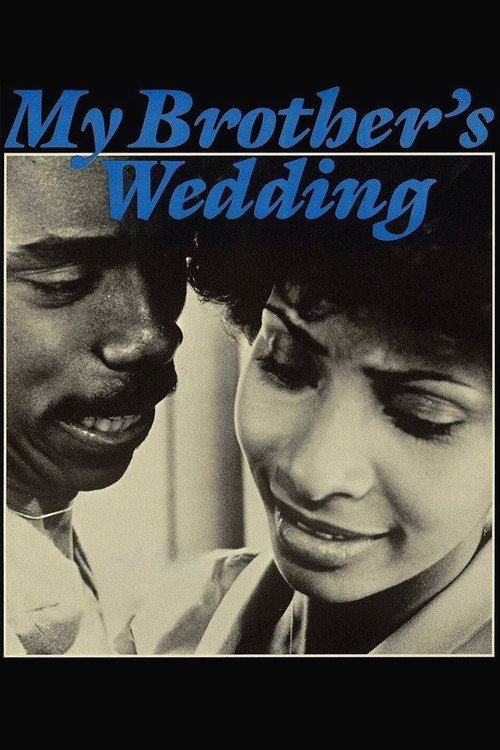
Charles Burnett has an enduring taste and eye for texture. I can't think of a shot in this that doesn't have some wrinkle, some grate or pattern that stands out from the smoothness elsewhere in the frame and lends the film a roughness far more sensuous and suggestive than your usual "grit." You can't teach that. The pacing seems a little haphazard, but not where it most counts, and his eye for detail and space is exquisite enough reason to get over it. Did he ever try his hand at outright nonfiction? I find myself increasingly curious about Burnett's seemingly documentary, microscopic vision of L.A., curious as to how his sense of urban totality can be so simultaneously broad and intimate. Rather than sprawling panoramas, Burnett pushes his narrative, and his sense of the city, outward with glints of history and prehistory: the black migration from South to North and West, the growing encroachment of drugs and increased mass incarceration, joblessness, and, of course, the long-standing interpersonal tensions sewn by the rest of these things. For all their lack of outward despair, there's no sense that the people here, especially the young black men fully given to the tides of this changing neighborhood, can really "make it," is there? I guess there's marriage. And at one point, a woman says "I thought we'd eat like white folks tonight," portending another universe of concessions one might make for survival. Is this his darkest film?
Pierce is, for a time, wholly likable. A sardonic man in a part of Los Angeles that's wrecked by drugs, violence, unemployment, economic hardship, and incarceration. His tensions with his upwardly mobile brother's rich fiancée seem to be an extension of his impatience with the general injustices of poverty he sees all around him. But then we see the kind of socially violent toll this environment takes on the ethos of its youth when Pierce’s friendship with a dude named Soldier ends up making Pierce complicit in the coerced sexual intimidation and harassment of a woman. Suddenly his ethical posturing against the rich and the other forces that strain his neighborhood ring hollow and Pierce is likable no more. From that point forward his behavior, never exactly ideal, loses whatever righteous engine it may have had and becomes more of a way to commit to the hardships of the streets and distance himself from opportunities to show up for his family.It's then that we realize we’re watching an incredibly complex assessment of both a character and a community. As always, Charles Burnett’s social touch is deft, his tone mischievous, his themes deeply layered and submerged, and his gaze on South Central Los Angeles revealing and subtly beautiful. (I can’t praise Burnett’s photography enough. Everything that man shoots has a quiet magic to it.) The film is often clunky and many of the actors are not entirely comfortable in front of the camera, but no one can deny that Burnett vibe. Funny, contemplative, effecting, jarring, and humanist.
“My Brother’s Wedding” has always been an imperfect masterpiece. It’s gotten that distinction not through any fault in its acting, shooting, or storytelling. But because its director, Charles Burnett, never got to finish the version he originally envisioned. Burnett’s follow-up to “Killer of Sheep,” itself partially defined by its tumultuous legal history, is a South Central Los Angeles-set tragicomedy about a young Black man who must choose between being the best man for his sibling’s nuptials and attending to his best friend. This modest yet critical story was ultimately taken away from Burnett by the film’s producers. They screened a rough cut at New Directors/New Films in 1983, where it received mixed reviews. Burnett would ultimately get to complete a new version of the picture when Milestone Films acquired it, giving him the opportunity to partially restore his intent. Unfortunately, the available material Burnett could work from proved scant; no outtakes existed. Since 2007, it’s this iteration, a massaging of the mauled rough cut, that’s represented the director’s vision. Not anymore, as Milestone Films, UCLA Film & Television Archive and Berkeley Art Museum and Pacific Film Archive, with Burnett supervising and Jillian Borders and Maya Cade consulting, have made a 4K restoration that premiered at this year’s Berlinale. Watching this revitalization of the director’s picture is like spending your entire life seeing the world in black and white and being introduced to color. It’s like an entirely different film. Hues that once looked light black now are vibrantly red; blues and greens have found their variations again, and the wallpapers and other homely objects that decorate these grounded physical locations are finally obvious to the eye again–re-establishing the vitality integral to this youth story. Seeing the film in this form is like a good polish revealing the former luster of a priceless heirloom. [full review via RogerEbert]