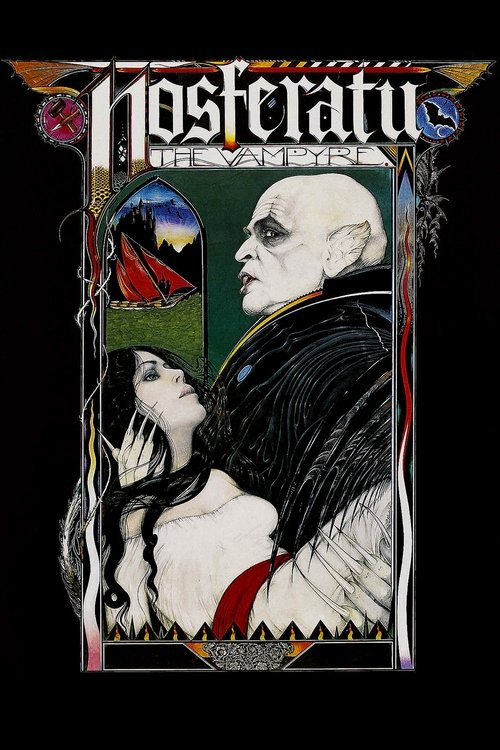





A movie about a normal guy who risks it all for a taste of Isabelle Adjani.I appreciate that Herzog's adoration of Murnau's original is so apparent that there are long stretches of this that play like a slavishly devoted tribute, replicating many of the same scenes and rhythms beat-for-beat while asking a modern 70s audience to slow down the tempo and meditate on the images and atmosphere like you would a silent film. It's a spectacular achievement of design, photography and mood with a few trademarked Herzog touches interspersed throughout: the long handheld takes wandering the gothic sets, the arduous and beautiful documentary style location vistas, the occasionally surrealist hysteria and abstraction like those contorted images of mummified corpses, the violin boy, the dreamy slow-motion bats vs. all the shots of Adjani wide-eyed and screaming, or that last supper celebration where the townsfolk dance around the plague rats. I do think Herzog shackles himself maybe a little too faithfully at times to Murnau, to the point where watching the film back-to-back can make it feel a little odd and uninspired, but one could also argue this movie is so in Herzog's bones that the reason it plays that way is because his brand of hypnotically blending the natural and artificial and his morbid fascination with madness and death stems from this material. I do appreciate how he and Kinski (who plays the role of monstrous predator pretty well, who would have thought!) sympathize with sad, ugly and hollow existence of an unloved immortal being. His Nosferatu is not just evil and destructive but himself a depressed sufferer in this cycle of pain, which I think makes his death by horniness arc even more effective. Also, I have to say, I love the detail that his death is not your usual vampire burning up or turning into smoke due to the sun, but a curling up and dying in the corner like an animal or insect.Full discussion on ep 360 of my podcast SLEAZOIDS.