
Honestly, no wonder Stalin was like "wut." Like tfw you're supposed to be making a film about 1917 but the form is from like 2057Like what did Stalin think when Sergei cuts to the peacock
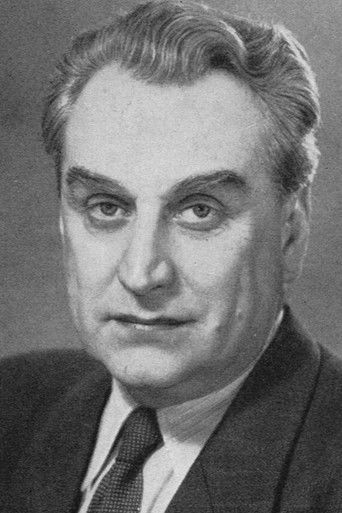
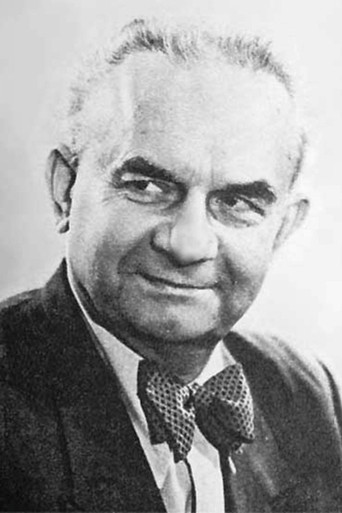
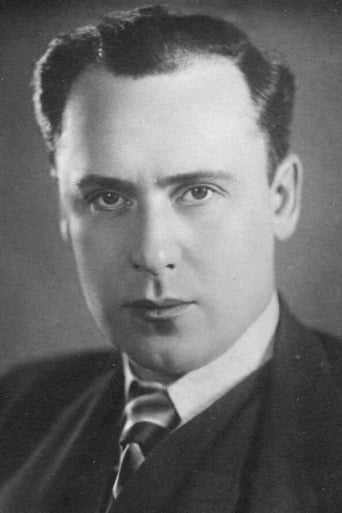
Directed by Grigori Aleksandrov +1
Октябрь
A gritty, critically acclaimed drama.
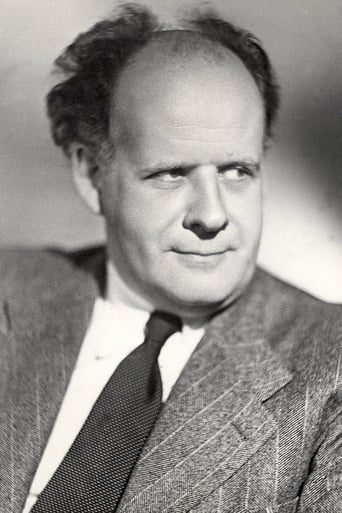
Sergei M. Eisenstein's docu-drama about the 1917 October Revolution in Russia. Made ten years after the events and edited in Eisenstein's 'Soviet Montage' style, it re-enacts in celebratory terms several key scenes from the revolution.
October (Ten Days that Shook the World) is showing in 1 cinema in New York City - next screening Sunday 18 October at 15:30 at Anthology Film Archives.
Next screenings: Sunday 18 October.
Full schedule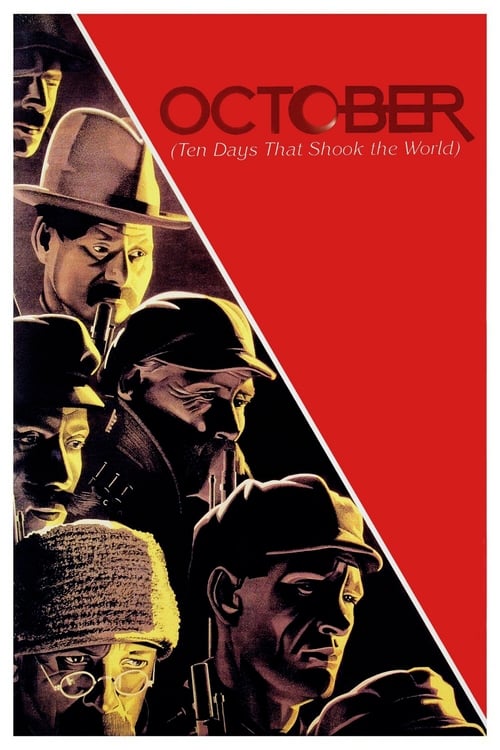
October (Ten Days that Shook the World) showtimes, refreshed every morning
Pick your cinema, get a nudge before it leaves screens.
Honestly, no wonder Stalin was like "wut." Like tfw you're supposed to be making a film about 1917 but the form is from like 2057Like what did Stalin think when Sergei cuts to the peacock

One hundred years ago, the Soviets marched into the Winter Palace and tore down the Provisional Government, and the proletariat, for the first time in history, completely controlled their own fate. Though others had tried before, each time, they were torn down, betrayed, or defeated; here, in this moment, a beacon of hope was lit for the whole world, one that would last 75 years, weathering imperialist corruption, revisionist decay, and fascist invasion. The Soviets inspired people around the world to follow their lead, and many of those who did remain bastions of proletarian power even today. One hundred years ago, we saw the truth of Lenin's words written in the blood and fire of revolution, and still today, the science of Marxism-Leninism guides those of us resisting the oppressive cruelty of the bourgeoisie. One hundred years ago, we tasted victory. One day, one day soon, we will do so again.The filmmakers tell this story in darkness. Most of this tale is one that takes place in the night, and those moments that happen under the harsh light of day are moments of foul brutality (the raising of the bridges) and bourgeois smugness. In the darkness, the Winter Palace falls, camaraderie is born, and the voice of the people is heard. What struck this time especially is the manner in which the film turns its eye toward the Mensheviks and the bourgeoisie with contempt, with mockery. The humor reminded me of Lenin's writing, which is sharp and acerbic; it showed appropriate scorn for the enemies of the revolution. It shows, too, that stories such as these do not require depth of individual characters to succeed. This moment in history is a collective one, one the entire proletariat (the world over) could and should celebrate together; the film does not tell a story of just one person, but of one people--the people of the revolution--and their journey from oppressed to liberated. This film wields symbols (some of them perhaps a little lost in translation) in place of vulgar individualism; even the villains are largely shown to be groups (a few names are mentioned, but never lingered on). One hundred years ago, we triumphed. Decades later, after intentional intervention by capitalists, against the will of the people, the Soviet Union was dissolved, and widespread catastrophe hit the people in the former Soviet Republics (and there were many, more than just Russia). Despite their resistance, the people were again shoved under the oppressive weight of bourgeois dominance, and the beacon of hope was lost... for now. The story of the Soviet Union is not proof of the flaws of communism but of exactly what Lenin, Marx, Engels, and other communists told us: to survive in a world of capitalists, the revolution must remain strong in the hearts of the people. To survive in a world of capitalists, the capitalists must be resisted and the people who resist capitalism--especially imperialism--must be supported. Until the imperialist core is defeated, communism will always be vulnerable. That's why those of us here in the United States, Canada, the United Kingdom, France, Germany, and the other imperialist countries must strive constantly to fight.One hundred years ago, we took back what was ours. We can do it again.
That feel when even Stalin thought you went too farIn all seriousness however, even regardless of politics this remains the benchmark of what can be done with montage in cinema, moreso than Frampton, even.October was probably too ahead of its time in 1928, and possibly remains so 91 years later - since today we literally see the world through a media saturation that never really got past Potemkin at best. And while I still am unable to parse the metallic peacock even after yearly winter viewings, one of the remarkable things about this movie is being able to break out of narrative form while retaining a linear structure. This is interesting in that it's also (even though he lived about 20 more years) a perfect example of the most accelerating of Eisenstein's theories in literal action: even his critique of Griffith, who was only able to show history as a repetitive cycle. The point of October is to illustrate that the October revolution itself destroyed the cycle, showed that there can be a new way of living, that the idea of the cycle itself is false and that freedom is achievable. That there is no such thing as determinism. History is not a narrative with a beginning, middle and end - it can even be completely reoriented. As an aside my friend Isiah had a musing to me that I found worth sharing: October very well may remain a challenging, intellectually rigorous work even today, but there is something quite touching, beautiful even, in Eisenstein's faith in the audience. To make a film on this scale that is this "experimental" (for lack of a better word) is maybe even more daunting today because we have examples with initial reactions available, but even though Eisenstein may have overestimated himself in this regard, it's a remarkably generous gesture to say "No, I believe the audience is smart enough to understand what I'm doing here."
It re-enacts the key events of the 1917 October Revolution in Russia, focusing on the downfall of the provisional government and the rise of the Bolsheviks.
It was directed by Sergei Eisenstein and Grigori Aleksandrov in 1928 as a celebration of the revolution's tenth anniversary.
Yes, it is a silent historical docudrama utilizing advanced editing techniques known as Soviet montage.