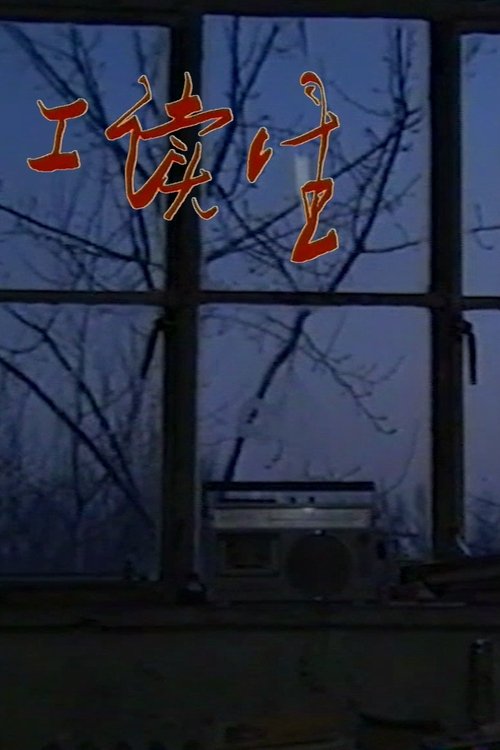



The only bond in this world that cannot be severedis the enduring one between mother and daughter.Finished drafting English subs for part 2 (of the four-part version; there's also a 90-minute film cut, not located).Stray notes on Part 2:Overall, Part 2 is weaker than the first installment—and it exposes several structural tensions in the film’s overall approach that I worry may be difficult to resolve in Parts 3 and 4. But with the sudden passing of this work’s director earlier this week (something that still weighs heavily on me), I’ll forego a rating for now and instead focus on what remains genuinely valuable here, perhaps even more so in this section.The above quote signifies a narrowed focus in Part 2: girls in reform school. Mostly it revolves around two students—given the pseudonyms Jiang Jiang and Zhu Di—who serve as case studies. Both were born to parents who were “sent-down youth,” and their stories illuminate, with painful clarity, the long-term human cost of Mao-era social engineering.In Zhu Di’s case, when her parents were finally allowed to return to Beijing from the countryside in 1980, they had already passed the age threshold for hiring in state work units/danwei. The family then slipped into poverty and a rift opened between mother and daughter; to make ends meet, the mom began selling vegetables on the street. Zhu Di felt humiliated when classmates saw her and pressured her mother to quit, plunging the household into even deeper crisis.Jiang Jiang’s story reveals an even more tangled confrontation with the absurdities of the state bureaucracy. Her parents, also sent-down youth in Ningxia, devised a scheme to return to Beijing: a “fake divorce” so they could apply separately for urban transfers while dividing their children between them. The father took their son first (“I was afraid he would fall behind,” the mother explains), with plans for mother and daughter to follow. But the emotional strain of this arrangement proved too great—the fake divorce became real, the family split permanently, and Jiang Jiang’s resentment toward her mother festered, spiraling into truancy.The centerpiece of Part 2, as with Part 1, is an extended classroom scene framed as an exchange between two sides. But instead of an ethical debate, we witness a distinctly Chinese social performance: mothers summoned to the school to listen to their daughters—placed here involuntarily—read letters aloud to an audience of their peers, faculty, and other parents. These letters nearly all follow the same emotional arc: beginning with anger and accusation, then pivoting abruptly into repentance, ending with exaggerated self-blame. Tears stream down the girls’ faces as they read; the mothers sob softly in the background. On the blackboard: “In This World, Only Mother Is Truly Good.”In Part 1, I felt that a similar tearful moment lost some of its emotional power because it happened mostly off screen. Here, everything is on full display, and I'm left with a different set of reservations. The filmmakers just seem unwilling—or unable—to grapple with the performative dynamics unfolding in front of them. The girls’ emotional appeals to be “loved” again—shouldn’t these be viewed, at least partly, through their desire to escape the social precarity of their current situation? And the mothers’ self-blame (“this child is both mine and the State’s…as a mother, I have not fulfilled my responsibility”)—aren’t these also performances of face-saving in a culture deeply invested in reputational restoration?And while I've spent enough time in China to know that these 'performances' happen no matter how big or small the audience, shouldn't there be some consideration of the film crew's magnification?If this documentary's creators truly intended us to ask such questions, the narration would not gravely intone afterward: “By intuition, I believe their passion was genuine.” A more sophisticated engagement could acknowledge the raw pain in these scenes while also interrogating their sociopolitical context. Too often up to this point, Reform School Students has presented an exceptionally rich text, but has signaled a lack in the intellectual curiosity required to fully extrapolate it.Very often, its emotional sensitivity has compensated for this lack—but in Part 2, there is a moment that strains that defense. In the final segment, the filmmakers visit Jiang Jiang’s mother (who had not come to the earlier letter-reading event). An interviewer asks her to recount the story behind the “fake divorce” and its fallout. She agrees politely. When she mentions that Jiang Jiang hasn’t seen her father in years, but knows where he is, the interviewer presses: how would she feel if they went to see him? Her discomfort is immediate. The interviewer presses again: “We’d like to show him the footage we shot today.” Her reaction is predictably negative. The naïveté of this goading is just startling—and it undermines the film’s otherwise more pragmatic handling of its ethical dilemmas.When I spoke with Wang Zijun at length last summer about the value he places on Reform School Students—its origins, the process of making it—he suggested that the approach he took at the time may not have been the right one. He even mused about revisiting the students, saying that as an older man he understood them better. The more I see of this documentary work, the more I think I understand what he meant. And yet, there is a fascination in all of this: watching an ambitious documentary team push into new territory in messy, searching ways, standing at the vanguard of Chinese non-fiction filmmaking well into the reform era, navigating a rapidly shifting society and trying to manifest the cinematic grammar and emotional vocabulary to responsibly represent a left-behind proletariat. The film bears those fractures.