


japanese schoolgirl SHOCKS horse with perfect neigh
We use cookies to personalize your experience and analyze traffic. You can opt out at any time.

Directed by Chie Hayakawa
ルノワール
An atmospheric, slow-burn drama.
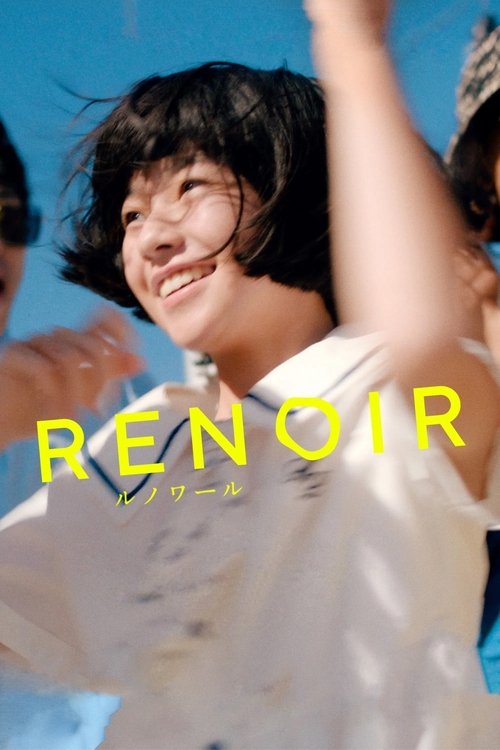
In 1987 Tokyo, a quirky and sensitive 11-year-old girl copes with a terminally ill father and stressed-out working mother while encountering various adults dealing with their own struggles.
Renoir isn't screening in cinemas right now.
Follow the film in the app to get notified when showtimes are added.
Renoir showtimes, refreshed every morning
Pick your cinema, get a nudge before it leaves screens.


japanese schoolgirl SHOCKS horse with perfect neigh

Many films show grief in different ways. Some rely on sudden plot turns, others repeat the same steps of loss and later recovery. Most of these stories, however, are told through the eyes of adults who can name their pain and rationalize it. But this film turns the lens elsewhere, exploring a rarely depicted landscape, the interior world of a grieving child. Set in late 1980s Tokyo, it follows Fuki, an 11 yo girl quietly navigating her father’s slow decline.On the surface, this film is a tender domestic story; beneath it, it becomes an inquiry into how children experience death when language fails them. it resists the conventions of tragedy and catharsis, favoring silence, atmosphere, and imagination over explanation. The film’s most striking gestures...Fuki’s fascination with telepathy, her dreamlike perception of time, the hypnotic rhythm of its images, become the grammar of a mind trying to hold grief without breakingI found this film remarkable in its restraint. Hayakawa avoids using loud emotions or heavy scenes to express grief. Instead, the story is presented in fragments. These fragments are not connected in a linear way, but instead gather like strokes in a painting, creating an emotional portrait instead of a narrative. This reflects real grief in children: often grief is not linear, it’s not wholly “understood” cognitively until later. Feelings may simmer, be ambiguous. Fuki does not fully understand what is happening, yet her body and imagination register it deeply. her silence is not emptiness but an active form of feeling.Telepathy becomes her way of reaching through that silence. Drawing on her own childhood interest in psychic connections, the director Hayakawa passes on that same instinct to Fuki: the belief that thoughts can travel, that love might still be heard even when words fall short. In this sense, telepathy is not treated as supernatural but symbolic- a child’s way of trying to stay connected to her fading father. It captures the essence of what grief feels like at that age: the wish to send a message to someone already halfway gone, to bridge the unbridgeable. Through this fantasy, Fuki preserves an invisible link.The film makes me feel what Fuki feels rather than just showing a story. Time seems to stretch and blur, drifting between the present and memory. The slow, quiet shots make me feel completely drawn in, like im lost in the moment. Viewers are not asked to follow a plot but to surrender to rhythm..to breathe with Fuki’s world, to feel her confusion, her wish to pause the inevitable. The cinematography, soft and fluid, evokes a state between waking and dreaming. In this way, the film itself becomes a hypnotic space: a film that mirrors how grief alters perception, slowing reality until it feels like memory before it is even gone.The film’s dreamy, hypnotic feeling helps both Fuki and viewers, handle emotions. Kids often deal with grief in indirect ways through imagination, play, or drawings. When they can’t fully understand or talk about their feelings, fantasy becomes a safe way to cope. This film shows this inner world. Fuki’s daydreams and telepathy aren’t escapes; they’re gentle ways to survive. They allow her to hold her feelings without being consumed by them. The film, in turn, holds space for tension, allowing sadness to exist without forcing resolution.Even with its poetic elements, Hayakawa never lets the metaphors drift too far from reality. She blends the poetic with everyday life, Fuki’s curiosity about adolescence, her small daily routines, and the quiet presence of adults who care but remain somewhat distant. This keeps the story grounded. Telepathy, for all its mystery, is really about a simple truth: the need to be heard and to stay connected when everything else is falling apart. The slow, calm pace doesn’t romanticize grief; it respects its rhythm, acknowledging that sadness in childhood is rarely a clean wound. In the end, the film does not provide any clear closure, which I feel might put some viewers off. there's no grand revelation, no moment of acceptance neatly framed for the viewer. Instead it ends in quiet persistence, aa reminder that grief, especially for a child,is not something to finish but something to live alongside. The threads of telepathy and imagination remain open. What was once a fantasy of contact becomes a form of remembering, a way to keep love alive even after loss.In this film, Hayakawa captures something many films miss: a child’s grief is not smaller than an adult’s, just more mysterious. It moves through imagination, symbols, and the quiet spaces between sound and signal. The film’s slow pace, its hypnotic beauty, and its subtle psychic metaphors all come together to reveal a single truth... that grief, like telepathy, is an act of faith. It’s a reaching toward someone who may no longer respond, yet still feels near. In that invisible space, between silence and connection, the child learns how to live.

death is so embedded into everyday life that it’s almost unremarkable. but from a child’s perspective, grief is a solitary experience so confusing not even magic can explain it. weirdly light despite how brutal it is but lots to love, yui suzuki is majorfull review: lwlies.com/festivals/renoir-first-look-review/
The film follows an eleven-year-old girl in 1987 Tokyo as she attempts to process the reality of her father's terminal illness while navigating the complexities of family life.
Chie Hayakawa directed Renoir in 2025, following her acclaimed feature debut, Plan 75.
Yes, Renoir is a Japanese-language film that is subtitled in non-Japanese speaking markets.