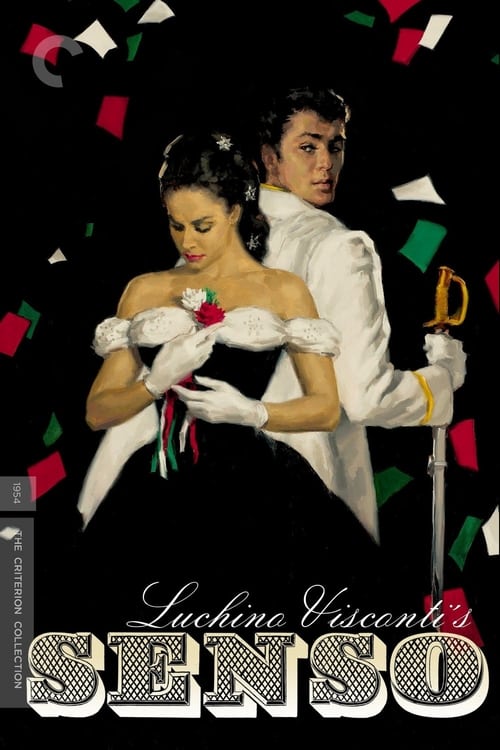






Luchino Visconti’s “Senso” makes high art out of camp in the same way that da Vinci made painted masterpieces out of mere oils. With “Bellissima” acting as Visconti’s rejection of neorealism’s shabby facade, the director turned to create a film that would make all other cinema look as cheap as a balsa wood backdrop. “Senso” - which depicts the illicit love affair between an Italian countess and an Austrian military officer - begins in opulence. La Fenice opera house in Venice appears in such fully realized vivacity, that stills from “Senso” were eventually used to reconstruct the building after it burned down in an arson attack. A key piece of coding to understand “Senso” arrives in this prologue. As Alida Valli’s Contessa puts it; Austrians go to the opera for the music. Italians… have an entirely different agenda. The bisexual Visconti draped layers of expensive luxury all over “Senso’s” to hide the extent to which the narrative is gay allegory. Much as amorous pairs in the tragedies of Puccini and Verdi disguise deep travesties in the subtexts of their duets - so Visconti plays his straight audience one aria… while layering an entirely different one underneath. So also is opera an apt medium to appropriate into “Senso’s” plot; long frequented by gay patrons who transplanted their own unrequited loves onto the grim fates of its sopranos and baritones. When the contessa - hidden in her Italian villa - hysterically bursts through a series of doors as a climactic dissonance of the string section accompanies each opening… it is Visconti telling his audience - this operatic theatricality is how love stories are told. And because of that - it is real. At least, to those who can understand its harmonies.