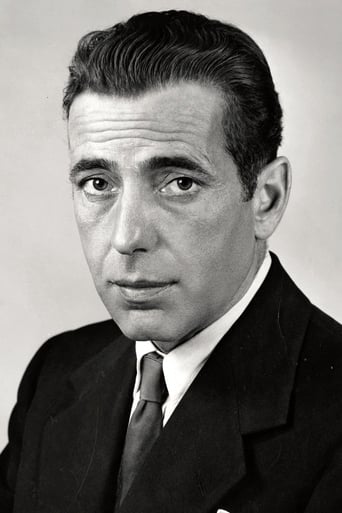
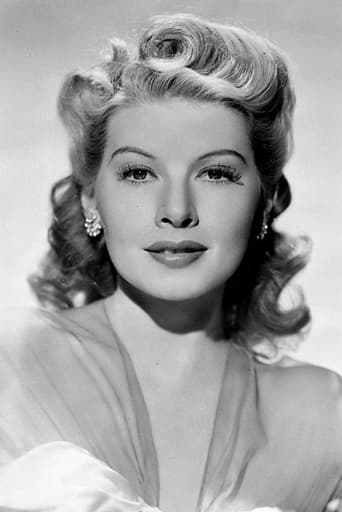
"Criminals ain't what they use to be."After a decade of playing hardly nothing but gangsters Bogart now finally famous bid a farewell to the mob with this performance (although he'd still play the odd criminal he did not play anyone in the mob or organised crime again until his penultimate film The Desperate hours in 1955 a good 13 years later. Bogey had certainly earnt his long overdue sabbatical from playing mob roles.) This role was obviously influenced by one of Bogarts big break out performaces the year before in High Sierra. The film follows quite a few similarities but ultimately it's an inferior watch to Raoul Walshes 1941 film, However although an inferior film it's still very enjoyable as Bogart was acting with the charisma and zest of a guy who knew he was finally the big shot. Unbelievably Bogart got the role when once again George Raft turned the part down. Bogart certainly owed his new found fame on Rafts lousy career choices, I'm amazed Raft ever shot anything with the amount of films he turned down."You can't be a crook anymore because you used up your chances. And you can't be honest because nobody'll let ya. So what? So you keep moving."The film sees Bogarts former Mob Boss but now three time loser Duke Berne finally back out on the streets again, wanting to go straight but his old connections want othetwise. He's talked into risking life imprisonment for an armored car robbery. The man behind the robbery lawyer Martin T Fleming (Stanley Ridges) is now married to Bernes old pre-prison flame Lorna (the very beautiful Irene Manning) and Lorna talks Berne out of doing the robbery but Berne is still arrested for it and although innocent Fleming angry about Lornas affections for Berne throws him under the bus whilst defending him and gets him sent down for life. Inside Berne plots an elaborate prison break centred around a prison talent show and manages to escape and he and Lorna go on the run but Bernes accomplice kills a guard in the escape and when it seems the innocent inmate George Anderson (who flemming had also betrayed getting George a year sentence for perjury) is going to be wrongly charged as an accomplice to the escape and for the murder Berne has to decide if his own happiness is more important than his code of honour and letting an innocent boy take the rap for something he didn't do. An enjoyable watch. Some nice Bogart rough and toughness but then also romance and a strong moral code which would be the signature to most of Bogarts characters moving forward. The direction is a little lightweight compared to Bogarts other directors of the time like Walsh, Michael Curtiz or John Houston but this is an easy enjoyable little watch."You should treat him with some kind of respect. After all, he was a big shot once.."
The films Humphrey Bogart made between The Maltese Falcon and Casablanca are a mixed bag. Following the successes of High Sierra and Falcon, Warner Bros knew they had a rising star on their hands, but they weren’t sure what to do with him. The Big Shot is a case in point. It has promising noir elements: Bogart plays a three-time loser who can’t get a job due to his criminal past. He becomes the prime suspect in a case of armed robbery, which he knew about but didn’t participate in. When shyster lawyer Stanley Ridges learns Bogart was with Ridges’ wife (Irene Manning) at the time of the holdup, he arranges for Bogart to take the fall anyway. Bogart is sentenced to life in prison, but he breaks out. The noir elements fade away in the middle third, as the behind-prison-bars conventions take over. Then, the final third rehashes High Sierra.Part of the problem, of course, is that noir itself was only beginning to coalesce as a coherent movement. Cinematographer Sid Hickox throws in some wonderful visual flourishes, such as a shadowy shot of Manning keeping Bogart from taking part in the robbery at gunpoint. But Manning is no femme fatale, and Bogart’s story is essentially a morality tale. As in 1940’s Stranger On The Third Floor, the most stylized sequence is an expressionistic montage that emphasizes Bogart’s psychological state when it’s clear he's going to prison for a crime he didn’t commit. Film noir really wouldn’t take the shape we all know and love for another two years. Filmmakers were still stumbling toward it in 1942.But the more fundamental problem is that neither Bogart nor the WB had quite settled on his on-screen persona yet. He’s world-weary, and he displays many of the gestures we recognize from the great films that were just on the horizon. But he’s given too much dialogue and frankly overacts at times. Near the end, there’s a scene where he and Manning are hiding out and Bogart reminisces about his character’s mother as he sits in a rocking chair and mixes pancake batter. It’s the sort of scene the WB’s screenwriters were used to writing for George Raft in order to make him more sympathetic. Bogart, however, benefited from minimalism, allowing viewers to read his regret, apprehension, and other emotions on his face and in his eyes. This role just doesn’t play to those strengths, and the choppiness of the story doesn’t help.Ultimately, it’s a footnote to the career of one of the great screen icons.
A notorious gangster, who already has three convictions on his record, pulls out of an armed robbery he planned fearing a fourth one that will send him to prison for life. Due to a series of unfortunate circumstances he is framed and found guilty again. But this time he starts plotting his escape.Humphrey Bogart's follow up to his star-making turn in "The Maltese Falcon" is a mediocre, cookie cutter, crime drama that was made with care and professionalism, but undermined by the over-reliance of its script on coincidence and contrivance, and some incredibly cheesy dramatic moments. There is some social commentary at the beginning about the difficulties former felons face when they try to reintegrate into society. But the film quickly abandons this route and becomes just another typical prison/gangster flick.Bogie is the biggest (and probably only) selling point of this obscure feature, and he delivers another solid performance. I was struck when I first saw Irene Manning. What a stunningly beautiful woman. Not a great actress, but competent enough. And there are also a handful of character actors who buoy the movie with their presence (Chick Chandler, Howard Da Silva, Stanley Ridges).It's no coincidence that despite being headlined by the biggest Hollywood star ever at the height of his fame, "The Big Shot" is totally unknown. Besides some historical interest, there is little here that would compel the average moviegoer to track it down and watch it.