
The Red Army Choir
A nostalgic, polished choral act.
Tracks10
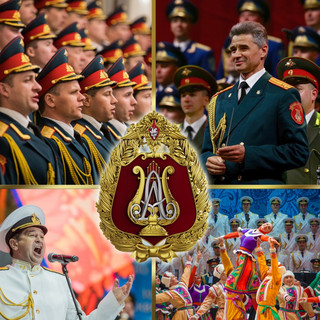
The Alexandrov Ensemble commonly known as the Red Army Choir. Founded during the Soviet era, the ensemble consists of a male choir, an orchestra, and a dance ensemble. The Ensemble has entertained audiences both in Russia and throughout the world, performing a range of music including folk tunes, hymns, operatic arias and popular music. It is named for its first director, Alexander Vasilyevich Alexandrov (1883–1946). Its formal name since 1998 has been A. V. Alexandrov Academic Song and Dance Ensemble of the Russian Army. Officially performed for the first time on 12 October 1928 under the direction of their conductor, Alexandr Alexandrov, a young music professor at the Moscow Conservatory. In 1935, the Ensemble was bestowed the Order of the Red Banner and was renamed the Red-bannered Red Army Song and Dance Ensemble of the USSR. During World War II, the Ensemble gave over 1500 performances at both Soviet fronts, entertaining troops about to go into battle, at gun emplacements, airfields, and in hospitals. In 2009, The Alexandrov Red Army Choir took part in the Eurovision Song Contest when the contest was hosted in Moscow as part of a collaboration by 2003 Representatives t.A.T.u. performed "Not Gonna Get Us" as the final portion of the interval act. Today, the Ensemble is led by Honoured Artist of Russia Gennady Sachenuk, who has been leading it since 2016.
No dates announced yet
Get notified the moment The Red Army Choir announces a new show.
New The Red Army Choir dates land in the app first
Follow once and we’ll tell you when a new date is announced.


Similar Artists
Similar Artists


Music profile
energy
60
polish
80
commerciality
40
fashion
60
locality
60
nostalgia
80
queerness
0
age
60
Common questions
What kind of music does The Red Army Choir play?+
The Red Army Choir plays choral, classical, opera - rooted in tradition rather than chasing trends. The Alexandrov Ensemble commonly known as the Red Army Choir.
What are The Red Army Choir live shows like?+
The Red Army Choir's live sets are tight and well-rehearsed - mid-paced sets where the arrangements come through clearly.
Who are the members of The Red Army Choir?+
The Red Army Choir is a 5-piece group: Gennadiy Sachenyuk, Alexander Vasilyevich Alexandrov, Boris Alexandrov, Anatol Alexandrov, Vladimir Aleksandrov.
How can I find out when The Red Army Choir is playing?+
Follow The Red Army Choir on Mood to get notified when new shows are added. Mood tracks their upcoming events across all supported cities.