This film is a real mixed bag. There's plenty of ideas, many of them good, but generally it isn't all that well executed. We focus on a bunch of war veterans turned college students who decide to rip off a Reno casino; partly through boredom and partly because they were told it couldn't be done. It's a mix of comedy, drama and noir elements. It gets off to a good start as we are introduced to the main characters; a jovial bunch who exchange snappy dialogue. Then we explore said characters a little bit, before the inevitable heist which actually isn't all that intricate and doesn't last very long. The film seems much more keen to focus on the characters rather than the crime element - but honestly I think it would have been a lot more fun with focus on the latter. It's never boring, however, and the character focus does pay off in the final third as the last fifteen minutes or so are quite tense. There's some deeper ideas - such as the character who is suffering from PTSD - but like the rest of the film, it's not delved into in any deep kind of way. 5 Against the House is entertaining enough, but I was left a bit unsatisfied at the end.
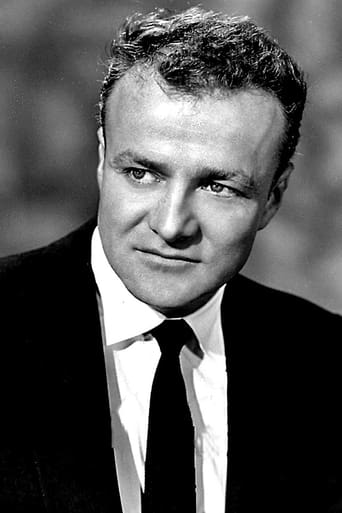
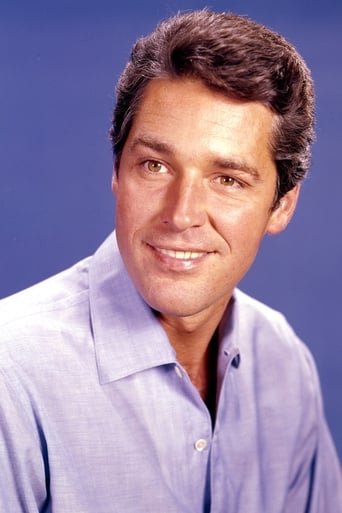
Though 5 Against the House is ostensibly about four college buddies (all Korean War vets on the GI Bill, which usefully explains the ages of the actors), it's really about the relationship between just two of them: Brick (Brian Keith, who is fantastic — unpredictable, pained, and intimidatingly sexy when he needs to be) and Al (Guy Madison). The other two (Roy, played by the reliably irritating Alvy Moore, and Ronnie, played by Kerwin Mathews) are there to say incredibly unnatural things, talk to women in aggressively artificial situations, and haze a random character who has no reason to be in the movie at all. (I assume the hazing is supposed to make them look "cool" and "hip," but really they're just uninteresting assholes.) I finally decided that Roy and Ronnie must exist basically to distract us from the often very gay things going on between Brick and Al, war buddies and roommates whose relationship is the very definition of bromantic (at least). Brick is dealing with pretty intense PTSD which only Al knows about and Al, who Brick saved at least once in Korea, is the only one who can calm him down when he's triggered. When we see Al taking care of his friend — reassuring him with touches, talking him down, and carefully putting him to bed — the ease of the movements and the sometimes resigned tone of Al's words makes it clear this is something they've been through many times together.Later, when Al and his girlfriend Kay (Kim Novak), are ~celebrating~ their engagement, Brick barges into the room as they're making out, examines them, says "Well, I know I should get discretely out of here, but I'm gonna stay, and watch," and then pulls Kay away and kisses her. It's chaotic and strikingly erotic, particularly in comparison to most of the scenes between Kay and Al, which fall apart when they stop flirting and start to touch instead. (I don't really know why that is — maybe Novak's inexperience? Pretty as they both are, watch the pair of them try to be convincingly intimate is so uncomfortable.)The movie would be a dozen times better if it was just was just Brick, Al, and Kay negotiating things among them, but because the book is about college boyz robbing a casino (in the book, Al is 19, and the rest are young, as well — the shared past between Brick and Al is entirely missing, as is the war), the other two have to be there, and things have to go wrong with the heist.* To be fair, the heist scene is simple but good — it's shot from above, surveillance style, as is much of the film's casino footage — and the movie looks fantastic throughout, thanks to the cinematographer Lester White's excellent work in crisp black and white. More than anything else, it's the writing that lets 5 Against the House down — that, and the refusal to cut characters from a novel that was already being significantly changed as it was adapted.Finally, watching this made me think about enrico's very relatable review of The Fifth Cord a lot, except with Guy Madison in place of Franco Nero. Have mercy.*Something that is never explained is why they are all so sure that Ronnie's heist will work, given that the only other plan of his that we know about is the "foolproof" one to win at roulette, which fails entirely.
"I've been gettin' into a lot of strange closets lately. Dangerous moths."For this week's edition of Noir Alley on TCM, Eddie Muller chose 5 Against the House, a fairly silly but generally solid way to pass the time courtesy of director Phil Karlson. Unlike many (or most?) offerings in the genre, in which there is an abundance of convoluted plotting, this heist film is the polar opposite in substance, relying instead on the kind of PTSD psychobabble that was all too common in crime dramas about damaged veterans (from the Korean War, in this case). Still, for fans of this era, there are some definite reasons to consider the possible pluses.As Muller points out in his intro, the screenplay is based on a story by Jack Finney of The Body Snatchers and Time and Again fame. Four of the five main characters - Al Mercer (Guy Madison), Brick (Brian Keith), Roy (Alvy Moore) and Ronnie (Kerwin Mathews; the part was originally meant for Roddy McDowall before former English teacher Mathews got his big break in this first ever credited role) - are college students who enrolled in their institution thanks to the GI Bill, and the casino that eventually becomes the site of their planned theft is Harold's Club, which, as per Muller's outro, was a real location eventually sold to Howard Hughes in 1970, closed in 1994 and demolished five years later. Unsurprisingly, the crime doesn't work as expected, a reminder that any scheme described as "a sure thing" and "the greatest hoax of the century - it’s nefarious as Fu Manchu, and as practical as a zipper!" couldn't possibly be so easy.(Side note: why have I never noticed before how much Guy Madison resembles Luke Perry mixed with a little William Holden? Meanwhile, Alvy Moore has a kind of Jack Webb thing going on, but in the nerdier Sunset Blvd. way.)Again, the psychology doesn't quite add up, the troubled character here (whose head injuries/experiences overseas have labeled him "one of the fruit salad boys" by an insensitive fellow student) seems like a retread of William Bendix's vet from The Blue Dahlia, the fake facial hair that the robbers wear in lieu of masks is kind of hilarious and the ending wraps up way too neatly. For a more satisfying casino heist flick, I would much sooner praise John Frankenheimer's Reindeer Games (2000), while Richard Thorpe's The Honeymoon Machine (1961) is an amusing comedy about a bunch of Navy buddies gaming the system by figuring out an algorithm for cheating a casino's roulette wheel out of a fortune.Still, Lester White's cinematography gives House the beautiful glow that so many Columbia noir gems also had, I enjoyed Eddie Muller's intro/outro trivia (I also learned that the ending in the elevated parking garage wasn't in the screenplay; Karlson was inspired on the fly) and I had a good time writing down several of the weirdest lines from co-writers John Barnwell, William Bowers and Stirling Silliphant, like when a random guy in the dormitory refers to Al's girlfriend, nightclub singer Kay Greylek (Kim Novak), as "a cream cheese lookin' for ya," a supposedly romantic interlude between Al and Kay has him declaring to her that "there are moments I wouldn’t trade for mountains of uranium" (uh, sure) and Brick suggests: "Hey, wouldn’t it be great on the honeymoon with just the five of us?" A quintuple, how modern!I must also mention: the Noir Alley pick for next weekend is Raw Deal, which I highly recommend. John Alton's B&W cinematography is spectacular and the starring trio of Claire Trevor, Dennis O'Keefe and Marsha Hunt are worth staying up late for.