



"Tell me, do you believe in the survival of human personality after death?""I don't know, I'd never thought about it, do you?""I don't know, I've thought about it too much."
We use cookies to personalize your experience and analyze traffic. You can opt out at any time.

Directed by Emeric Pressburger +1
An acclaimed, spectacular romance.
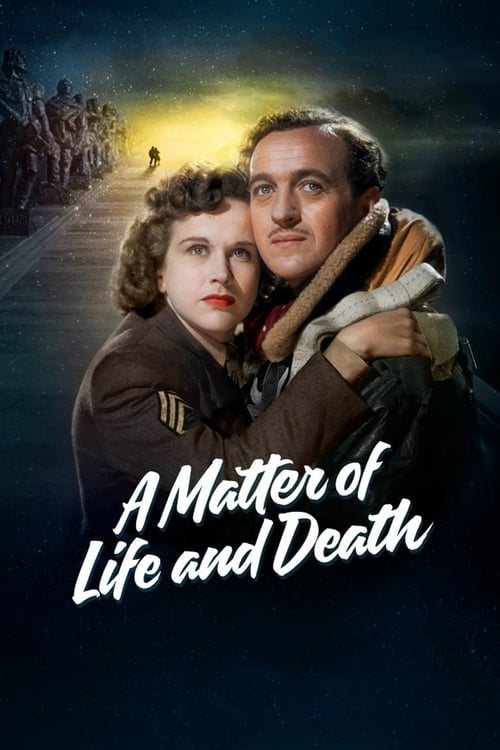
A British wartime aviator who cheats death must argue for his life before a celestial court, hoping to prolong his fledgling romance with an American girl.
A Matter of Life and Death isn't screening in cinemas right now.
Follow the film in the app to get notified when showtimes are added.
A Matter of Life and Death showtimes, refreshed every morning
Pick your cinema, get a nudge before it leaves screens.


"Tell me, do you believe in the survival of human personality after death?""I don't know, I'd never thought about it, do you?""I don't know, I've thought about it too much."

The decision to make all of the fantasy sequences black and white while the "real life" sequences are technicolor speaks so much to the unorthodox philosophy of this movie. The afterlife may not be such a bad place, but there's something more appealing, more romantic about the fleeting, the evanescent, the malleable. Eternity is static (everyone dead is wearing the uniform in which they died, clinging to the beliefs with which they died), while on earth there is love, sadness, hope, grief, learning, growing, drama, etc. The afterlife isn't necessarily heaven. Heaven is love, so choose life.There's no way to approach this movie that doesn't find it an unmitigated success. It's wonderfully romantic. It's hilarious and entertaining. It's a fantasy spectacle with jaw dropping analog effects. It's a post-war curative that inspires patriotism and a spirit of cooperation. This is one of the best movies.

One of the greatest moments in all of cinema is when Marius Goring looks at the camera and says “one is starved for technicolor up there.”
It follows a British wartime pilot who survives a plane crash against the odds and subsequently finds himself caught in a metaphysical legal battle to determine if he should live or die.
It was directed by the acclaimed filmmaking duo Michael Powell and Emeric Pressburger in 1946, collectively known as The Archers.
While it did not receive major Academy Awards, it is frequently cited by critics and filmmakers as one of the greatest and most visually innovative works in British cinema history.