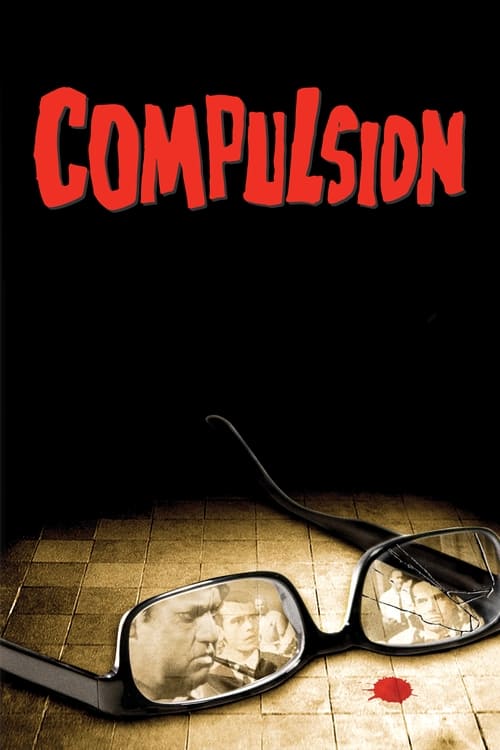






Adapted from the 1956 novel that tells the story of the trial of Leopold and Loeb, which is the same crime that would inspire Hitchcock’s Rope, so you can expect a film loaded with subtexts lol. But this specific film is less interested in the progression of the narrative and more in what happens silently beneath it: narcissistic psychopathy, intellectual arrogance, and repressed impulses often not even named. And so the story is built: two students, convinced of their intellectual exceptionalism, decide that common rules no longer apply to them. The crime is of a surreal arbitrariness; the killing is a result of neither necessity nor feeling, but simply the taking of the experience, like an experiment conducted by minds certain of their superiority. The planning is meticulous, but if I'm writing about it, not meticulous enough.The film keeps very close to the actual events of the crime while still allowing for some small but significant fictional interventions. Sid and his girlfriend Ruth, for example, are characters that become the film's instruments of focus. Through them, the story departs from mere reconstruction into psychological investigation, making it clear that this is more a sustained study of character. Guilt is never in question; the boys are indeed guilty, and the film treats this certainty as a point of departure, not as a conclusion.From there, the tension shifts to punishment, to consequence, to the discomfort of deciding how justice should manifest itself once doubt has already been eliminated. In parallel, I found myself really fascinated about the portrait that the film has of criminal investigation at the beginning of the twentieth century, long before DNA or modern forensic science. The evidence is “fragile,” such as a typewriter identified through a ransom note, a single pair of glasses traced among thousands back to its owner. The interrogations also follow a different logic. Before the formalization of procedural rights, the effective investigator does not rely on brute force but on patience, on keeping the suspect talking. With enough time, guilt reveals itself. And so the film’s most important question remains: when guilt is absolute, what kind of punishment are we willing to justify, and what does that decision say about us?