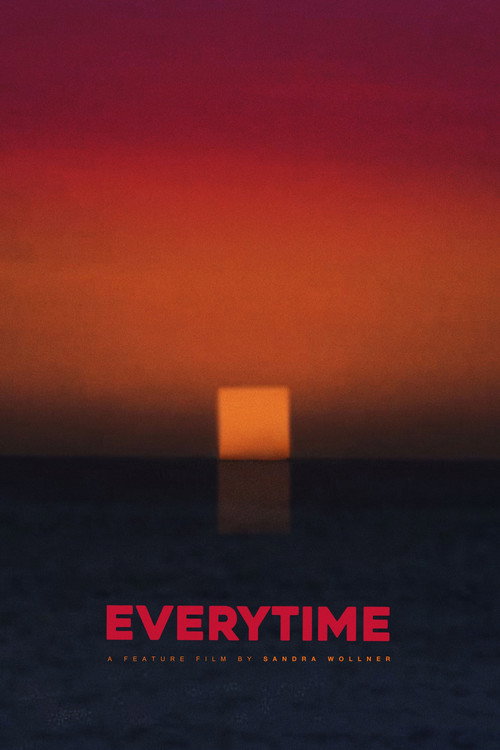
the most haunted, knowing, and mysterious new movie i've seen about grief since Aftersun. (same cinematographer too). i'll be thinking about this film — and certain shots in it — for years and years to come. nothing better than being reminded that the movies are still being invented.
I don’t believe in an afterlife, but that’s OK because the people I love most are never going to die. Not to me. At least, not in the way they used to before our species began to migrate online, to store our memories in the cloud, and to digitally encode the raw data of our existence onto everything we touch. My father was born in 1939, the same year that Iowa State College scientists John Vincent Atanasoff and Clifford Berry built the prototype for the first binary-based computer; in the months after he died 75 years later, I often felt the reflex to reach down and call him from the iPhone that fit inside my pocket. To ask if he’d seen the Rangers game, or to tell him that I’d gotten engaged. I knew that he was gone, of course, but the piece of consumer technology I’d used to connect with him when he was alive had created a separate neural pathway between my brain and his being — a crude one-way network that didn’t begin to break down until much later in my grieving process. A decade later, those pathways have grown exponentially more complicated and convincing. The emergence of AI has led to a variety of ghoulish attempts at deathlessness and resurrection (from bots that feed on your grandma’s Facebook data to the ChatGPT Theodore Roosevelt who Trump was “honored to be with today” at the former’s Presidential Library), but such products and publicity stunts miss the fact that everyone is already being (temporarily) immortalized on a server farm somewhere, the traces of our existence shed into the digital ether like a Pollock-like splotch of invisible ink.Charlie Kirk’s face is Twitter’s most ubiquitous meme. My long-deceased college friend you’ve never heard of sends me hacked emails full of links to “old pictures they found of us together.” The cancer-stricken hedgehog I fostered for a few months in 2016 still cycles onto my home screen at random sometimes, and he’s now been buried behind a house in suburban New Jersey for longer than he was ever alive. People have always looked for errant glimmers of the dead in the world around them, but now the past runs parallel to — imprints upon, and circles around — the present to a degree that can severely confuse the relationship between the two. Sandra Wollner doesn’t believe in an afterlife either, but she’s certainly attuned to the mysteries of this one. Picking up where the equally spectral likes of “Personal Shopper” and “Aftersun” left up, the Austrian writer/director’s mystical and magnificently beguiling “Everytime” takes a rather ambivalent stance towards what happens when people die these days, or at least — per its curious title — towards how we mourn them from inside the flat circle of a temporal overlap where yesterday and tomorrow are folded into the pockets of an ever-expanding now. There are no clear answers to be found in this astonishing third feature, which shares a number of thematic similarities with Wollner’s “The Trouble with Being Born,” but retains one crucial difference (that film, about a man who has an implied sexual relationship with a child-sized android coded with the memories of his missing 10-year-old daughter, unsurprisingly had trouble securing American distribution). Indeed, the grounded portraiture of the movie’s first 70 minutes eventually gives way to a final act so cosmic and surreal that it becomes all but impossible to pinpoint the precise location of Wollner’s characters in space-time; to say for certain whether “Everytime” has glitched into another dimension, or if it has invited another dimension to glitch into our own. Initially timeless in its nuanced and deeply recognizable depiction of loss, and then even more so as it gets devoured by the meta-modern flourishes that have fringed its story from the start, this is perhaps the most forward-thinking film I’ve ever seen about the changing face of grief. ~this review continues on IndieWire~