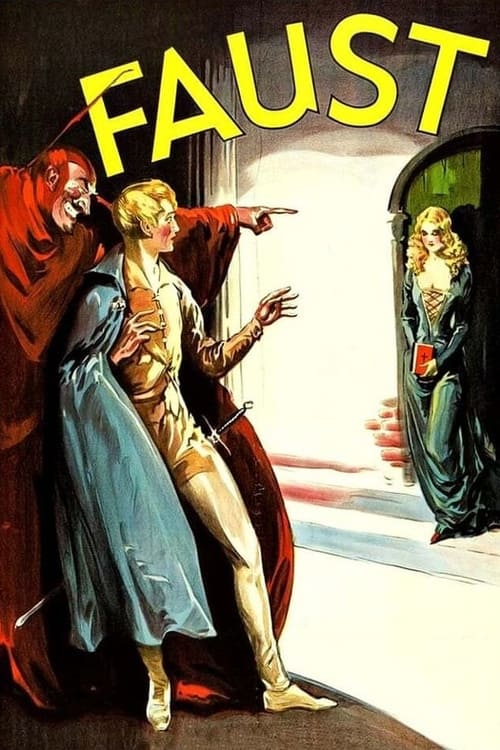


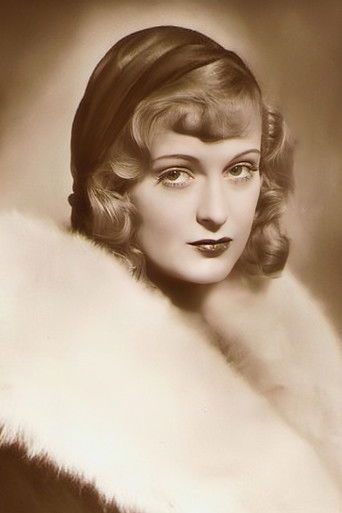

Murnau’s most baroque work - an instance of the director working both within maximalism and in examination of maximalism as well. It's opening and closing moments are Murnau at his most melodramatic - but everything in between is him at his most inquisitive. It's constantly stimulating to watch - shards of light blasting in from everywhere possible, constant smog, and some of the most haunting poses and faces in movies. This is what makes this film so interesting - rather than level the usage of these effects for simple sensory response, (ala, say, Walsh's Thief of Bagdad) Murnau appears to use these effects for the purpose of dialectic with the story - in turn becoming a critique of the trickery & falsity of design. This is fascinating in this regard - special effects were not commonplace in 1926, (and certainly not as much as they are now) and was reserved for very rare cases, for example the aforementioned Walsh film. So Murnau is inventing here without intention towards dialectic with the cinema. Rather, it is a more intense and exploratory work than perhaps Goethe even intended - the perfect adaptation, because it takes an acute understanding of the source material and chooses to build on it. As Michael Mann stated in his Sight and Sound text from 2002: "Invented what had never been done before and delivered magic in both its human pathos and visual effects." No doubt!The first instance of this is when Faust is preparing to burn his books, and suddenly a book opens by itself while the rest of the frame is engulfed in fire. Faust stares while surrounded by flames. The point is quite obvious - that hell and fantasy are indistinct from each other - "all the might and glory of the world," this book says. So Faust goes to a crossroad engulfed by fog and light from that notorious harbringer of doom in Murnau's cinema, and summons Mephisto. Faust tries to leave the frame, yet Mephisto appears in each successive one...Later when Faust is reverted back into a youth, Mephisto appears in slick leather, sophistacates his gestures from the grotesque ones before, and plies Faust with images of nude women - now linking the fantastical and this trickery with decadence. They attend the "wedding feast of the Duchess of Parma," - surrounded by groups of dancing women and blacks in gold chains while Faust seduces the Duchess with a present of two elephants decked again in gold. Again - more visual deceit - "his kingdom's treasures," says Mephisto, giving a diamond which turns into a kind of flash-bomb, stunning everyone in the room but Faust, the Duchess, and Mephisto himself. I'd say that there are four major masterworks by Murnau: this film, Nosferatu, Sunrise & Tabu. These four works can be grouped into pairs: Nosferatu and Sunrise - the tone poems which rely on sensual experience based on the inherent abstraction in the images. Faust and Tabu, on the other hand, are films of a sort-of examination, both relentlessly fascinated with forms and the codification of them. They are polar opposites in a way - Tabu's sparseness contrasted with Faust's maximalism - yet both ask the viewer to wonder: "why do we respond in a certain way when we see, for example, the shadow of a body, the shadow of a shape, the form of a rectangle." This actually describes Tabu more than Faust, but it also drives into one of the most stunning moments in this film - Faust's seduction of the Duchess. Upon the scene opening, Mephisto happens upon a candlelit chandlier, which he then lights and then has swing back and forth, while he paces away to allow for Faust and the Duchesses entrance. The movement of the chandelier creates a beautiful lighting effect as they enter the room, her in his arms. If only it had not been swung by Satan itself! And thus this effect takes on a critical tone, not a complementary one - critiquing the tendency for beautification in all art, and linking it with the already linked themes of decadence, fantasy, and fraudulence. When Mehpisto tell Faust at the end of this scene that his time is up, Faust extends his hand without hesitation to shake it, saying "I am enslaved for eternity!" When next we see Faust, he is surrounded by mountains, craters and smoke - no doubt from Mephisto's hell. "Do you want the Emperor's crown?" the latter exclaims! But instead we enter a place of flowerbeds and joy - Faust seeks love but because of his actions he cannot help but corrupt it. So at once an image of Mephisto wandering around this peaceful place is amusing, at the same time it is tragic. Camilla Horn's Gretchen channels Lillian Gish (who indeed Murnau tried to get for the role originally) and she is even framed the way Griffith would Gish in Birth of a Nation & Way Down East, with tree-branches and flowers obscuring the foreground in the frame. To my mind, this is the only time Murnau calls to mind the influence of another filmmaker, (though one could make an argument for Sjostrom's Phantom Carriage on Nosferatu, and Murnau's treatment of Polynesians greatly resembles Vidor's treatment of African-Americans in Hallelujah) Gretchen becomes the protagonist now, suffers more than any heroine of Griffith and Dreyer, and is left to die in the snow. The movie reverts back to pure melodrama, but now the superimposition's, having first being used for total abstraction and secondly for illustration of the fantastical, now revert to complete emotional representation. Though the stakes continue to shift ever so slightly - Gretchen's plight becomes compared and contrasted with that of the Passion Play - children sing on Christmas "And a little child has been born in the depth of winter.." while Gretchen wanders through the snow with her baby, desperately searching for someone to help but with no avail. We start to get tableau's that would not be out of place in Dovzhenko. In a way the ending is a kind of cop-out - maybe it's beautiful that Faust and Gretchen kiss while being burnt at the stake, and that an angel says the greatest word is love. For me that's quite tragic. And it's not the image of this final kiss that sticks with me the most. It's the image of Gretchen asleep like a statue of the Madonna in the snow, while her baby has frozen to death. Such is the nature of vanity, decadence, greed and beautification. *Addendum written in 2026, 11 years after I wrote this journal entry: I don't agree with some of the stuff I wrote then, particularly the end - but I still think this is an incredible masterpiece. I no longer think the ending is tragic but actually incredibly beautiful.