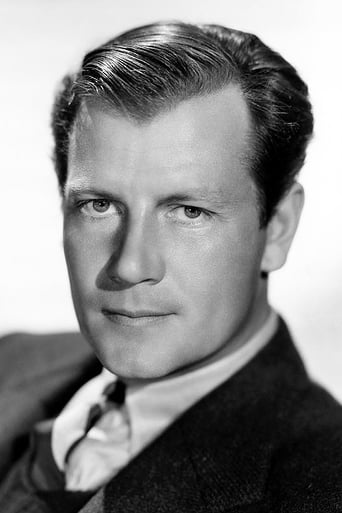
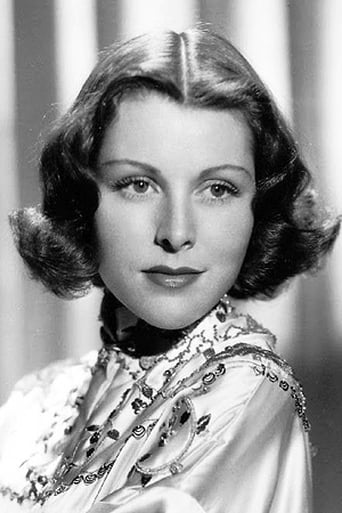
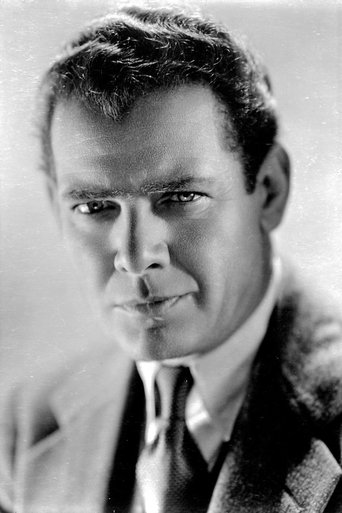
I've mentioned many times how frustrating it can be finding films for my collection, and Four Faces West is a typical example of just how difficult the search can be? Joel McCrea sits just behind Randolph Scott as my favourite Western actor, and with good reason. A man who dedicated himself almost exclusively to the Western genre for the best part of 30 years, McCrea took his love of the cowboy life and became a proper rancher with his wife Frances Dee on a huge spread in Ventura County, California, where they raised their family. McCrea was hands-on, with his ranch a viable money-earner for the already wealthy actor, and probably another reason why he always looked so comfortable on a horse? Here in Alfred E. Green's Four Faces West, he's once again a cowboy, one who robs a bank in the most polite and unassuming fashion, leading to a certain Pat Garrett trailing him across New Mexico. Four Faces West has the distinction of being a Western where there's not a single gunshot fired in the whole film, something that suits both the material and the whole feel of the film. With Joel McCrea in the leading role as Ross McEwen, a down-on-his-luck cowboy who robs a bank of $2000 dollars, this film has a lighthearted and playful feel from the off. After taking the banker for a little ride, McEwen relieves him of his boots, before handing him a signed IOU, and heads off towards pastures new. The banker however puts a $3000 dollar bounty on his head, and soon McEwen is looking over his shoulder, with Pat Garrett and his deputy also on his trail. That trail will lead to a train, where McEwen has jumped upon after being bitten by a rattlesnake, and although his presence is undetected by authorities, others have noticed him, including Joseph Calleia's gambler Monte Marquez, and Frances Dee's Fay Hollister, a nurse who treats McEwen's arm. There's an obvious chemistry between them, well they were actually married in real life, so you'd expect that, and although McEwen is a wanted man, he never comes across as dangerous to anyone, especially to Fay. It'll be McEwen's quick thinking that'll help him evade the law, and when the train journey then becomes a buggy ride, McEwen and Fay start to get even closer to each other. When McEwen then shows his true nature by caring for a family with sick children rather than heading for freedom, you know exactly where this film is going. This does come across as a bit of a oddity in terms of what we'd come to expect from a late 1940's Western, and although the lack of gunplay is noticeable, it doesn't harm this as much as you'd imagine? Obviously despite the fact that McCrea is really playing a good guy who did a bad thing, you know that the studio isn't going to let his criminal away with committing a crime, he'll have to pay in the end, despite all the good deeds he does afterwards. Both the romance and the plot thread involving Marquez do add extra dimensions to the overall film, in fact they probably make the film, because McCrea's just too amiable to play a real villain? McCrea as always, is a pleasure to watch, and Frances Dee was a breath of fresh air here, with Calleia likewise. Charles Bickford's Pat Garrett wasn't exactly the guy we'd become accustomed to over a host of cinematic portrayals, but he still played his part well enough.
Screening with Ramrod at Light Industry on October 13 to celebrate the release of Narrow Margin's fourth issue, The Western: From B-ZWrote some program notes for the event: www.lightindustry.org/narrow-westernsPerhaps most well-known as the western in which not a single shot is fired, Green’s Four Faces West is a parable of fundamental values: self-respect, courage, and integrity. The film was part of a trend of postwar westerns that offered an escape from the paranoia of McCarthyism and the Cold War: Tourneur’s Stars in My Crown, Springsteen’s Hellfire, Witney’s Stranger at My Door, and Ford’s Wagon Master. Against the cynicism of a High Noon or even a Silver Lode, these films embraced the naïveté of their genre, treating it as a Saturday matinee sermon on doing right by one’s neighbor.The film’s protagonist Ross McEwen (played by McCrea) is a good man who has done a bad thing to help those he loves: robbing a bank to support his impoverished father. Over time, he’s been repaying the bank anonymously, mailing back cash whenever he is able to find occasional work or win a little bit of money from gambling. Ultimately, McEwen must decide whether or not to turn himself in—to resolve whether he was justified in acting according to his own moral code. Unlike the westerns of Anthony Mann starring Jimmy Stewart and Gary Cooper, Four Faces West is not about a bad man making good but a good man who might have done wrong. The question the film asks is a fundamental one: “Can past wrongs be righted?” Though the story concerns McEwen’s past transgression, the crimes of history—the violent conquest of the American West—haunt the images of Four Faces West.Green’s story of redemption is set around El Morro. Otherwise known as Inscription Rock, this immense slab of limestone is covered with carved words and figures made across several epochs, from the Ancestral Puebloans to Spanish conquistadors, American land surveyors, and other early settlers. “Isn’t it strange, how everything is made from sacrifice,” Fay Hollister asks, standing before the rock and its countless etchings. Like so much of the dialogue in this film, Hollister’s remark carries at least two meanings: one that refers to the generations of people who have inscribed their messages in the rock, the other to the decision McEwen must ultimately make to retain his self-respect. McEwen’s past comes back to haunt him in an environment possessed by other crimes: all the men and women “sacrificed” in the making of the West.This history of conquest emerges not just in the story and its setting but also in the way they are shown, the style of the film’s landscape cinematography harkening back to earlier visual traditions. For the scenes shot on location, Harlan drew on pre-existing photography of the American West, particularly the 1870s photographs of Timothy O'Sullivan. Four Faces West almost exactly recreates two of his photographs of El Morro. Moreover, when McEwen sets the canyons aflame, it is hard not to see O’Sullivan’s well-known photograph of Canyon de Chelle. In that image, O’Sullivan depicts an entirely depopulated terrain marked by the ruins of Puebloan cave dwellings. Only a decade prior, Navajo were forcibly removed from those canyons by Kit Carson, who scorched their farmland and killed their livestock. When McEwen sets the landscape ablaze, this other past leaks into the film: one that cannot or will not be righted. McEwen’s reflection of his own deeds might as well reflect the mindset of innumerable Americans: “If we can forget what’s happened, I think it’s worth it.”Four Faces West appears to be a naive story of doing good and paying one’s debts yet it communicates something far more ambivalent and mysterious. However direct and candid they may appear, every image, phrase, and gesture invites multiple readings; even McEwen’s final, seemingly valiant act leaves an aftertaste more sour than sweet. Perhaps the western remains fascinating because so often it ends with questions rather than answers, its simplicity in fact an irresolvable multiplicity.