

Just a moment...Enable JavaScript and cookies to continue
In 1940s New York, a white widow who dreams of being on Broadway has a chance encounter with a black single mother, who becomes her maid.
Imitation of Life is showing in 1 cinema in Los Angeles - next screening Wednesday 14 October at 13:00 at The Egyptian Theatre Hollywood.
Next screenings: Wednesday 14 October.
Full schedule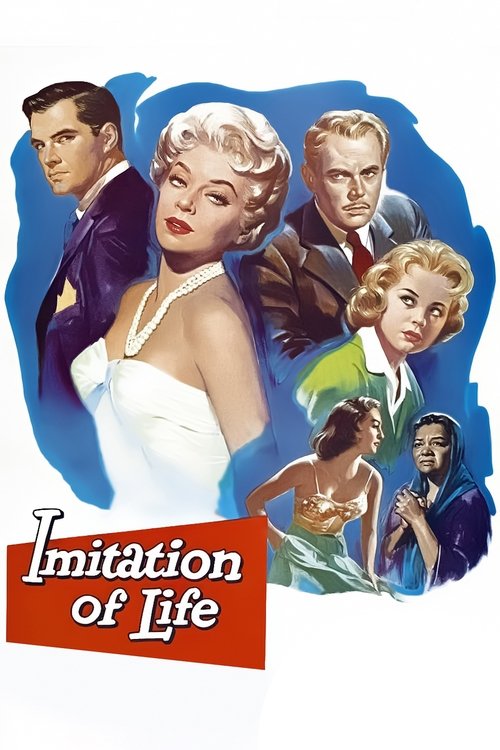
Imitation of Life showtimes, refreshed every morning
Pick your cinema, get a nudge before it leaves screens.


Just a moment...Enable JavaScript and cookies to continue

93/100Douglas Sirk is a master of feeling, and Imitation of Life is no exception. Viewing a Sirk film is like knowingly diving into a kiddie pool, embracing its mush and melodrama, but as soon as you hit the water, its depths are unexpected and gorgeously profound. Never have I seen a film tackle a traditional rise/fall narrative and switch character perspectives continuously, and it results in a lovely piece of schmaltz that feels less like a character study and more like a mosaic of people and relationships. This widening view of family flourishes when paired with its racial and social underpinnings, and the discussion of cutthroat showbiz also meshes well with the typical Sirk theme of buried turmoil in an unforgiving society. It is certainly one of the most progressive films that I have seen from the 1950s, and I'm quite happy to report that I was floored by every second of this cinematic delight. I've only seen two films from Douglas Sirk, but he's already shaping up to be one of my favorite directors.

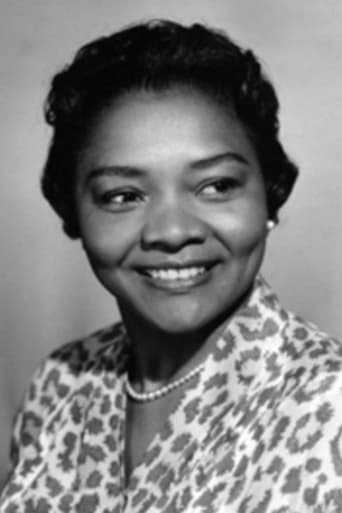
''How do you tell a child that she was born to be hurt?''Well with this, my second Douglas Sirk film after All That Heaven Allows, I can recognise the intuitive gaze of a man of European descent, and how he saw American society and dutifully applied bitter critique and social commentary to the Hollywood studio film, which is probably quite telling as to why his films were not received quite as well upon release as the rapturous reappraisal that has existed ever since. 1959's Imitation of Life is almost epic in scope, both with vast amount of characters it explores and the weighty issues it examines with race, class, gender and capitalism at the forefront. What some would label as pure melodramatic soap opera, could have been just that in the wrong hands, yet Sirk had proven his vision to be far more assertive in the desire to transcend the traditional Hollywood approach by offering a scathing dissection of American society and culture, but presenting it in such a way that didn't require a soap box to speak basic truths. Sirk's Mise en scène is exquisite as ever here (just look at the way Juanita Moore's Annie Johnson peers through a shadowy nook as she watches her daughter dance in a gentleman's club, where she will go onto to deny her like Judas Iscariot) and Russell Metty's cinematography, whilst not as noticeably arresting as in All That Heaven Allows, proves to be so finely tuned to Sirk's vision that they were indeed a match made in heaven. The scope of the narrative, sharp writing and the wonderful performances left me dazzled, and yes the drama is heightened by today's standards, but it is totally befitting of it's era and needs to be viewed with this in mind. The world we live in will always struggle with the issues that the Imitation of Life highlights, and the reverberations though the ages will always be relevant. It seems poetic that Sirk would end his Hollywood career on such a high, and boy oh boy what a bow out is the stunning finale of what many would consider his masterpiece.
A white aspiring actress and a Black single mother form an unlikely household in 1940s New York, grappling with their own ambitions and the complicated, strained relationships they have with their respective daughters.
Douglas Sirk directed this 1959 film, widely considered a pinnacle of the American melodrama genre.