
Justice for Fifi
In the midst of societal conflict in the futuristic city of Metropolis, Kenichi and his uncle Shunsaku Ban set out to uncover the mystery behind the first human-like robot, Tima.
Metropolis is showing in 1 cinema in Athens - next screening Monday 2 November at 22:00 at Cinobo Patision (Formerly Alexandra).
Next screenings: Monday 2 November.
Full schedule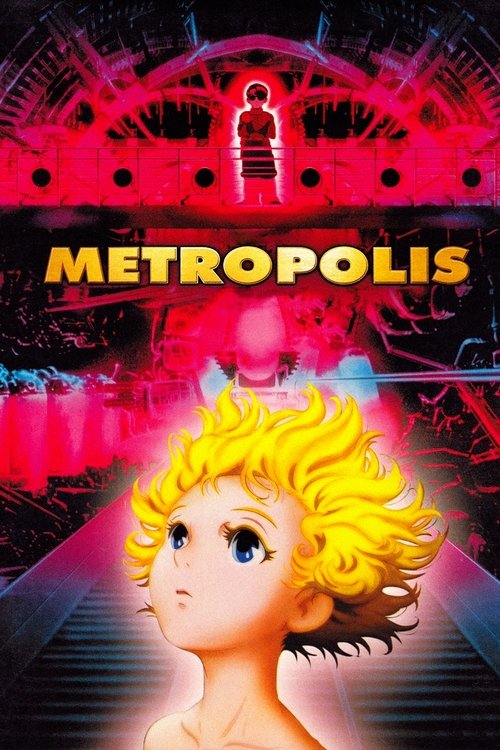
Metropolis showtimes, refreshed every morning
Pick your cinema, get a nudge before it leaves screens.
Justice for Fifi

Rintaro's Metropolis is a cinematic oddity. Not to be confused with Fritz Lang's silent masterpiece Metropolis, this animated film is an adaptation of Osamu Tezuka's manga Metropolis. The manga shares some elements of original German film, but Tezuka says he had only seen a still image from it of Maria's Transformation; the anime, on the other hand, borrows more liberally from the original film, despite being an adaptation of the manga, which is not an adaptation of the film. Metropolis (2001) is, above all else, Metropolis (2001), and it is simultaneously both similar to and different from each other Metropolis that came before it.Fortunately for my particular interests, one of the themes Rintaro returns to from Lang's original film is its representations of class conflict and revolution. Metropolis (the city within the film) has a president, but its de facto plutocratic ruler is Duke Red, the city's wealthiest citizen and the not-so-secret financier of the Marduks, a paramilitary pseudo-security force tasked with controlling (which often means killing, Blade Runner–style) the many robots that walk side-by-side with humans. This authoritarian plutocracy inspires a coup d'état, but there are many eyes watching, all hungry for the throne, and this labyrinthine battleground becomes another instance of corruption serving those already in power.Aesthetically speaking, the film reminded me of the original Tron in a peculiar way. That might sound like a backhanded compliment to some, but I genuinely love the original Tron. While you may or may not enjoy the result of its then-groundbreaking but now-dated special effects, the film was also shot with the same cameras and on the same film stock as 2001: A Space Odyssey and Lawrence of Arabia. There's simply nothing that looks quite like it, and the same can be said of Metropolis. It mixes beautifully hand-drawn animation with turn-of-the-century computer-generated imagery in a way that speaks to the film's anxieties about technology.While the upper class lives comfortably on the surface of Metropolis, the lower classes live down below, underneath the Earth's crust in subterranean "Zones" of the city, and much of these lower classes consist of humanoid robots. This is a world in which humanity has created artificial life in its own image, a truly marvelous achievement, and it has done so in order to have someone new to oppress. There's a brief moment that gracefully communicates humanity's relationship with its creation: a young boy attempts to explain sentience and consciousness to a young robot, and he quickly stumbles over his words and becomes confused himself. We give life, but we don't even know what that life is.In its ambition and arrogance, humanity pushes technology heedlessly forward. Duke Red funds the invention of the ziggurat, a tower meant to harness humanity's full potential and grant it the ultimate power over the world, but even as its creation is celebrated, people openly discuss the fact that they have no idea what it actually is. This is why the visual aesthetic is so perfectly appropriate to me: like the characters in the film, Rintaro's aspirations outstripped the medium's ability to deliver. When it comes to the power of technology, humanity's reach exceeds its grasp.2001 | Anime | Sci-Fi

JUNIMATION II: F*** YEAH!Based on a manga that was at the same time inspired by the classic film of the same name by Fitz Lang, this was a pretty stunning movie from an animation standpoint. The blend of 3D with 2D was really well employed; films like Titan A. E. come to mind, but this one certainly did a better job in my opinion. I appreciated the way it incorporated several elements from Lang's film, such as the world-building and the character of the android girl, whose design left a lasting impression. Additionally, the ending's music selection was brilliant and further enhanced the intrigue of the detective story. In fact, speaking of music, I really loved the score; I wasn’t expecting some of the jazz and stuff, which I guess fits Metropolis decade of release.All in all, if you are a fan of the iconic film or sci-fi in general and great animation, this one is, I’d say, worth a shot.JUNIMATION II: F*** YEAH!TODAY SCHEDULEMemoriesMetropolisMind GamesThe Boy and the Beast
In a futuristic city plagued by social unrest between humans and robots, a boy and his uncle search for a scientist and encounter an advanced humanoid robot named Tima.
Metropolis was directed by Rintaro in 2001, a renowned Japanese anime director known for his distinctive visual style.
The film received widespread acclaim for its pioneering blend of traditional hand-drawn animation and early computer-generated imagery.