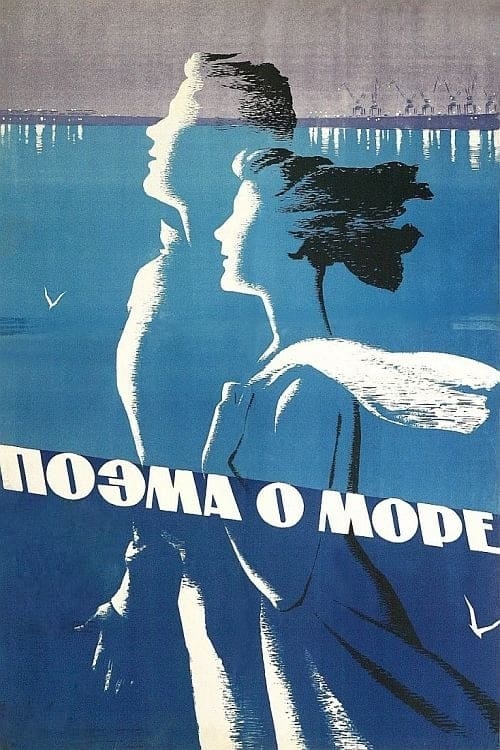
Poem of the Sea is a towering piece of propaganda, a celebration of the people of Ukraine first and, second, of the determination and commitment of the masses of the USSR. Directed by Yuliya Solntseva from a screenplay written by her deceased husband, Aleksandr Dovzhenko, it's a remarkable solo debut, ably balancing long, propagandistic speeches with an embrace of humble, imperfect humanity, and a loving acknowledgement of those who weep before the gears of progress.It's hard to explain what makes Poem of the Sea so impactful for modern audiences, but perhaps it starts with the clear affection Solntseva shows for virtually all Soviets, but particularly those born and raised in Ukraine. In a film about the damming of the Dnieper River by the Kakhovka hydroelectric station, Solntseva makes time to not only acknowledge, but also validate the feelings of those who resent this national progress for the damage it does to their lives.History and memory are twin weights borne by everyone in Poem of the Sea who is older than about 25. WWII is a palpable, often visible presence, and the fact that the dam will flood several villages, thus erasing the history of both those places and the families with generations of roots there, is treated with the seriousness it deserves. In an immensely moving gesture, the manager of a collective farm in the path of what the subtitles refer to as "the new sea" invites home everyone who grew up on the farm, from military commanders to refrigeration experts. He wanted them there to be able to say goodbye, and to celebrate the place and people from which they came, one final time.For a piece of propaganda, full of odes of the greatness of the common man and rejection of personal ambition, Poem of the Sea is remarkably complex. For example, the young authority figures who wield their power like clubs are repeatedly prove ineffective — it's the older party officials who are effective, because they recognize the individuality of those whose lives lie in the path of progress, and engage with them as human beings, not mere obstacles.Anyway, I loved this movie. It turns out that I am very vulnerable before the combined power of Sovcolor, Mosfilm, and the wonder of industrial development. Thank goodness I do not live in the USSR of the 1950s.⏩ ☭ Soviet (Bloc) Spring 🌷⏩ 52 Films by Women: watchlist | seen
There are so many little technical tricks employed here that when used by Hollywood suggest divinity and superiority and to give interiors an opulence. But here it's all the elevation of workers and warm domestic interiors and bustling work places. This will broadly get the title of "propaganda" but it's weird for propaganda to be so willing to indulge oppositional viewpoints. A new dam is being constructed and naturally that requires flooding the land in which many people have lived for centuries. You'd expect one long spiel about the wonders of progress and how this paves a road to the future and you do get that but you also get rebuffs to those ideas from villagers who's complaints range from their disgust at seeing a church their father built torn apart or just feeling dehumanised by officials ordering them about without looking them in the eye. They're very human and very understandable complaints.World war two is casting a big shadow here with everyone over a certain age being some variety of veteran or victim and time is granted for people to articulate their suffering but it also adds to the sense of optimism. That the period of intense misery is over and now the workers can create a far better future between them. It's also interesting how much time is dedicated to a sort of dialectical unlearning of capitalism. The mentality that would have you refusing the love of your life because you think it would be advantageous to your career to marry the daughter of a celebrated engineer is roundly condemned as a form of nepotism that doesn't exist under communism. There's a level of didacticism to all this but it doesn't stop a number of amusing, charming and very thoughtful characters from emerging. It's a particularly engaging and warm piece of Soviet history for those interested.Freya's rating: 4/5As part of Recommend ya boi a film. (thanks Yammy)
Yuliya Solntseva's solo directorial debut following the passing of her spouse Aleksander Dovzhenko. Using one of Dovzhenko's own scripts, Solntseva inspires a sense of paradise as well as one of dread; complete with ridiculous fantastical and even animated daydreams as its own ideology comes into conflict. The question of what symbols of progress might mean to different people, or how one even fits into another man's progress, it is rarely if ever subtle, but never not sincere. With gorgeous painted skies and landscapes shining from every window, with death in an atheistic light still finding meaning, and with a tone that is as nostalgic as it is apocalyptic as it is hopeful. Perhaps those contradictions could be cruel under a different name, but I think Yuliya Solntseva sees heaven on earth much in the same way her husband did, built in forever changing layers worth rebuilding upon so long as we are still alive.