

There are like 500 cattle moving through every shot in this movie and I got so stressed out imagining what it must have been like to shoot. "Oops, John Wayne flubbed a line, move all the cattle back a mile and we'll try it again."
Directed by Howard Hawks
A critically acclaimed, moving western.
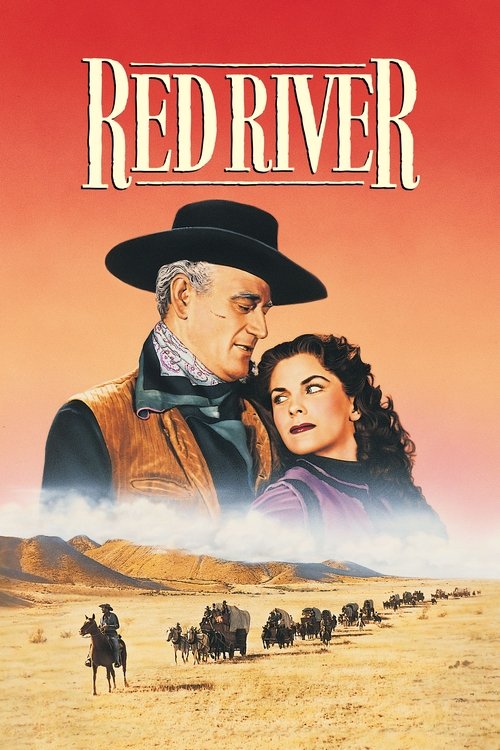
Following the Civil War, headstrong rancher Thomas Dunson decides to lead a perilous cattle drive from Texas to Missouri. During the exhausting journey, his persistence becomes tyrannical in the eyes of Matthew Garth, his adopted son and protégé.
Red River isn't screening in cinemas right now.
Follow the film in the app to get notified when showtimes are added.
Red River showtimes, refreshed every morning
Pick your cinema, get a nudge before it leaves screens.
There are like 500 cattle moving through every shot in this movie and I got so stressed out imagining what it must have been like to shoot. "Oops, John Wayne flubbed a line, move all the cattle back a mile and we'll try it again."

Hawks made perhaps the greatest Western of all time a decade later, but damned if this doesn't make an equally strong argument for placement at least among the genre's pantheon. Old West and new order pitted as classic stardom vs. young method acting. Vision of capitalism as murderous tyranny, capable of being bested only by a Hawksian community of men. When both fail, it's up to a woman to set them straight, natch.

i discuss the ending in vague terms in the fifth paragraphladies, i may be jumping ship from al pacino and pledging allegiance to montgomery clift. stay tuned.i think the appeal of the western is the vastness of it all. you can sit in a crowded movie theater or while cooped up in your house (ahem) and pretend that there's a never-ending sky above you. your problems are secondary to the grandeur of the mountains and the beauty of the landscape. you don't have to worry about taxes, a 9 to 5, drudging your way up the corporate ladder. you can just saddle your horse and ride off into the sunset.life in the real wild west was harsh but there's an element of escapism to the western. men were real men (until suddenly they weren't) and women were real women (until they died). there's no pesky moral questions (until you've gone crazy and started abusing your men that is). you grab your gun and fight the bad guys (what if you've started to become the bad guy).funny that i'm talking about westerns in general because this is basically a character study of the central father-son relationship dressed up as a western. it's why it introduces more complicated questions. what happens when you start to see the collapse of a legacy? what do you do when someone you love disappoints you? how does trauma cycle it's way down to the next generation? why is someone like montgomery clift devoted to john wayne? (i said what i said.) the feints towards other characters are unimportant- valence is a narrative tool and cherry never reaches his whole potential as a rival (boyfriend) for matt. they don't matter in the end.it's why i don't have any problem with the ending. yes, it's anti-climatic and a little disappointing on the surface but it ultimately narrows the focus down to what the film has cared about all along. the build-up and pay-off are in seeing the emotional changes of wayne and clift's relationship, not in some grand gun battle. they've come to understand each other and care for each other, despite their flaws. they've proved themselves to each other. they don't need to battle it out in the dust. they just need a slap in the face to remind each other that family is family, warts and all.okay, so i've praised this, but i think i have to bury this too. the casual racism, mostly in the form of a Native American character, is upsetting and un-needed. the sexism is a little more understandable but not exactly easy to tolerate. it's frustrating when a movie is doing so much right technically and so much wrong morally. does this mean that it doesn't deserve the relatively high rating i'm giving it? i don't know. i've been struggling with the problematic aspects of Old Hollywood movies and how to contextualize them. i'd like to have an easy answer but i don't have one.
Following the Civil War, a headstrong rancher decides to lead a perilous cattle drive from Texas to Missouri, leading to a tense conflict with his adopted son.
Red River was directed by Howard Hawks in 1948, marking his first venture into the Western genre.
While it did not win major competitive Oscars, it is widely celebrated as one of the greatest Westerns in cinematic history and holds a top-tier critical approval rating.