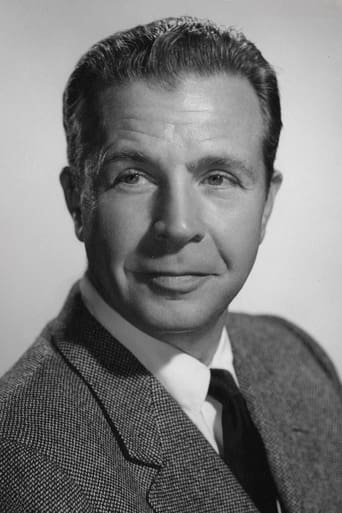
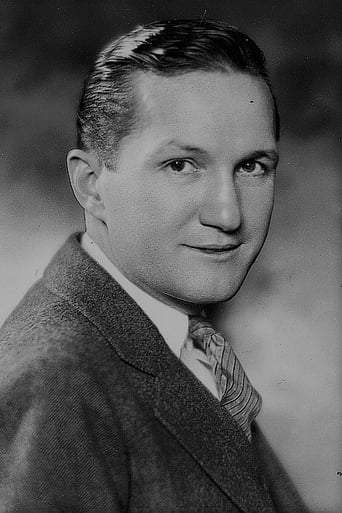
If you closed your eyes while watching this, you'd be forgiven for thinking it was a story about a seedy PI with a leggy dame in his office and a price on his head. in reality, it's a western about an undercover ex-Army officer looking into gold thievery and murder, but with Dick Powell as the investigator (Haven) and Jane Greer — just coming off of Into the Past — as the femme who is probably a fatale (Charlie), well, it's be a waste of a perfect cast not to sprinkle it with some noir dust. Happily, the award-winning screenplay by Frank Fenton and Winston Miller does just that, and is so perfectly suited to Powell's snark and rhythms that it's hard to imagine it wasn't either written after he'd been signed to star, or in the hope that he would end up doing so.Once you get used to seeing Dick Powell in a cowboy hat (which takes less time that you'd think, since he wears it like a fedora with a wider brim), there's a lot to like here. He and Greer are excellent together — wry and wary and extremely interested — and her Charlie is commanding in the quiet way that only people who know they'll be obeyed are able to pull off.Elsewhere, Agnes Moorehead is (of course) very good in a supporting role as a tough widow with a whole lot of both power and gold, and Burl Ives is a singing hotel clerk with whom Powell has a fantastic, low-key rapport.
Haven (Dick Powell) rides into town, to all appearances just another western drifter looking to put his feet up for a spell, but there's something more to this mystery man. He's also a military detective, traveling incognito in the hopes of infiltrating the town's social hierarchy and learning how and why their gold shipments keep going missing. But just as Haven had a few tricks hidden up his sleeve, this place isn't your average little frontier town. Haven learns that Charlie, the man running the criminal operations in town connected to the gold shipment hold-ups, isn't a man at all, she's a woman—in fact, she's the very woman Haven was so brazenly flirting with in the saloon just the night before. He was right next to her and simply had no idea.This is what I love so much about Station West: it takes this little western town with a clear patriarchal power structure—male sheriff, male detective, male military presence—and shows how it's the women who really hold all the power and influence. The gold mine is owned by Mrs. Caslon and being grifted by Charlie; the entire narrative revolves around these two women, with the men merely circling around the fringes, buzzards hoping for scraps. The local lawyer Mark Bristow is a fun example here: he's played by Raymond Burr, cast brilliantly against type as a total pushover with nothing but debt to Charlie, thousands of dollars in IOUs despite his position in a traditional bourgeois profession.When Haven first arrives in town, the proprietor of the local hotel is singing a song: "A man can't grow old where there's women and gold." At first, these lyrics seem to position women and gold as the two evils of society, the things that prevent men from growing old (rather than, you know, them shooting each other out of some thin pretense of macho bravura). But what it's really saying is that a woman with gold holds all the real power. Even Haven, our supposed protagonist, works simultaneously for both Charlie and Caslon. Haven and Bristow and the military officers and other men of the town think they run things, but their debts ultimately run to the women; they're all mascunline pawns in a feminine game. I've been enjoying Criterion Channel's Western Noir collection (duh, of course I have), but Station West is perhaps the first proper cross section of both genres. As its dual thematic fulcrum, it takes the western's examination of the greed brought to America during the gold rush and the noir's examination of the subversive feminine power of the femme fatale. The town at its center is ruled over by two matriarchs: Charlie's femme fatale provides the dark inverse of Mrs. Caslon's "proper" businesswoman; Charlie's proto-mafia crime syndicate is the direct inverse of Mrs. Calson's mining operation. Both endeavors are exploitative, Charlie is simply more willing to embrace the social ostracism of being a powerful woman.These women are not the villains. The patriarchy is the villain. These women are merely playing the game they're forced to play, grabbing what power they can. It's hardly their fault if their rise up through the social hierarchy threatens established power structures.Westerns | Film NoirWestern Noir on the Criterion ChannelWonderful dialogue, smart and snappy. A real pleasure.