
Rough around the edges, but has some solid comedic bits and is overall entertaining enough to be worth watching for Imamura fans.
Directed by Shōhei Imamura
盗まれた欲情
A gritty comedy with an ensemble cast.
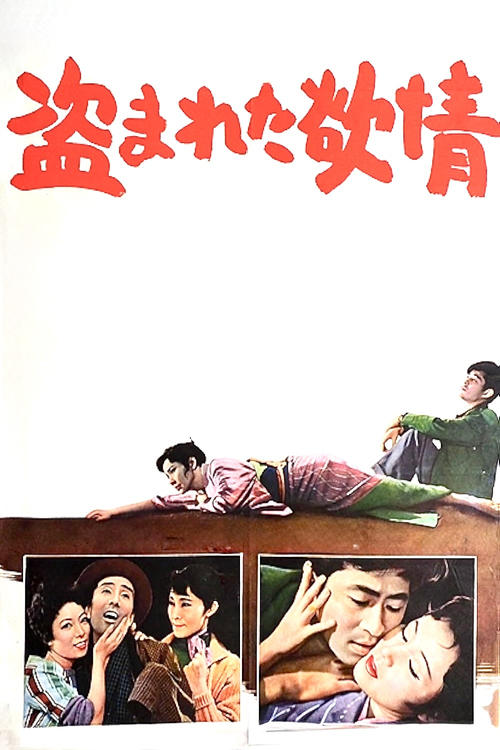
A rambunctious and ribald tale of a troupe of travelling actors who alternate highlights of kabuki theatre with strip shows.
Stolen Desire isn't screening in cinemas right now.
Follow the film in the app to get notified when showtimes are added.
Stolen Desire showtimes, refreshed every morning
Pick your cinema, get a nudge before it leaves screens.
Rough around the edges, but has some solid comedic bits and is overall entertaining enough to be worth watching for Imamura fans.

This was like a hornier, sillier Naruse melodrama meets Fellini, and I dug it. Been thinking about a Shohei Imamura run-through, and the amount of personality here even in his "lesser" work cemented to me that I should in fact do so.

“Dirty old men!”“They’re all alike.”Shohei Imamura’s debut film follows a traveling troupe of performances that are like a Japanese version of an old burlesque show. They offer traditional Kagamijishi dance numbers, but also a show where a handful of young women strip down to their bra and panties, something we see several times over the course of the movie. Kind of strange that there were ticket pricing options for both adults and children.One of the recurring themes which is bound to put many people off is the ogling of women, and I don’t just mean during the strip show. We see men attracted to a curvy girl walking in the street, peeping tom’s while women bathe, men looking down at women sleeping, and men leering at women working in a field. They make crude comments about the women’s body parts and what their personal preferences are, acting a little like a perverted Greek chorus to this story.We also get an instance where a woman who wants to work in the troupe is made to first get naked, and then to have sex with one of the managers. He’s told her he needs to see if she can “cut it or not,” that he needs a full inspection because “these days women wear falsies.” It was nice when she resisted and called him a “dirty bastard,” but soon she succumbs, and after they get into a horizontal position, she asks him “is this part of the audition?” Meanwhile, several men outside try to get a look.The hijinks are in there to titillate of course, and also help cover a pretty thin story. At the center of it is a college-educated man (Hiroyuki Nagato) who is with the troupe, but is considering leaving for better opportunities. He loves a woman (Chidori, Yoko Minamida) but she’s married to one of the performers, and meanwhile her sister (Chigusa, Michie Kita) carries a torch for him. Before the film is over, he will have had sex with both women, but it’s initiated by them, something which was refreshing for 1958. Imamura was definitely pushing boundaries from the very beginning of his career.You can look at the film two ways. One is that there are three women who’ve all had sex outside of marriage – Chidori (adultery, out of love), Chigusa (also out of love), and Masako (coerced, and giving in out of ambition) – and none of them end up being punished. Chidori is taken back by her husband, Chigusa gets her man in the end, and Masako gets the job, helped by her pluckiness. There is something empowering about that. On that other hand, the film normalizes the equivalent of the “casting couch” and made it seem like a good thing, all of the women in the troupe are ogled and have their body parts commented on (something Imamura seems to be doing too), and how can we feel good about Chigusa? The young man has made it clear he doesn’t really want her, so how is that going to work out?It’s weak as a story and there is an awful lot of objectification here, but at least the film had some life. There were also some other little bits of interest, like seeing Osaka’s Tsutenkaku Tower, which had just been rebuilt a couple of years earlier, and a symbol for Japan rebuilding. There’s also an old woman who comes up with a homebrew version of American Coca-Cola, who says that the soda “tastes like a mixture of mint water and Jitsubosan women’s herbs.” Lastly, we see one of the women wearing a bizarre nose shaping device, hoping I believe to lengthen hers, something I had never seen before. This is by no means a great film, or even a particularly good one, but there was enough here to keep it interesting, especially for when it came out.
It follows a rowdy troupe of traveling actors who attempt to survive by alternating classical kabuki performances with burlesque strip shows in provincial towns.
It was directed by Japanese filmmaker Shōhei Imamura in 1958 as his feature directorial debut.
Streaming availability varies, but the film is occasionally accessible on curated arthouse platforms like the Criterion Channel.