





Funny to think of a bunch of guidos still high off Goodfellas going to see this together and being like “da fuck was Marty thinking?!” but one of them secretly weeps in the bathroom of the pizzeria they hit up later
Directed by Martin Scorsese
A critically acclaimed, atmospheric drama.
In 19th century New York high society, a young lawyer falls in love with a woman separated from her husband, while he is engaged to the woman's cousin.
The Age of Innocence is showing in 1 cinema in New York City - next screening Wednesday 21 October at 15:15 at Metrograph.
Next screenings: Wednesday 21 October.
Full schedule
The Age of Innocence showtimes, refreshed every morning
Pick your cinema, get a nudge before it leaves screens.
Funny to think of a bunch of guidos still high off Goodfellas going to see this together and being like “da fuck was Marty thinking?!” but one of them secretly weeps in the bathroom of the pizzeria they hit up later

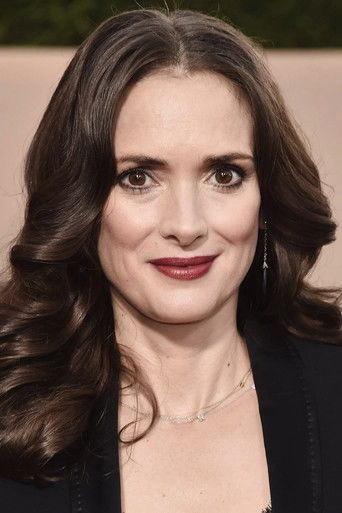
Rewatch confirms what I've suspected for awhile: this is Martin Scorsese's very best movie . . . poor Newland Archer, always thinking he's the smartest person in the room when in fact he's the dumbest . . . and what rooms, those sweeping tracking shots, rooms cluttered with objects, the conspicuous wealth of the 1870s, generated on the backs of the wholly absent poor . . . a world of unimaginable riches and power, so seductive, its occupants entirely unaware of its exceptionality: a simple matter of fact that their universe is the way it is because they are destined to lead it, their system of unexpressed rules governing their every motion . . . Archer thinks he understands it, and looks down upon those he doesn't understand, those poor simple women who lack his self-awareness, his understanding of the ritual . . . his late realizations that not only is he caught in a web of conspiracy, that his darkest secrets are public knowledge and, ultimately, that his apparently vacant wife his a far more deft manipulator of the levers of power than he could ever hope to be . . . Archer ultimately refuses freedom, he's old-fashioned, preferring to live in his constructed reality (ala Shutter Island or Solaris), lacking the imagination to step outside the social order imposed upon him . . . Day-Lewis and Ryder are brilliant of course: he taking a character that should be insufferable and making him a tragic hero, a foolish, arrogant prig who fails in every pathetic scheme, yet is ultimately almost admirable in his refusal to be anything other than what he is; she hiding May's depths behind bright eyes and a sunny smile, never cracking but always twisting the knife, bending the world with a will far stronger than Archer can imagine . . . Pfeiffer might be a weak link, saying her lines as if she's always out of breath, but perhaps that's just the way Archer sees the Countess, her eyes betray a steeliness and wry arrogance that belies Archer's view of her as the embodiment of his desires for sex and freedom . . . in a film so much about the unspoken rules and systems that underlie an excess of conversation, actors that play on multiple levels are essential, and no actors contains more multitudes than Daniel Day-Lewis . . . Scorsese captures it all of course, the beauty (that shot of the light house on the shore!), the isolation (that cube mansion in the middle of an undeveloped Manhattan) and the seductive power of the objects that surround them, the food, the cutlery, the hands of stone, such a luscious prison . . . and the dissolves, oh wow, the dissolves . . .

I docked a half star for this movie not being able to predict how nicely Daniel Day-Lewis would age
In 19th-century New York high society, a young lawyer falls in love with a disgraced countess while engaged to her cousin.
Martin Scorsese directed the 1993 film, widely recognized as a stylistic departure from his crime-focused filmography.
Full schedule on Mood.







