


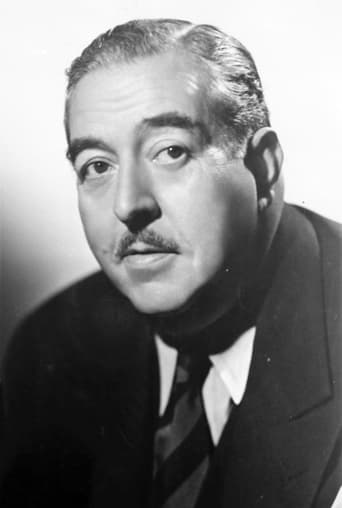


"Oh boy, a Hollywood film from the 30s centered around a Chinese character! Sure can't wait to see which Asian American actor plays him..."
Shanghai, China, the 1920s. In the midst of a bloody civil war, General Yen, a ruthless warlord, rescues Megan Davis —who was about to marry a missionary— from certain death amid the chaos.
The Bitter Tea of General Yen is showing in 1 cinema in Bucharest - next screening Friday 13 November at 17:45 at "Eforie" Cinematheque.
Next screenings: Friday 13 November.
All 2 days & timesNot this day?
All 2 days & times
The Bitter Tea of General Yen showtimes, refreshed every morning
Pick your cinema, get a nudge before it leaves screens.
"Oh boy, a Hollywood film from the 30s centered around a Chinese character! Sure can't wait to see which Asian American actor plays him..."

I expected something sexy and romantic going into The Bitter Tea of General Yen; I did not, however, expect something genuinely knotty and complex. The most remarkable thing about this 1933 Frank Capra film is just how subtle it is in detailing the stirrings of the interracial romance that develops between Christian missionary Megan Davis (Barbara Stanwyck) and the titular Chinese general (Nils Asther—not Chinese, obviously; this is pre-code Hollywood, after all). There's more than a standard Hollywood romance at work here; there's also a clash of ideologies, with the controlling General Yen finding himself strangely fascinated by Megan's faith in humanity even as he essentially risks his own empire in order to prove a cynical point to her. And yet, in Capra's perverse vision of romantic desires suppressed and sublimated, the loss of control is equated with sexual liberation, as Megan—who has spent most of the film trying to deny her growing attraction to a man she feels she shouldn't be attracted to, for reasons both religious and cultural (i.e. racist)—finally gives in to her stirrings at the point that General Yen loses his political power and decides to commit suicide. He may have lost an empire, but he has conquered a woman's heart.Little of this is directly spelled out; we witness these delicate emotional shifts through gestures, hints, actions, all captured in Joseph Walker's sensuous soft-focus cinematography. And then, of course, there are the two extraordinary lead performances—especially Stanwyck. Everything you need to know about how supernaturally great she is here can be glimpsed at the moment she preaches to General Yen when she finds out he's about have traitorous concubine Mah-Li (Toshia Mori) executed, with her delivery uncannily suggesting a kind of passionate autopilot: a Christian missionary falling back on the safety of goody-goody impulses that she is quite possibly starting to question. Now, that's some formidably intelligent, psychologically penetrating acting right there.

Visually enthralling, a dream-like moral descent, when the world is so cold to your beliefs it starts to shatter them one by one. Capra filming everything oneirically turns all assurance one might have unstable, no certitude is absolute, skepticism is a constant - a rather peculiar thought for one of the biggest propagators of north-american idealism. Attraction and contempt come close together, as our moral conception and our contradictory impulses.'You are afraid of death as you are afraid of life', he says before holding her in his arms while she cries of confusion, until she gives in to love and he dies with the only certainty one can have in this tricky ride we call life."I was coming into your room to kill you, and then follow you to some celestial garden, where there is no General Yen and no Megan Davies, just you and I". Perhaps he’ll find her there or perhaps they are already alone together, and she is the wind.
In 1920s Shanghai during a bloody civil war, a ruthless warlord rescues a missionary woman from certain death amid the chaos.
The Bitter Tea of General Yen was directed by Frank Capra in 1933, an American filmmaker renowned for his classic Hollywood works.
The Bitter Tea of General Yen was released in the US on January 6, 1933.