



I'll be damned if that wasn't the coolest fucking cigarette lighting scene I've ever seen. Tony Chiu Wai Leung is the man.
We use cookies to personalize your experience and analyze traffic. You can opt out at any time.

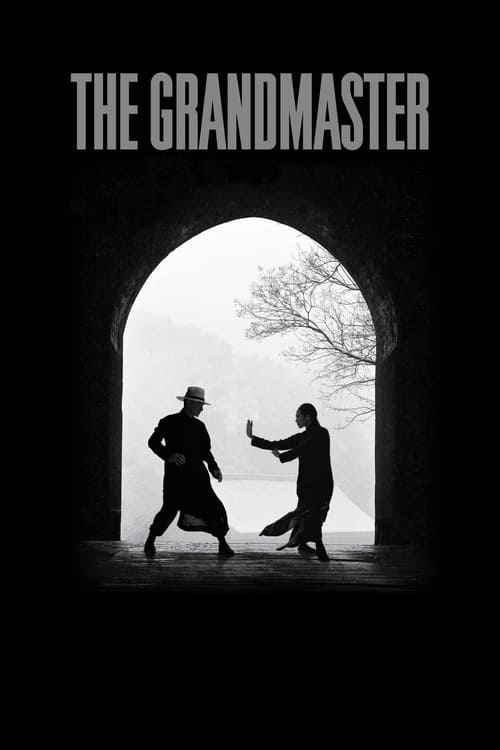
Directed by Wong Kar-Wai
一代宗師
An atmospheric, acclaimed action.
Ip Man's peaceful life in Foshan changes after Gong Yutian seeks an heir for his family in Southern China. Ip Man then meets Gong Er who challenges him for the sake of regaining her family's honor. After the Second Sino-Japanese War, Ip Man moves to Hong Kong and struggles to provide for his family. In the mean time, Gong Er chooses the path of vengeance after her father was killed by Ma San.
The Grandmaster isn't screening in cinemas right now.
Follow the film in the app to get notified when showtimes are added.
The Grandmaster showtimes, refreshed every morning
Pick your cinema, get a nudge before it leaves screens.


I'll be damned if that wasn't the coolest fucking cigarette lighting scene I've ever seen. Tony Chiu Wai Leung is the man.

*GRADE REFLECTS 130-MINUTE CHINESE CUT*“Kung fu: two words – one horizontal, one vertical.”Perfectionist, tinkerer, victim of his opaque sui generis approach to cinematic storytelling – however you slice it, when it comes to the difficulties of getting his vision onto movie screens intact, this isn’t Wong Kar-Wai’s first rodeo. The first time that the prodigiously talented Hong Kong auteur tried his hand at a film with wuxia elements, it took him nearly 14 years to arrive at a definitive cut (“Ashes of Time” was completed in 1994, but the sands didn’t settle until 2008 when Wong produced the slightly shorter “Ashes of Time Redux”). Needless to say, it’s no surprise that his latest and most outwardly ambitious work – a genuine historical epic five years in the making – has emerged into the world with its ink still wet.“The Grandmaster”, which chronicles the life and times of the legendary Ip Man (master of Wing Chun, mentor to Bruce Lee), debuted in China on January 6, 2013, merely hours after Wong had applied his “final touches” to the long-gestating project. The cut with which Wong introduced the film to the world (henceforth referred to as “The Chinese Cut”), clocked in at approximately 130 minutes, having already been whittled down from a rumored four-hour version. Reviews from the Chinese press were overwhelmingly (if not exclusively) positive, and the film performed extremely well at the box office, its domestic grosses alone ($50 million) enough to compensate for its production budget ($38.6 million). Nevertheless, Wong decided to trim 15 minutes from the film in time for its glamorous international debut at February’s Berlin International Film Festival. In her ultimately positive appraisal of the Berlin cut, Stephanie Zacharek wrote that “‘The Grandmaster’ can make you feel woozy, but not always in the best way … We want Wong’s movies to be overwhelming but delicate; supple but sturdy; hypnotic but assured. ‘The Grandmaster’ is trying to be all of those things at once, and it’s perhaps the ‘trying’ that’s tripping it up”.Indeed, the films of Wong Kar-Wai are as delicate as any of their characters, whose lives are often upended with a brief gesture, beautiful records that are doomed to repeat themselves as the result of a single scratch. From improbable romances to impossible affairs, from the cramped confines of a dingy Argentinian motel room to the cabin of a train that delivers the lonely souls of the future to a mysterious place of no return, Wong’s films don’t progress in acts so much as they travel in orbits, drawing perfect circles around formative moments like a ship that’s anchored in the middle of the sea. If a single wave is out of place – if one character disappears for too long or one detail is made too clear – his movies threatens to feel more like a sketch than a slipstream, and their magic is lost.Needless to say, that’s a risk that Harvey Weinstein is willing to take. Largely responsible for making foreign films palatable to American audiences in the 1990s, Weinstein has earned a reputation for drastically altering his acquisitions for their domestic release, and so Wong Kar-Wai fans had reason to be concerned when The Weinstein Company bought “The Grandmaster” at Berlin. Alarm reached fever pitch when TWC revealed that the American cut would only run 108 minutes, but fears were somewhat allayed when it was subsequently revealed that this new iteration of the film – completed in partnership with Megan Ellison of Annapurna Pictures, whose other recent contributions to the cinema have been extraordinary – was closely supervised by Wong Kar-Wai, himself, and featured “additional footage” that had not been included in either of the previous cuts. Broadly comparing the American Cut with the Chinese Cut, Variety noted that “The result is not only simpler than the domestic version (which recalls the grand tradition of Chinese martial-arts novels in its tricky, convoluted structure), but also boasts explanatory intertitles, character identifiers, and a reference to Bruce Lee in the closing credits.” In that same article, Wong justifies the decision by arguing that, unlike his previous films, “‘The Grandmaster’ is very specific. Because (non-Chinese viewers) don’t have much information or knowledge about the background and history, you have to give enough information for them to get into the story.”Here’s the bad news: If you’ve only seen the American Cut of “The Grandmaster”, you haven’t seen “The Grandmaster”. While Wong Kar-Wai is living proof that the first cut of a movie that escapes onto cinema screens should not be implicitly regarded as a definitive or holy object, “The Grandmaster” tragically illustrates how refinements can shear away what made a movie so special in the first place. While Wong is rather transparent about how the American cut is a concession to cultural ignorance rather than an artistic statement, he’s profoundly mistaken in thinking that such a concession was required in the first place, and may be too close to the material to recognize that the American cut is insanely reductive and, at the same time, also harder to understand than the original.The Chinese Cut coherently splits its focus between Ip Man (Tony Leung) and Gong Er (Zhang Ziyi as the beautiful daughter of a revered rival), devoting itself to the distance between them and the varying extent to which they fight to maintain the historical virtues of their respective fighting styles, and resolving into an appropriately fragmented portrait of time outpacing tradition. The Chinese Cut uses the brunt of its 130 minutes to hauntingly illustrate how the only histories that we can own are the ones intimately shared between people, the backdrop of the Second Sino-Japanese War (1937-1945) serving only to underscore how history is human.The American Cut says nuts to that, ditching Ip Man’s romance with Gong Er and instead attempting to distill Ip Man’s life – his tragedies and his revered legacy – into a device for shoveling a path through history, its edits so completely obfuscating purpose in the name of action that the action soon loses all meaning. The resulting film is a horror show of ribbons, a cut that confuses itself into thinking that naming people with instructive on-screen text is somehow more informative than showing us who they are.The curious thing is that, at least for me, the woeful American cut was actually a revelatory experience. I revere Wong Kar-Wai and was familiar with Ip Man, but my first encounter with the Chinese Cut was nevertheless a destabilizing one, its woozy rhythms somewhat difficult to reconcile with the director’s uncharacteristically chronological narrative. Watching the butchered American cut wasn’t an immediately pleasant experience, but it made me eager to revisit the longer edition, and upon doing so I quickly found that the 108-minute version illuminated a path into the heart of the original, functioning like a codex of sorts for a film that’s most exquisite pleasures require a viewer to properly contextualize them. Where Wong and Weinstein got it wrong was in thinking that the context was a historical one, when in fact a working knowledge of the war is less essential to appreciating the film than an understanding of how it could transform two people and the way of life that compelled them to each other.READ A DETAILED COMPARISON OF THE TWO CUTS ON FILM.COM: www.film.com/movies/wong-kar-wai-the-grandmaster-ruined-by-american-cut

A dream of love. Every biopic from here on out should've been required to have at least three showstopping kung-fu fights.
The film explores the life of Ip Man, the famed martial arts teacher, and his complex relationship with Gong Er amid the socio-political upheaval of 20th-century China.
The film was directed by Wong Kar-Wai, an acclaimed Hong Kong filmmaker known for his distinct visual style and works such as In the Mood for Love.
Yes, there are several different cuts of the film released internationally, including the original Chinese cut and shorter versions prepared for Western audiences.