"I see it as my duty to stimulate reflection on what is essentially human and eternal in each individual soul, and which all too often a person will pass by, even though his fate lies in his hands. He is too busy chasing after phantoms and bowing down to idols. In the end everything can be reduced to the one simple element which is all a person can count upon in his existence: The Capacity to Love. That element can grow within the soul to become the supreme factor which determines the meaning of a person's life. My function is to make whoever sees my films aware of his need to love and to give his love, and aware that beauty is summoning him." - Andrei TarkovskyI firmly believe that one of the most powerful and significant messages of Andrei Tarkovsky's final masterpiece is that, while language is a powerful tool which we can use in our efforts to repair our fallen world, it is vital that we take action and actually commit to the reparation of our civilization, rather than just speak of it; "Words! Words! Words! At last I know what Hamlet meant. He was fed up with windbags. And so am I! Why do I talk this way? If only someone could stop talking, and DO something instead!" And so am I, Andrei, so am I. Therefore I'm going to make this review as short as I possibly can. I'm making a vow to myself and those that I love - all of mankind, that is - to do something, to better myself and all of the people that I come into contact with for the rest of my life (to the best of my abilities). I want to make this world a better place, an easier place to live; I want to replenish the beauty that is so easy to see in nature, but also so easy to forget amongst all of the evil that exists around us. And I am positive that those of you who are reading this do too. I am what is left of my father - my brother and I - and I am a son who wants to make his father proud. His soul lives all around us: my father's, Andrei's, the ghosts of your past, the ghosts of mine. Keep them in mind in your quest to improve this planet and the individuals that inhabit it. It is not an impossible feat, but it is not a simple or painless one either. Thank you, Andrei Tarkovsky, for changing my life, for showing me the light that you so desperately wished for your brothers and sisters to see. I am forever reformed, forever bettered, and I know, with certainty, that I am not the only one.
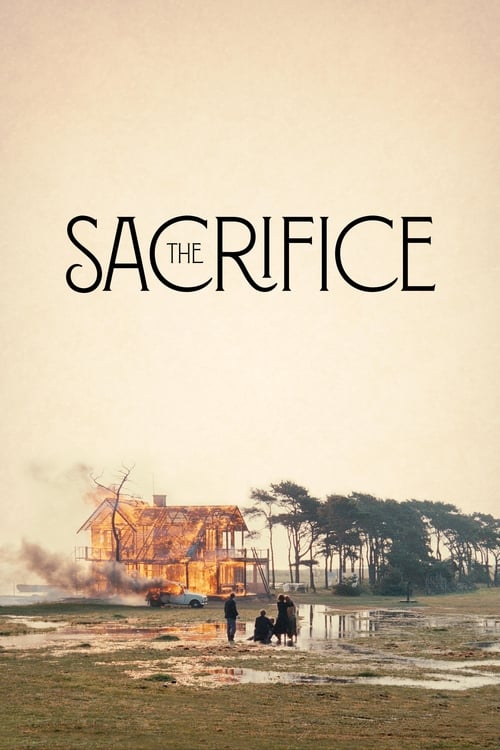
There’s no way around it, The Sacrifice feels like a farewell. Not just to cinema, but to life itself. Tarkovsky, standing at the edge of his own mortality, crafts a film that aches with the weight of a man reflecting on everything he has given away for his art, for his faith, for some fleeting sense of transcendence. Watching it, I couldn’t shake the thought that this wasn’t just another film, it was Tarkovsky’s own prayer, his last confession.From its opening shot, where Alexander plants a barren tree and tells the story of the monk who watered one every day until it finally bloomed, the film frames itself around faith not as certainty, but as devotion. That tree is Tarkovsky’s cinema: seven films, all of them masterpieces in their own ways, each one watered with years of sacrifice, of exile, of estrangement from home, of illness, and now, in this final work, it all culminates in a desperate plea for meaning. What struck me most is how deeply personal this feels compared to his earlier work. Here, Tarkovsky is untethered from Russia, working with Swedish actors, Swedish landscapes, and yet, it is unmistakably his. You see the echoes of The Mirror in its memories, Stalker in its haunting silences, Solaris in its longing for something beyond comprehension. But unlike those films, this one feels like an unfiltered Tarkovsky, because for the first time he wrote the screenplay entirely himself, and he even co-edited it. There’s a rawness here, yes, it borrows Bergman’s actors, yes it borrows Bergman’s island, but this is not Bergman. This is Tarkovsky, naked and unchained, pouring his soul out on film.And then there’s the pain running through it. You can feel the weight of death pressing down on every frame. Alexander’s monologue about the futility of man, the desire to undo what has already been done, it doesn’t just sound like a character, it sounds like a dying artist asking if everything he gave up, all those years devoted to cinema, were worth it. When the world in the film teeters on the brink of annihilation, it feels less like fiction and more like Tarkovsky grappling with his own annihilation. There’s also guilt. The film is filled with guilt, human destruction of nature, human failure to live truthfully, human silence before God. Tarkovsky himself admitted to feeling complicit, and in the postman character you see a figure that feels quintessentially his: lost, waiting, desperate, yet clinging to faith as the last fragile thread tying him to existence.The ending, Alexander’s desperate act, the burning house, the silence that follows, left me trembling. It’s as if Tarkovsky wanted to set fire to his entire body of work and leave us with only the ashes, to see if anything sacred might rise from them. And then, as if to comfort us, we return to the boy and the tree. The boy whispers, “In the beginning was the Word.” The tree is still barren, but the promise remains. Faith, hope, sacrifice, they’re all that’s left. I walked away from this film shaken. It’s not just Tarkovsky’s final work, it’s his epitaph, his spiritual will. A film where art, faith, mortality, and despair converge into something indescribable. He died months after finishing it, at 54. Seven films, all of them unforgettable. And this feels like the one where he gave everything he had left. I don’t think I’ll ever forget it. And I don’t think Tarkovsky ever wanted us to.
Like John Huston's The Dead, Tarkovsky's final film addresses regret. Having spent his days crafting ideas, speaking his mind, and ultimately sacrificing his life for art, Tarkovsky bows out with a film that, among other things, demands to know why no one takes action. At the same time, it feels like an apologia of his leaving behind his family and pursuing his filmmaking in Italy and Sweden, and it is an expression of deep, profound faith. It staggers me to see so much put into a film, so ably made. What stands out is the use of mirrors. Tarkovsky at this point seemed to be devoted to the long take, the sacred tool of filmmakers seeking to maintain continuity, suspension of disbelief, and the fluidity of perspective that is how we experience the world. To do this, on multiple occasions, he positions mirrors just so, calling attention to them via movement (either in the reflection or of the mirror itself) and lets them show what is happened off camera, so that the take will remain unbroken. He reminds us of what is beyond our perception without reminding us that we are limited to the range of the camera, and instead of remember this is a movie, we simply become enriched by the knowledge of how deep this setting goes.The religious nature of this film is slightly ambiguous--is it God or the witch? It doesn't matter. What matters is that there is a spiritual truth in this setting, that miracles occur. The stunning climax of spiritual power is one of the most startling moments--save perhaps the end of Stalker, an equally supernatural moment--in Tarkovsky's work. In one read, it is a definitive statement, a declaration of absolute spirituality. (The other read I will come to later.) What follows is a depiction of horrifying dignity--a man fulfilling his promise to God in a manner akin to Abraham readying his knife over his son in terms of dramatic impact. It is the titular sacrifice, and it depicts a spirituality that suggests that faith is a duty, an active characteristic. Faith is not necessarily a contract, but we must attend our responsibilities to God.The idea that there is anything worth sacrificing everything one loves is striking from a man whose latter life was spent away from his home. The film takes pains to show appreciation for art, over and over again, whether in music, paintings, or other things beautiful--trees, maps, and so on. It delves deeply into matters of philosophy, and it draws attention to a world full of romantic coincidence in the form of the story of the photographs. This passing suggestion is that there is a deeper meaning to life, that the worst of times can build to moments of profundity much later. It is as if to say, "My departure was not in vain."And that comes back to regret. There is a shred of doubt here, in the form of the demand for action. As a man who spent his life in the realm of expression, is this film, about apocalypse and an implied nuclear war, a tacit acknowledgement that perhaps there was more he could have done? That there might have been more than simply filmmaking to be done to actively combat the restrictions on his art? This is wild speculation. The other interpretation I referenced above is that what Alexander experiences is madness rather than supernatural, that the appearance of the ambulance at the end (so sudden as it was) is explained by the fact that his madness was known to his loved ones. Torn by a love triangle between himself, the maid, and his wife, he has gone mad and sought to destroy the potent symbol of his marriage--the house he and his wife discovered together--and gone mad. The visions of apocalypse and the whole birthday experience were all in his head, and the ending is his being taken away to a psychiatric institute. Under this interpretation, the film is more about the conflict between his love of his family and his love of his art, and the destruction being his exile. It is more direct, but no less powerful.What makes Tarkovsky one of my favorite directors is how his films contain all of this at once. He is capable of capturing incredible emotion and profound thought all at once, and to turn those into stunning visuals. His ideas rest alongside one another rather than lined up sequentially. He expressed them visually and audibly, but when he resorts to dialogue, it isn't generally didactic or expository, but narrative and, if not necessarily natural, certainly poetic. It is always a viewing experience that hits me right in the heart, and I can't express how satisfying it is.[edited 9/26/21