





the vines will grow and cover it allEverything I want to say is in here.
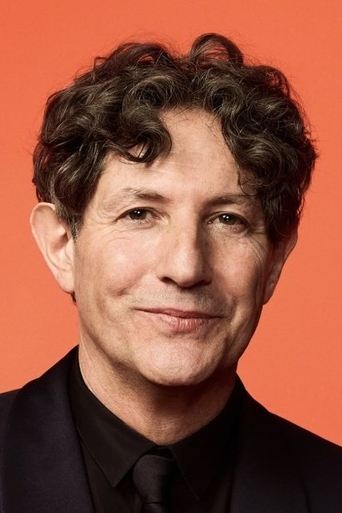
Directed by Jonathan Glazer
A dark, critically acclaimed drama.
The commandant of Auschwitz, Rudolf Höss, and his wife Hedwig, strive to build a dream life for their family in a house and garden next to the camp.
The Zone of Interest is showing in 8 cinemas in London - next screening Sunday 18 October at 11:00 at Ritzy Cinema and Cafe.
Next screenings: Sunday 18 October.
Full schedule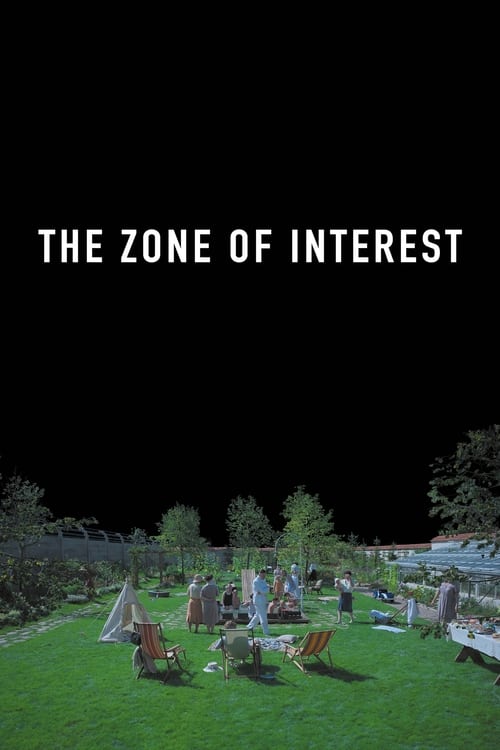
The Zone of Interest showtimes, refreshed every morning
Pick your cinema, get a nudge before it leaves screens.
the vines will grow and cover it allEverything I want to say is in here.

Holocaust cinema has so implicitly existed in the shadow of a single question that it would no longer seem worth asking if not for the fact that it’s never been answered: How do you depict an atrocity? The most urgent and indelible examples of the form offer equally simple yet perfectly contradictory responses. Documentaries like “Shoah” and Alain Resnais’ “Night and Fog” suggest that you don’t, while historical epics like “Schindler’s List” insist that you must. If the latter argues that seeing is believing, the former maintains that seeing wouldn’t help — that some things are too unfathomable for the human eye to comprehend from a distance, and can only hope to be understood by their absence. A tsunami might not seem much bigger than any other wave if you stare at it from a distant shore, but watching the ocean water as it gets sucked back into the sea reveals the full immensity of what’s coming. A narrative Holocaust drama that’s defined by its rigorous compartmentalization and steadfast refusal to show any hint of explicit violence, Jonathan Glazer’s profoundly chilling “The Zone of Interest” stands out for how formally the film splits the difference between the two opposite modes of its solemn genre — a genre that may now be impossible to consider without it. No Holocaust movie has ever been more committed to illustrating the banality of evil, and that’s because no Holocaust movie has ever been more hell-bent upon ignoring evil altogether. There is a literal concrete wall that separates Glazer’s characters from the horrors next door, and not once does his camera dare to peek over it for a better look. It doesn’t even express the faintest hint of that desire.“The Zone of Interest” opens with a long overture that forces the audience to sit in pure darkness for several minutes on end as the first pearls of Mica Levi’s elusive score clatter together over the soundtrack. The effect doesn’t create a distance between then and now so much as it elides one; when the first proper scene of the film begins, it feels like an act of unblinking. Our eyes were closed for a time and then opened again, but that’s all — nothing has been filtered through or clarified by the lens of history. The “authorless” quality of Glazer’s images (to borrow the word he uses in the film’s press notes) frees the characters within them from the emptiness of moral judgment. The evil on display is never the least bit in doubt, but its failure to recognize itself as such is only so able to take shape in the absence of its limiting obviousness. ~this review continues on IndieWire~

shaking my head in the theater so ppl know i disagree
The film follows the commandant of Auschwitz and his family as they construct an ordinary domestic life in a house directly adjacent to the concentration camp.
Jonathan Glazer directed the 2023 historical drama, which won the Academy Award for Best International Feature Film.
Yes, the film won the Grand Prix at the 2023 Cannes Film Festival and two Academy Awards.