Just a moment...Enable JavaScript and cookies to continue
A street vendor with a grim home-life forges a connection with a young woman on her way to Paris.
What Time Is It There? is showing in 1 cinema in London - next screening Wednesday 4 November at 18:00 at The Garden Cinema.
Next screenings: Wednesday 4 November.
Full schedule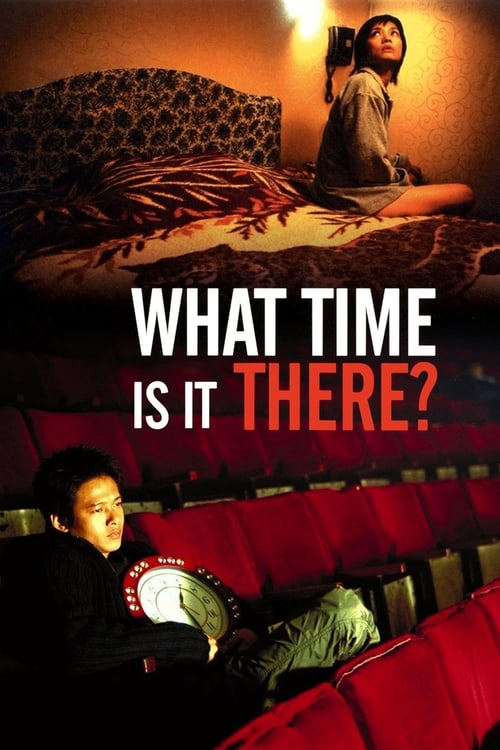
What Time Is It There? showtimes, refreshed every morning
Pick your cinema, get a nudge before it leaves screens.
Just a moment...Enable JavaScript and cookies to continue

I feel like I've read so much about this film before that adding anything new might be impossible. Having become a fan of Tsai Ming-liang over the last year, and having discussed him with my friend Basil, I spent some time reading up on him and this film in particular, in part because it came up in my Letterboxd feed a few times by chance. The two things that stayed with me while I watched it were Basil's mentioning the father as a metaphor for Taiwan, and an odd thing from Roger Ebert's review. In his review, he speculates that the graveyard Jean-Pierre Leaud is sitting in in the film is where Francois Truffaut is buried, and the idea of Leaud visiting the grave of Truffaut hit me with a deep note of sadness. So as I watched this film, that sadness tinged my experience.Which is appropriate enough, and likely part of Ebert's point, that this film is about loss as much as isolation. Basil's interpretation suggests that what is lost is some part of Taiwanese identity. A literal interpretation would focus on the father that dies early on. Any interpretation, though, suggests that what the characters experience is a need to come to terms with this loss, and their strange behavior, their wandering, their loneliness all stems from something missing in their lives. Hsiao-kang's attempts to synchronize the clocks is both an attempt to connect with someone who took a piece of his father, an attempt to reach out to the part of Taiwan taken off to another realm, and an almost literal attempt to turn back time. His mother's insistence that her husband is returning or in their large, white fish (in a tank many times too small) is a sort of harsh denial of reality, another desperate attempt to cope. Wandering Paris and trying to connect with other Taiwanese people there amounts to much the same thing.

Loneliness as an all-consuming omnipresent being. The acts of communicating feelings and forging meaningful relationships are akin to ghost towns. Actions are eccentric, words are deficient. Loss - be it a death, or someone's temporary departure to another land - is coped through silence and obsessive tendencies. Whether an impossible quest to change the collective time of a city, or in the search of a reincarnated soul in any living being, estrangement borders on insanity in this friendless realm; all of it concluding in the most perplexing ending I have seen. The perennially lonesome Taipei of Tsai Ming-liang has never been more alienating.
A grieving watch vendor in Taipei changes every timepiece he encounters to Paris time after selling a watch to a young woman leaving for France.
It was directed by Taiwanese auteur Tsai Ming-liang in 2001, renowned for his contemplative pacing and minimalist style.
The film competed for the Palme d'Or at the 2001 Cannes Film Festival and won the Grand Jury Prize at the Chicago International Film Festival.
Full schedule on Mood.