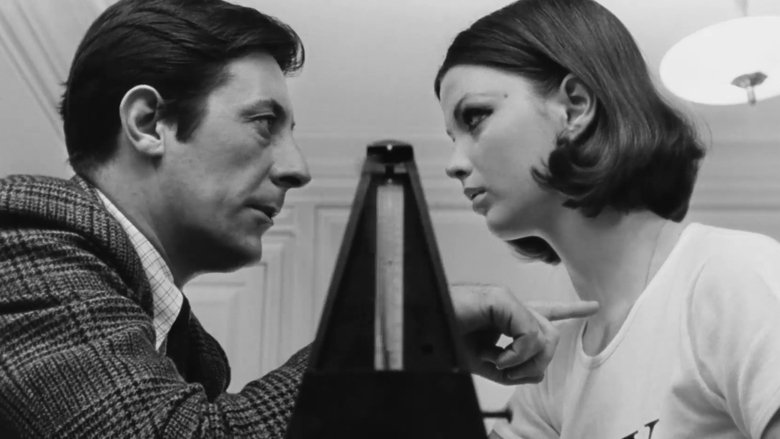
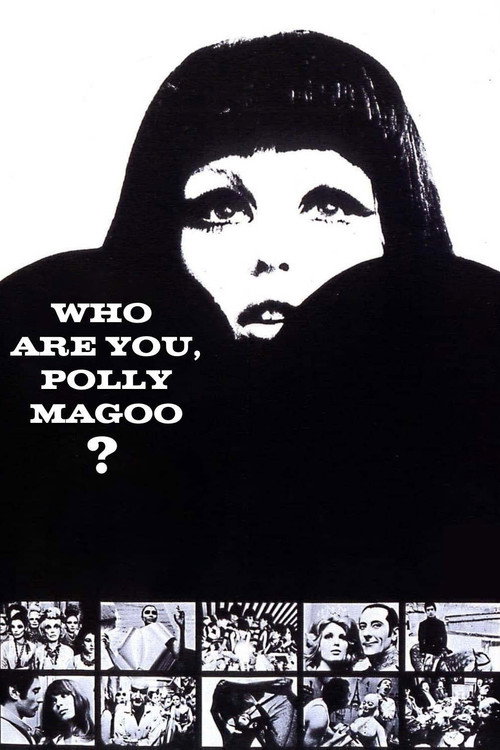




William Klein’s absurdist fairy tale, Who Are You, Polly Maggoo? is a zany treasure trove of boisterous criticisms on the pretensions of the fashion industry, the malicious intention of the media, independent identity and autonomy living in the public eye, and is a sly commentary on social change and the ephemerality of opportunity and success. Klein, who was an artistic consultant on Louis Malle’s Dadaistic Zazie dans le métro, evokes the same spirit here in his puckish pasquinade of high fashion’s outlandish alternate reality.The disjointed Alice in Wonderland-meets-Cinderella excursion of titular covergirl Polly Maggoo (estimably portrayed by fearless American model Dorothy McGowan) bounces wildly from an elaborate haute couture runway show, to trailing the raven-haired fashion plate through the bustling streets of Paris where she is accosted by pathetic, raunchy men from all sides, to her flat where she is then ambushed by a TV crew hungry to film her for their documentary, human-interest program, Who Are You?. There she meets Grégoire (Jean Rochefort), a producer with immediate palpitations for our cryptic ingenue. Off in a rural country, however, handsome yet forlorn Prince Igor of Borodin (Sami Frey) also pines for a fragmented fantasy of Polly, and a whimsical tug of war begins between the two men for her favor—each employing farcical schemes to hunt and ensnare her. Between fantastical photoshoots, surrealist dinner parties, and both a TV camera and a pair of bumbling secret agents tracking Polly’s every move, the film makes pitstops in the madcap magazine office of editor-in-chief Miss Maxwell—“what a bitch”—a scathingly comical rendering of then-Vogue editor and proto-Anna Wintour high priestess of fashion Diana Vreeland, played with expressive, avant-garde theatrics by Grayson Hall. Vreeland’s monumental personality, which Klein experienced first-hand as a photographer at Vogue from 1955-1965, is synonymous with the inflated, eccentric public image of high fashion—she worked as a columnist at Harper’s Bazaar from 1936-1962 before assuming the mantle of editor-in-chief at Vogue in 1963 until 1971. Feared and adored as a cultural icon, Vreeland revolutionized and galvanized fashion, its demographics and the way it was reported. She discovered talents from Lauren Bacall to Edie Sedgwick, styled First Lady Jacqueline Kennedy, and thrived in the ever-changing, modernizing world of 60s fashion. A subversive renegade her entire career, she tactlessly declared in 1946 that “the bikini is the most important thing since the atom bomb.” Vreeland’s avatar, Miss Maxwell, also emphatic and demanding—with her gaggle of assistants dressed as a coordinated, space-age harem—is seen, among other pomp and bombast, waxing dramatic in a phone interview about a designer’s recent fashion show: “He has recreated woman!” We first encounter Miss Maxwell on the premises of said runway extravaganza, which was filmed in Meudon, a suburb of Paris, in the garden pavilion built by engineer and artist André Bloc. The distorted, organic form of Bloc’s Sculpturehabitacle II makes for an otherworldly venue where we encounter fictitious designer Isidore Ducasse’s latest collection. Thusly named as a nod to the father of Surrealist poetry (nom de plume Comte de Lautréamont), Ducasse and his team snip, bolt and screw models into sculptural, stainless steel constructions. Murmurs of, “Brilliant! Uncomfortable—but what can you do?” orchestrate the procession of silvery, bionic waifs—sheet metal-swathed seraphim choreographed to the heavenly tones of a triumphant Michel Legrand score. The range of exaggerated, impractical, metallic pseudo-garments were designed by the Baschet brothers, pioneers of sound sculptures and inventors of various musical instruments—an obvious remark on the reflective, fanciful, futuristic looks popularized in the sixties by the likes of Pierre Cardin, Paco Rabanne and Andre Courrèges that appear, as one zealous attendee extols, as “tempests transfixed and deified!”Klein’s wife, Jeanne Florin, worked as costume designer for the remaining raiment in this sartorial satire, ranging from mod, striped bodysuits and eponymous t-shirts, to macabre, cemetery chic and high-flying fashions. Another standout garment is the custom gossamer wedding gown made on McGowan by haute couturier Madame Grès that she dons to a Buñuelian fête—McGowan herself cites it as the most memorable ensemble of the film, causing quite a media sensation: In the film, Sami Frey, my costar, and I fly over Paris and land on top of the Galeries Lafayette. It became an actual front-page story in Le Figaro, “Bride and Groom atop Galeries Lafayette”, or something like that. They reported we were doing the movie. I sent it to an old boyfriend to show him what I was up to.