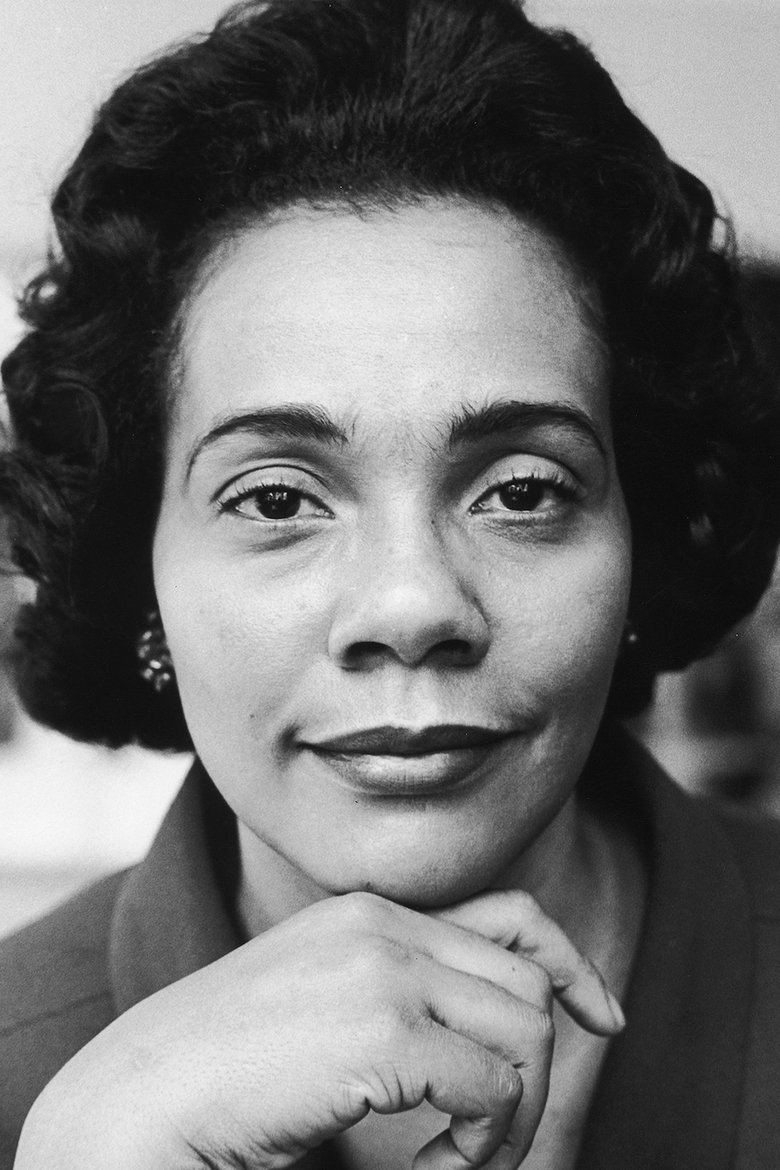
Coretta Scott King (née Scott; April 27, 1927 – January 30, 2006) was an American author, activist, civil rights leader, and the wife of Martin Luther King Jr. As an advocate for African-American equality, she was a leader for the civil rights movement in the 1960s. King was also a singer who often incorporated music into her civil rights work. King met her husband while attending graduate school in Boston. They both became increasingly active in the American civil rights movement. King played a prominent role in the years after her husband's assassination in 1968 when she took on the leadership of the struggle for racial equality herself and became active in the Women's Movement. King founded the King Center, and sought to make his birthday a national holiday. She finally succeeded when Ronald Reagan signed legislation which established Martin Luther King, Jr., Day on November 2, 1983. She later broadened her scope to include both advocacy for LGBTQ rights and opposition to apartheid. King became friends with many politicians before and after Martin's death, including John F. Kennedy, Lyndon B. Johnson, and Robert F. Kennedy. Her telephone conversation with John F. Kennedy during the 1960 presidential election has been credited by historians for mobilizing African-American voters. Description above from the Wikipedia article Coretta Scott King, licensed under CC-BY-SA, full list of contributors on Wikipedia.
Know the day Coretta Scott King's next film opens
Follow once, we'll tell you when it reaches cinemas.
Coretta Scott King was an American civil rights leader, author, and activist who shaped the equality movement and appeared in numerous historical documentaries.
She is known for her lifelong human rights advocacy and archival appearances in acclaimed historical films such as 4 Little Girls and Mighty Times: The Legacy of Rosa Parks.
She founded The King Center in Atlanta to preserve and promote the philosophy of nonviolent social change.