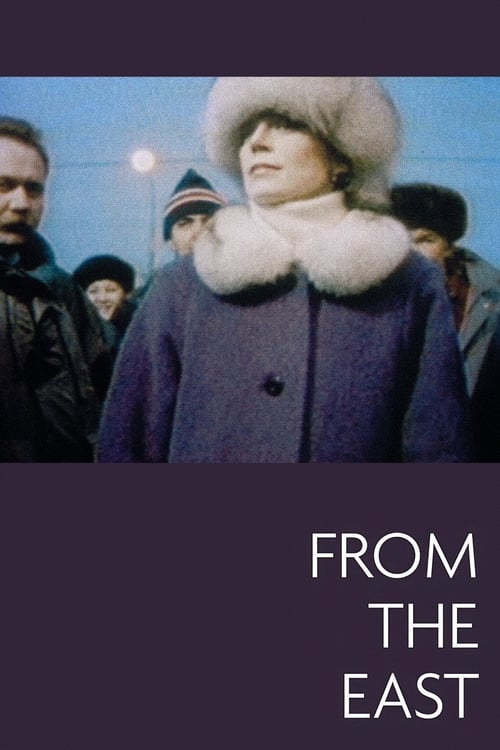


In From the East, Akerman demonstrates her anti-ethnographic model of filmmaking.And this may be the film’s most obvious achievement: it is a journey through various places – explicitly titled From the East – but it never feels exploitative or condescending toward its subjects. There may be ways to trace various elements of Akerman’s style, including the pacing, compositional strategies, camera proxemics, etc., to better determine how such an inviting and un-exploitative aesthetic may be produced. However, I don’t think such a formal analysis would be able to express in words this feeling of generosity, genuine curiosity, and inclusivity I’m trying to articulate. This is the work of a filmmaker who has spent decades since Blow Up My Town developing an inimitable tone and set of filmic ethics that cannot be reduced to form alone.No image in From the East feels like it is forcing any sense of profundity, but I also never feel that any image is without aesthetic and thematic depth. This is what remains so paradoxical: her images are equally intimate and distant. As in Akerman’s other best works, I’m invited to make sense of these actions, faces, and juxtapositions without being forced to draw specific conclusions. These images feel deeply personal and yet also intentionally opaque.The greenish-tinted image of a snowy street at night is as “real” as any purportedly realist or documentary style, yet it simultaneously feels like an otherworldly image from the finest science fiction films. One shot of this snow-covered street, which is filmed in a very lengthy take, gives me time to actually change my responses to its movements, colors, snowfall, etc., as it unfolds. This is why Akerman’s best films never feel “boring” to me. This is not a “slow” cinema for the sake of aesthetic rigidity or pretentions; it is a perceptive style that layers its subjects and their actions within wide compositions and long takes, which invite viewers to take part in a personal journey. That may be what I’m always trying to communicate about my love for Akerman’s cinema: it is deeply personal and aesthetically innovative, but it always feels inclusive, generous, and inviting (even when engaging its most challenging themes).