




“Some films have made me doze off in the theater, but the same films have made me stay up at night, wake up thinking about them in the morning, and keep on thinking about them for weeks.”- Abbas Kiarostami
We use cookies to personalize your experience and analyze traffic. You can opt out at any time.

Directed by Bi Gan
地球最后的夜晚
An atmospheric, slow-burn drama.
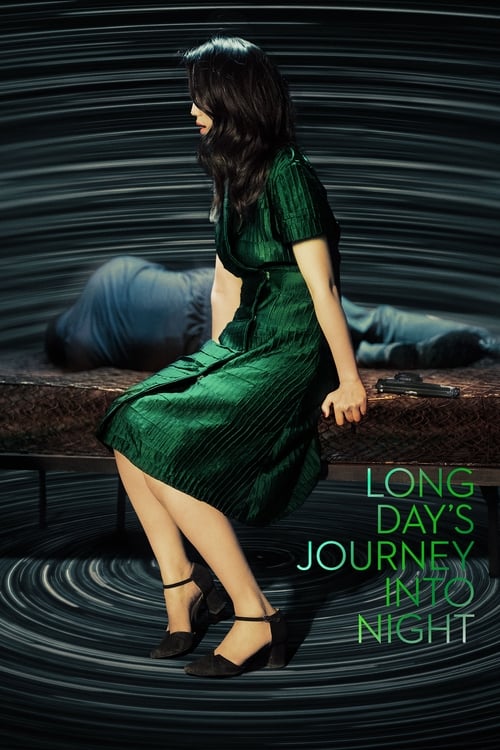
Luo Hongwu returns to Kaili, the hometown from which he fled many years ago. He begins the search for the woman he loved and whom he has never been able to forget.
Long Day's Journey Into Night isn't screening in cinemas right now.
Follow the film in the app to get notified when showtimes are added.
Long Day's Journey Into Night showtimes, refreshed every morning
Pick your cinema, get a nudge before it leaves screens.


“Some films have made me doze off in the theater, but the same films have made me stay up at night, wake up thinking about them in the morning, and keep on thinking about them for weeks.”- Abbas Kiarostami

Dropping the title card 75 minutes into your film then continuing the rest of the film in 3D with one single take for an hour might just be the biggest power move in all of cinema. Masterpiece, obviously.

Maybe spoilers? This isn't really the kind of movie that has anything to spoil, but I'm going to unpack a lot of the events of the film, so if you're a spoiler-sensitive viewer you should probably just see the movie before reading anything at allOkay, let's start with the basics, and apologies in advance if this is all obvious. First and foremost, the movie takes place in two parts, the first in 2D and mostly in static, frequently cut shots (or frequently by this movie's standards); this first half is reality, or as close as we get to reality — everything is mediated by the protagonist, Luo, and his biases and misperceptions, but this is as close to an objective perspective as we get. The second half is in 3D and is a single, unbroken tracking shot; this is Luo's fantasy. He falls asleep in a movie theater, and what takes place in his dream contains elements of the previously presented reality fantasmatically reworked to fit the his desiresSo that's the structure, but what actually happens? In the first half, Luo's father has just died; Luo recounts a tale of his friend, known only as Wildcat, and how he died; and Luo finds a picture of a woman in a broken clock inherited from his father. He then begins a journey to find this mystery woman, who he says disappeared when he was young. However, interspersed with this search for the mystery woman are scenes from Luo's past, with hints at what Luo isn't telling us but the movie is: Luo fell in love with Wan Qiwen, the lover of Zuo, a gangster who killed Wildcat and dumped his body down a mineshaft. In turn, she convinces Luo to kill Zuo and also dump his body down a mineshaft, but before he can return, she vanishes.Because of this, Luo's grief over the death of his father is mixed up with this past grief of losing his friend, falling for a woman involved (however indirectly) in his killing, and being manipulated into killing again for her, and this psychological trauma causes him to lie to himself (and the audience). There was a woman who disappeared when he was young, but this woman was Wan Qiwen, Zuo's lover, who ran away after Luo killed Zuo. This is the central emotional/psychological core of the movie that Luo is unconsciously attempting to navigateThen comes the second half of the movie, wherein Luo re-configures this reality he's presented to us in such a way as to work through his trauma. He finds himself in a mine occupied by a young boy he eventually nicknames Wildcat, an acknowledgement of his sense of loss, and perhaps an unconscious recognition of his regret for killing Zuo for Wan Qiwen. He must beat this new Wildcat at ping pong, a game he said he would teach to his son (a continued conflation of the death of his father and his friend), after which Wildcat leads him to the mystery girl, who in this unconscious re-imagining has an unfaithful boyfriend (a projection of Wan's infidelity with Luo).The mystery woman initially rejects him, and in his sorrow he wanders into a dispute between a woman with red hair (a reference to an earlier conversation about Wildcat's mother dying her hair red) and a man with a truck (which most closely resembles the van Luo inherited from his father). Luo mediates this dispute, fantasmatically reuniting his mother and father, and in the process he steals a broken watch from the woman, a clear reference to the broken clock he inherited form his father.Luo presents the broken watch to the mystery girl, symbolically healing his trauma, and she takes him to the house that (in the past, in reality) she almost got caught trying to rob. Luo and the mystery girl kiss, the symbolic successful romantic union — but the camera quickly tracks back to a burning firework, a sign (as the movie directly tells us) of the transitory, reminding us that this is Luo's fantasy, that it is all imaginarySo what does it all mean? Structurally it's all about the way trauma and fantasy interact, how the repressed always returns, often in the form of the sins of the previous generation, and narratively it's all about love, death, friendship, and family. Is it just a reminder that our fantasies are false? Or, perhaps with a bit more nuance, that our fantasies simultaneously are born from and are born in order to address our deepest traumas? I guess that's kinda the message I got, but the beauty of it is that it's fundamentally interpretable, that you bring to it your own perspective, your own fantasy born of your own trauma
A man travels back to his hometown of Kaili to search for a woman from his past, leading him on a surreal, dream-like journey through repressed memories.
The film was directed by Bi Gan, a Chinese filmmaker known for his distinctive style which blends regional atmosphere with dream logic.
Check local cinema schedules for independent and arthouse screenings or follow Bi Gan on Mood.