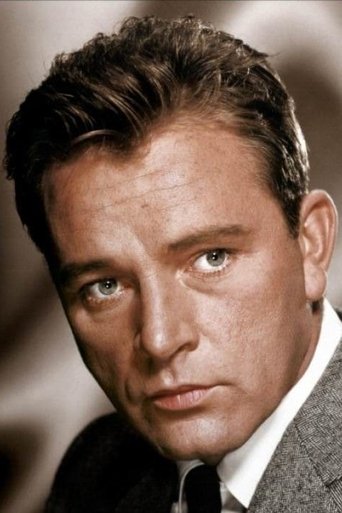
"Is your handwriting legible?""Except on weekends."Le Carré's noirish prose is translated wonderfully by Ritt's unadorned interiors and hard compositions. There isn't an ounce of glamor to this; the joyless outposts overlooking Checkpoint Charlie are almost indistinguishable, aesthetically and atmospherically, from the apartments where Leamas bides his time. Even a burlesque show is sapped of even the slightest titillation, a revue run on autopilot for a crowd that sits in disinterested silence.Flirtatious dialogue is filled with loneliness, and figures always seem small in the frame even when filmed at medium distance or closer. Even the high-stakes realm of defections and triple-crosses is played out in the most miserable ways, of seducing those members of the intelligence world who drift away from the herd like wounded animals, the leches and drunks for whom treason might come at the price of some sliver of regained dignity. All of the wearing self-revulsion of Le Carré's text is here in abundance.Burton seemed to live his life on a collision course to play Leamas; 40 years old when the film was made, he looks a full decade older, already suffering from cirrhosis bloating every square inch of him except the sinkholes around his eyes. Leamas's cover, that of a ruined alcoholic attempting to drink away his guilt and shame, is akin to a professional wrestler "living the gimmick," and Burton looks all too at home slouching between dives as he plies East German operatives for free booze as much as information. The disgust that builds on Leamas's face as he increasingly realizes what he's been set up to do for the ultimately hollow games of various spies is chillingly realized on Burton's countenance.
“they’re just a bunch of seedy, squalid bastards like me… little men… playing cowboys and indians to brighten their rotten little lives.”Oh, so this is what spies actually are like. The anti-Bond. No glamour, no spectacle, no pulp, no clean heroics. Just tired, cynical men drifting through the Cold War’s collapsing promise of a clear line. The whole movie feels buried beneath a heavy blanket, no matter on which side of the Iron Curtain people stand. A feeling of alienation hangs over the story itself, where loyalties constantly shift, identities blur, and every truth immediately folds back into another lie. Half the time I honestly struggled to find stable ground inside the film’s kaleidoscopic maze of manipulations (though on my rewatch, after some reading, things became much clearer). And that’s exactly where Martin Ritt wants you. The film works as much as a puzzle box crafted by genre-defining master John le Carré as it does a mood piece about losing emotional footing inside systems that demand absolute belief while slowly eroding human connection and genuine empathy. Watching the final act truly feels like being slowly carved out from the inside, with every last trace of humanity hanging on by a thread. And somehow, tragically still holding on, refusing to break.“i want you to stay out in the cold. just a little bit longer.”After losing one of his men at the Wall, Leamas (Richard Burton) returns to his British intelligence superior Control (Cyril Cusack), who already seems to know exactly how to play him. Retirement is mentioned almost mockingly before Leamas is pushed into one last operation against Mundt (Peter van Eyck), an East German intelligence officer who hangs over the film like a ghost. Leamas is sent back to London to stage his own collapse, pretending to become a bitter, broken man willing to betray his side so the other side will finally approach him and try to pull him in as an asset. But the deeper the film goes, the harder it becomes to tell where the performance ends and the real disillusionment begins. And before long, the whole world around him starts taking on that same confusion, until nobody seems to know who is playing who anymore.“communism, capitalism, it’s the innocents who get slaughtered.”And then, inside all that coldness, this surprisingly tender and mature love story slowly appears. Leamas has basically lost every stable sense of conviction left in him, and then he meets this principled, idealistic librarian (Claire Bloom) and committed communist, someone who still genuinely believes in a cause while he can barely believe in anything anymore. He initially mocks her, but it quickly becomes clear that what draws him to her is not her political faith but the possibility that someone can still believe in people, togetherness, and some form of human meaning at all inside this moral collapse. The film carries this tension with so much subtlety, dry humor, and emotional intelligence that the relationship feels completely real from the very beginning. Once the final act begins, everything that felt warm and human between them suddenly gets tested under impossible emotional pressure.“nothing to be clear-headed for anymore.”I loved this. There’s something almost painfully modern about it now, not because it explains the world, but because it understands the exhaustion of living inside systems nobody fully trusts anymore. The feeling of it, the atmosphere, the way it looks – stark black-and-white cinematography that turns all this bleakness into something strangely beautiful. Some of those shots genuinely floored me. Quiet, stripped down, deeply cynical, but still carrying this fragile little human warmth underneath it all. And that’s where the casting becomes perfect. Richard Burton brings this completely worn-down emotional heaviness to Leamas, while he and Claire Bloom build a chemistry that quietly holds the entire tragedy together.And then that ending. One of those final images that just permanently burns itself into your mind. A perfect resolution to everything the film has been building toward, a world where morality has become operational, where every idealized image between them finally collapses into bitter truth. They can barely carry it anymore, side by side, cramped inside this tiny car heading toward their escape. To the Wall. It all lands with unbearable tenderness.---watched via blu-ray from alive! filmjuwelen. came straight from hud because i adored it, and you can absolutely feel it here too. same cinematographer (oswald morris). the camera work here feels even more searching and abstract at times. reflections, distance, glass, fragmented framing, like the movie itself occasionally struggles to see the world clearly, only to return to it in all its stark and unbearable bleakness. really nailing the tonality and just beautiful work overall. one of those rare adaptations that genuinely feels equal to the reputation surrounding the novel itself. 4/5
this… THIS (is what James Bond wishes it was). i honestly didn’t know what to expect, as i was feeling a bit stuck with what to choose for tonight - it was one of those nights - and then this popped up and just shone out to me.i definitely picked the right choice… honestly amazing. i do love me a Cold War thriller, especially when it’s a Le Carré adaptation. not only that, but quite possibly the best political thriller i’ve ever seen. ….Communism. Capitalism. Its the innocents who get slaughtered. you live in a world, regardless of ideology, which leaves no stone unturned, you move in circles that toss you about like a rag doll, leaving things to reach a point that would leave you no chance to notice the suffering around you, but is that really the case? human resilience goes great lengths in the face of duty, but there is only so far one person can go before they must reach a point where nothing will be as it seems any longer, where their own lives will seem distorted as though through some sort of lens, perhaps the lens of a pair of binoculars, viewing themselves in a scrutinising manner as they see more and more the flaws within the essence of their own mind and soul. can certain jobs create a sort of heartlessness within the individual, one that they may not even realise is forming? but then if we become heartless to great extents, then are we human any longer, can we truly connect with another or ever feel towards one again if the empathy is struck out of our own souls by the very life that we had become so devoted to? it seems that this world creates its victims out of the circumstances it conjures upon its own doing, this world that lingers beneath the surface of the ground on which we walk upon, a world that holds nothing but gorging flames, tearing apart any light that may enter its space.within this world lies a few select people, ones that have sold themselves on to another entity, ones that perhaps had never been truly human in the first place, so disconnected from the heart of the individual that they would wish to tear it apart, to create a tomb withholding what had once been, using only then it’s powers as a weapon of destruction for its own good, while the heart seeps out its essence in drabs from that tomb within. in a heartless world, what good is attachment, love, empathy?….my first Martin Ritt film, although i was already aware of him being the man that directed Hud, so it was nice to be able to finally watch one of his films. i’m immediately impressed by the way he approached the filming of this adaptation, truly evoking all of those feelings, that suffocation that the novel captured so well. it was such a pleasure to see this as a film adaptation, and i rarely say that with films such as these. i’ll start off by giving slight admiration to Richard Burton. he was one hell of an actor, isn’t he? i don’t even think what i’m trying to pin here is his range, although i’m not exactly entirely sure what makes him so special, but i think it’s the presence that he exudes that is just so encapsulating in all it’s grandeur, especially with a role like this, one where much of the emotion must lay within, beneath the skin, yet still reach its audience. bravo. an opening shot of barbed wire over a fence - melancholic piano music plays - the gloomy night can be seen through it. a gradual zoom out to show a processing facility with armed guards on all entrances, moving along to reach a sign reading ‘You are leaving the American sector’, crossing to an almost empty road with one car passing by as multiple guards stand by and watch. the streets have life, but they are lifeless. the border is there, but it seems unreal, it seems intangible. this was one of the most brilliant and well crafted openings of a film i’ve ever seen, and the review that i’ll upload tomorrow morning (Bonnie and Clyde) says the same thing, so i’m a pretty good roll here. i was just so impressed with the way the camera panned across in such an elegantly smooth way, creating this deep rooted sense of apprehension within me. i was plainly just waiting for something to go wrong. incredible. this is how you open a political thriller. incredible film.(also added to my favourites if anyone cares)