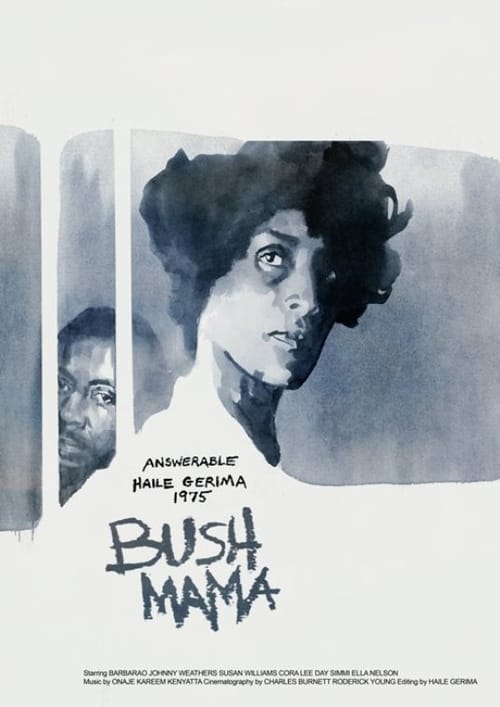


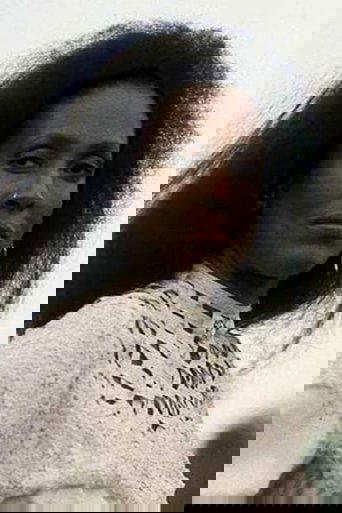
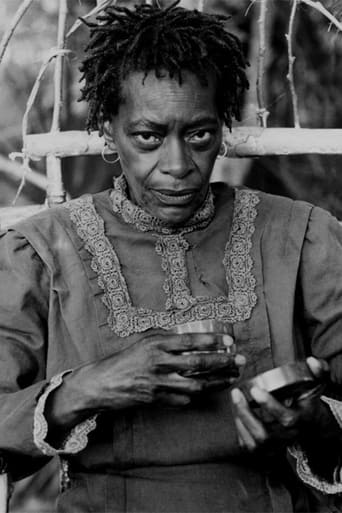

One of the most insidious ideas that somehow survives in this world is the idea that charity and welfare are shameful, that it is wrong or harmful to society to engage in these activities as a recipient. I have friends who hold onto their so-called pride while refusing to apply for food stamps, help with health insurance, or even unemployment benefits because "they would never." In their minds, this is something to be embarrassed by, and though none of them have ever said it, I suspect more than a few of them view it as something only African-Americans do. This is furthered by a comment I've heard repeated to me at work, wherein one of our partners (the term we use for the families in one of our programs) noted that they did not realize our organization served "people like them" (meaning white people). This is frustrating on all sorts of levels. The most immediate is the racist and classist assumptions that charity and welfare are shameful and somehow intrinsically linked in a manner that exempts white people, meaning that being in need is equated in the wider consciousness with weakness in such a way that prevents anyone from being willing to get help. Poor white people fall victim to their own racist attitudes and poor black people become targets of derision for supposedly embodying this negative stereotype. That governmental aid in this country is often hampered by political maneuvering, creating an abyssal bureaucracy that can defeat even the most well put together individuals doesn't help. (I work for a non-governmental nonprofit, for the record, but that doesn't exempt us from having our own hurdles in reaching people we wish to help.) The stereotype of a welfare recipient as some sort of con artist or leech is a disgusting lie that has persisted probably forever. Those who have benefit from depicting those who have not as evil or pathetic; this sentiment also has its place in anti-communism/socialism. Media depictions of those in need are almost universally (a) focused on the bad choices or unfortunate circumstances of the recipients and (b) generally simplistic if not merely a brief part of a broader narrative that uses it as a tool rather than exploring the fullness of it. These are the better depictions, of course. The worst go back to those con artists and leeches. Bush Mama (count how many words it took me to even get to the movie, here's three more) completely destroys every one of those trends.Dorothy is not exactly a housewife. She has a child to take care of and a husband in jail (wrongfully--this is crucial not to make him more sympathetic, but to make the system less sympathetic). She does not spend her days idling. She is not a drug user. She doesn't have a job, but it's not that she doesn't try. The world's just fucking hard. She spends a lot of time waiting in line at the welfare office, where she is treated badly on a few levels, not the least of which are the discomfiting (to say the very least) demands that she terminate her pregnancy. She is not weak. She is not pathetic. We see her struggle--there is no weakness in struggle. Working and fighting and surviving are the actions of the strong; but not being weak and being powerful are two different things. Dorothy is powerless. She is without agency not because of some inherent quality to herself, but because she is subject to a system designed to disempower her. There are so many moments in this film that illustrate this, but I will only focus on a few. The aforementioned demands that she get an abortion (inverting the conservative anti-woman powerplay) is a demeaning obstacle from a cold bureaucracy that requires a choice that is unconscionable. This is not to suggest that abortion is the unpleasant choice, but the choice of ceding one's body to governmental control. The continual police violence depicted throughout the film is another clear indicator of the system's degradation of the disenfranchised. These bursts of brutality come seemingly out of nowhere, like post traumatic flashbacks, jarring and disturbing Dorothy and the viewer alike. The third feature of disempowerment is the self-loathing prominently spouted by characters throughout, from the African-American woman claiming that "it's the [nxxxxrs] that have gone crazy" to the fear and confusion anti-racist rhetoric inspires in Dorothy early on. This is a film about, as much as anything, the ingrained attitudes that hold people back, and the incredible lengths one must face to begin to change (a theme it shares, if taken more broadly, with Satantango, though Tarr's film is less a call to action than a bleak statement, and not based in American racism). Though it focuses on Dorothy, she is clearly a stand-in, a single unit of a greater whole, and the film shows that her singular enlightenment is not enough to defeat an oppressive system. She acts in a blazing moment of agency and finds herself even more battered and destroyed than before, and the choice she refused earlier is imposed upon her by murderous hands of the white supremacist power structure. Combined with the community voices around her that spew poison from the white power paradigm, this mixed victory/defeat illustrates that this must be a collective struggle. In short, we need to shrive our disempowering attitudes imposed upon us by the American hegemony so that we can stand together.February count: 14/28