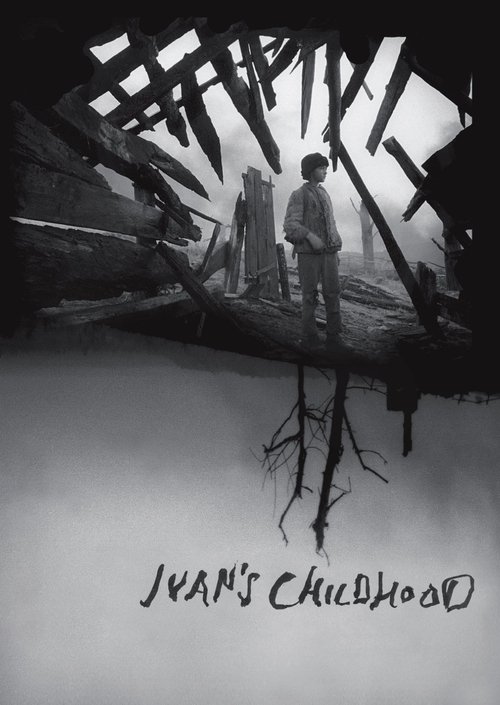
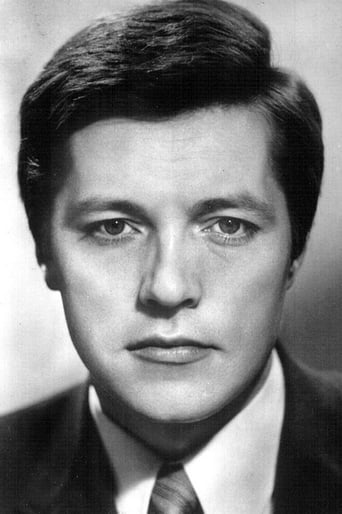
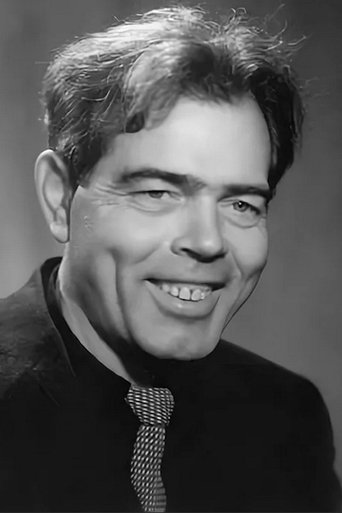
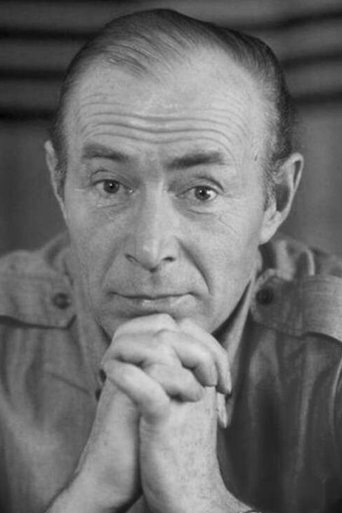
In WW2, twelve year old Soviet orphan Ivan Bondarev works for the Soviet army as a scout behind the German lines and strikes a friendship with three sympathetic Soviet officers.
A devastating, poetic and heart-wrenching depiction of war and loss of innocence. There are no battle scenes, all we experience is the consequences of war: one moment Ivan is taking or making commands and works like a soldier, the next he's dreaming of his childhood with his mother. Its a very simple film, but there's such a strength and power underneath because of the direction, cinematography and its atmosphere. The shot of Ivan sleeping with the camera then sweeping away and looking up the well, where Ivan and his mother are standing, was one of the most beautiful dream transitions i've seen. But there are endless beautiful and haunting moments in this film, especially the low-angle kiss shot, Ivan becoming the ghost of a Nazi, the scene where they sneak Ivan across the river, and the hypnotizing ending. It's so heartbreaking seeing the effects of war on such a young boy, the shell shock and loss of innocence, and Nikolay Burlyaev nails every bit of emotion. I can finally experience what the fuss is about, Tarkovsky is a master. Absolutely sublime debut, what a flex.
davidehrlich4.5
impressions of war. Tarkovsky's first tinkerings with time... florid, free-floating psychological imprints serving to underscore the banality of real-world war. 4 dreams bound by 1 nightmare. formative work from a hired gun, but masha hanging above the trenches and the well to the stars point towards a career that would ascend to worlds unknown.can't imagine it's a happy accident that Criterion is re-releasing this and THE TIN DRUM in the same month. echoes abound.
Rembrandt Q Pumpernickel5.0
Ineffable.In my opinion, it's one of those great words that sounds like its own meaning. You call something "ineffable," and I feel like English speakers, even if they don't know the word, have a sense of what you mean. What's even more impressive is that the word means beyond words in a way. It's a word that exists to tell us that some things exist that there are no words for. Not every picture is a thousand words. Some are only a sentence or two. Some are a couple pages. And some...well, they're ineffable.There's very little that compares (for me) to the endorphins released into my brain, when I figure something out. I loved puzzles as a child, and as an adult, that joy lead to a brief (maybe four years?) love of twist endings in films. Eventually, the pleasure of unravelling the plot became the pleasure of analysis. Of watching a film in a way that I could pull it to pieces and put it back together to reveal its secrets, its themes, its overt and unintentional goals. I can feel the endorphins pumping in my brain as I arrive at a conclusion I hadn't previously thought of, as something the film seems to be telling me becomes formed and solid and into a full coherent thought. It's one of the unique pleasures in my life and something that brings me great personal joy.But it is still second place to the feeling of a moment that lands for me that I have no explanation for, that leaves me wordless and bewildered. That I can say, "That means something deep and powerful and vulnerable and beautiful and thought provoking," and yet I can't say why or wherefore.When I think about film in any sort of overarching way, in a way to say, this is what I'm looking for in movies, this sums up what I really want, what I'm always hoping to see, I think of a scene in Ivan's Childhood. The scene is nothing special on the surface. Ivan and his sister (in a memory? a dream? a fantasy?) are riding on the back of a horse drawn cart filled with apples. They hit a bump and some apples tumble out the back to be munched on by some other horses.That's it. Horses walk up and begin to eat some apples that fell out of the back of a buggy. Yet ask me what my favorite moment in the history of film is, and I'll probably reply, "Horses eat the fallen apples in Ivan's Childhood."I don't believe in God, but I do believe in the ineffable. I believe in the idea that there are moments, ideas, and forces where words fail and something flows through you like an electric shock.There's plenty of wonderful things to say about this brilliant movie. There are moments other than the one that I mentioned that devastate me and reveal what a powerful and undeniable filmmaker Andrei Tarkovsky is. I could talk about all of them; I could talk for ages about this film and how it felt the first time I watched it.But what I always return to, whenever I think about it, is horses and apples.And ineffable.
More like this
Common questions
What is Ivan's Childhood about?+
A twelve-year-old Soviet orphan acts as a scout behind German lines during World War II, balancing the harsh reality of war with dream-like memories of his past.
Who directed Ivan's Childhood?+
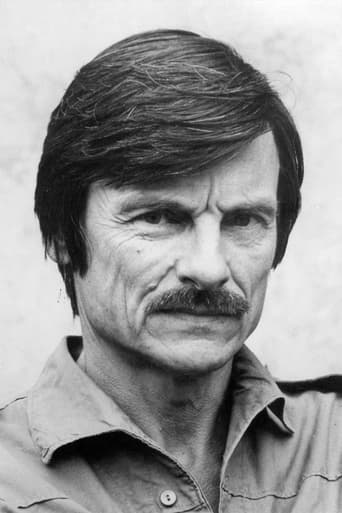
Andrei Tarkovsky directed Ivan's Childhood in 1962, marking his powerful feature film debut as a master of Soviet cinema.
Has Ivan's Childhood won any awards?+
Yes, the film won the Golden Lion at the Venice Film Festival in 1962.