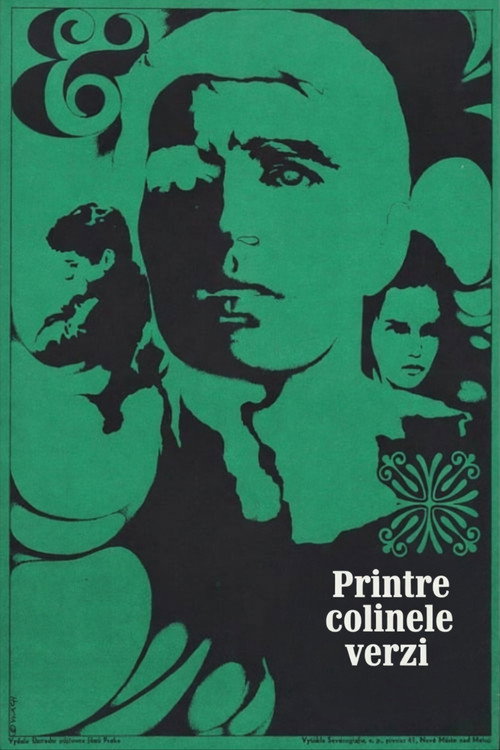

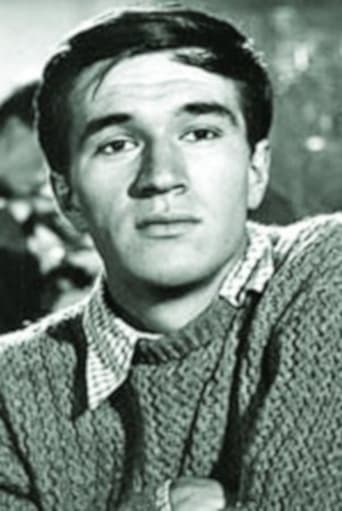


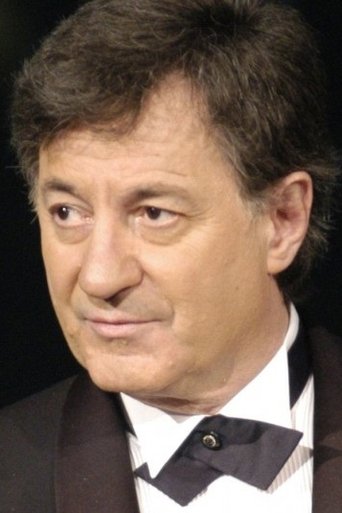

*WATCH this film FREELY on CINEPUB.RO*www.youtube.com/watch?v=D8vFAQnvAKMReligion, sexual sadism, good cops and bad cops in Nicolae Breban's filmAt first glance, "Sick Animals" (1971) sounds like a really interesting movie. It's the only movie Nicolae Breban directed, and it's based on his own 1968 novel which was really well received. The movie's subject and themes were super hot at the time. It was set among the quasi-lumpen and misfits on the margins of socialist society. It dealt with forms of popular and at the same time eccentric religiosity — disconnected from the Orthodox Church: self-appointed preachers, etc. It presented as common knowledge the fact that the militia was prone to abuse. It offered both a detective story (a series of murders in a small mountain town) and a Dostoevskian debate of ideas. Unfortunately, Breban did not turn all this into a good film, but only into a curiosity, yet at least it is strange, that is not something that can be denied. His presence in the main competition at the 1971 Cannes Film Festival is also strange (the last Romanian film to get there was Mircea Mureșan's "The Revolt", in 1966), alongside titles by Visconti ("Death in Venice"), Forman (his first American film, "Taking Off"), Nicolas Roeg ("Walkabout"), Zanussi ("Family Life"), Jack Nicholson (his directorial debut, "Drive, He Said"), Louis Malle ("Le souffle au coeur"), and Joseph Losey ("The Go-Between"), as well as another (French) film shot in Romania, The Newlyweds II (with Belmondo). In terms of the Palme d'Or, 1971 was Losey's year (and that of his screenwriter, Harold Pinter), but all the films listed above (except for "The Newlyweds") have since become classics, as have other titles in the competition, such as "Wake in Fright" (by Ted Kotcheff) and Panic in "Needle Park" (by Jerry Schatzberg; the film that launched Pacino), even if their directors' names are less well known. However, "Sick Animals” went unnoticed internationally.It was not a box office success in Romania either, although critics discussed it politely and intelligently — Breban was the editor-in-chief of "România literară" and, prolonging his stay in the West after the film's presentation at Cannes, he criticized Ceaușescu's "July Theses" in an interview with "Le Monde". The climax of its reception must have been the round table discussion dedicated to it by Cinema magazine, with Ecaterina Oproiu, Ov. S. Crohmălniceanu, Valerian Sava, and S. Damian facing Breban himself. Since then, the film, with all its fascinating content, has been more or less forgotten. How can this be explained?Well, "Sick Animals" tends to lose its audience. Dan Nuțu — the rebel of our 60s-70s cinema — plays the role of a young man who arrives in the fictional town of Nădrag and takes a day job at a factory. More a witness to events than a protagonist in the full sense of the word, Nuțu's character is the kind of naive, slightly crazy, but poetically so, vagabond that international cinema around 1968 had no shortage of. In terms of the "youth" cinema of the time, he is a drifter and a dropout (someone who has disengaged from society and turned his back on it, refusing the role it had assigned him). He is a "madman" in the Fellinian sense (the meaning of Richard Basehart in "La strada") and an "idiot" in the Dostoevskian sense. Despite his quasi-lumpen social status, he speaks in an extremely flowery, literary — and torrential, delirious — manner. As we see him walking the streets, yawning, entering a church, etc., to the music of Tiberiu Olah, we listen to him fabulate about his past, about the other day laborers with whom he shares a shack, about other citizens of the city. The things he says sound like fabrications, like fantasies. These seem to be some of the things that happen to him. The problem is that, if this is indeed the case — if some of the things that happen in this film happen "for real," while others are meant to be "fantasies" — the distinctions are dubious, so the confusion is great. The other problem is the confusing way in which his chatter dominates the images (which often have nothing to do with it).The reversal of the usual relationship between word and image and the disjunction between them could, of course, have worked interestingly. As a prose writer and director, Breban is, after all, a contemporary of Marguerite Duras and Alain Robbe-Grillet, writers who, entering the field of film with ease, created a highly literary cinema. The difference is that Breban does not seem rigorous at all. As viewers, he does not reveal the rules of the game to us until the end. The only character with a voice-over seems to be Nuțu, but that is until the end, when another one enters, speaking in the same bookish manner. In terms of cinematography, the film is full of reframings, zoom-ins, and zoom-outs that seem arbitrary. The music is no less arbitrary. Not that it isn't catchy: the first few bars of the main theme are identical to the chorus of Phoebe Cates' "Paradise", which wasn't released until 1982! From this, we inexplicably move on to some chords from Schubert's "Trout", over which some trumpets come in, over which some suspenseful accents come in (ta-da-daaaam), even though all that is happening on screen is Dan Nuțu walking down the street. Then, although the intro with a train (a freight train with workers on it) approaching Nădrag seems to promise great cinema, many of the images that follow are at best picturesque, cinematographically uninteresting — they play too faintly alongside the verbal and musical eccentricities of the soundtrack. In short, unlike Malraux, Duras, etc., Breban cannot find his cinematic style. He seems to be groping in all directions.The part about religious passions boiling under the lid of state atheism, as well as the part about police brutality, exerts a certain fascination, given the rarity of these subjects in Romanian cinema during the Ceaușescu era. Mircea Albulescu is perfectly cast in the role of the preacher Arion (in the novel Krinitzki: did they change his name so that its Russian sound would not be offensive?), the giant with a sculpted brown beard and booming voice, who reads from the Bible to the other day laborers in order to tame their own violence. Vasile Nițulescu is also well cast in the role of his unctuous proselyte, Miloia, who is also Arion's double. However, the preacher is nowhere near as impressive as he was in the novel. While Breban allowed him to unleash a torrent of words on the page, on screen he is not allowed to preach enough for his charisma to captivate the audience. (Is this for reasons of censorship or simply because Breban had to make deep cuts to compress a verbose novel of almost 500 pages into a two-hour film? Even the interrogation conducted by Sergeant Mateiaș (Ion Caramitru), which turns into an exchange of ideas, does not translate satisfactorily to the screen. On paper, it may look good, especially when represented as a diagram: Caramitru's character (the communist humanist) doubles that of Dan Nuțu (with his more abstract humanism) in a debate that pits him against Arion and Miloia (with their pretended human-loving mysticism). But neither side develops its ideas properly. Mateiaș's behavior during the interrogation seems unstable — he either confesses hastily to Arion or raises his voice at him. While they talk in a deserted train station (with a spaghetti western soundtrack playing in the background), Breban, the novice director, gets carried away with the crane shot. Later, Arion is made to leave the scene so abruptly that you risk not even noticing he has left – a frustratingly hasty fate for a presence that promised so much. And the dispute between humanism and mysticism is ultimately settled in such an unequivocal way (much more brutally than in the book) that it is clear it was rigged from the start (guess which side in favor).As a mystery, the film is told with the utmost restraint. It has neither suspense nor surprise effects. It is a film in which corpses are constantly being discovered, but the discoveries lack dramatic weight. The book also fulfilled its duties as a detective novel with a certain air of superiority, but if Breban tries the same thing in the film, this time it comes across as incompetence, due to his inability to project self-confidence as a director. (Before Coline, he had been Gheorghe Vitanidis's assistant director on "Răutăciosul adolescent" – for which he had also written the screenplay – but he had no other experience.) The film contains some action — a suspect being hunted through the forest in the rain, a hand-to-hand fight on a slope—but the most convincing signs of life it gives are flashes of pulpy sadism. Most of these are attributable to a character named Voștinaru (Ion Dichiseanu) — another investigator who functions as Mateiaș-Caramitru's dark double. The book is full of allusions to the obtuseness and brutality of the militia, full of lines like: "You're an intelligent man. That's exactly what I wanted to ask you: how did you end up in the militia?" Breban has toned these down in the film, but it is still clear that Mateiaș, although a good detective (well, he is supposed to be good, because we don't see him in action: he doesn't even discover the murderer, who is handed to him on a plate), does not feel comfortable as a law enforcement officer (he wears a suit and not a uniform). What he is actually doing is advocating for a new police force — one with a human face. And the old face of the police force — the brutal one from the 1950s — is represented by Dichiseanu, whose excuse is that he was trained in difficult times, when he was not required to be subtle in his methods, but to be an effective soldier. To which Mateiaș retorts: "Do you think we still need soldiers in civil investigations?" – which may well have sounded courageous to some ears in 1971. But the film is not a criticism of the militia, but rather a whitewashing of its image, a classic operation of self-immunization through self-injection with a small, precisely measured dose of “criticism”. (A similar ideological operation, but on a much larger scale, also takes place in "Power and Truth", another "critical" film that knew how to leave untouched the sensibilities that should not be touched. When a film really did disturb them — the case of Pintilie's "The Reenactment" — sensitivities were heightened.) Simply put, "Sick Animals" carries out a "good cop, bad cop" operation, the conclusion being that the institution is OK as long as there is room in it for a virtuous policeman like Mateiaș, even if he cooperates with a sleazy one like Voștinaru. What's more, Voștinaru is also saved in the end: despite all his abuses and excesses, he is ultimately made to look noble — yes, sir, a soldier.Like the novel, in which Voștinaru threatens and abuses a suspect over many, many pages ("I'll tie you to the table with your own hair!"), the film is permeated by a strong current of sexual sadism. The suspect, a widow named Irina, is played by the still inexperienced Emilia Dobrin, who was basically given the role of Irene Papas — the character is just a repertoire of provocative, haughty attitudes, against which Dichiseanu unleashes a barrage of insults, domineering gestures, and cruel smiles. (Dichiseanu is good in the role, but it is even more interesting to imagine Sergiu Nicolaescu in his place – Breban's excellent initial choice.) Sadism also seeps into sequences not dominated by Voștinaru, taking, for example, a homoerotic form during the few inexplicable moments when Dan Nuțu, dressed in shorts, is fitted with an elastic band over the bare thighs of a teenager, also in shorts, who in the meantime asks to be whipped in turn. Even more arbitrary is a rape sequence on the waterfront under the moonlight, with a man and a woman we haven't seen in the film before and won't see again – a feverish dream (with breasts that are quite visible by Ceaușescu-era cinema standards) that seems to have strayed in from another film."Sick Animals" has no reason to be considered a classic, but in a more cinephile culture than ours, it would at least be a cult film for some.(Andrei Gorzo, cinepub.ro)