


don't snitch!!!(incredible fog)
We use cookies to personalize your experience and analyze traffic. You can opt out at any time.

Gypo Nolan is a former Irish Republican Army man who drowns his sorrows in the bottle. He's desperate to escape his bleak Dublin life and start over in America with his girlfriend. So when British authorities advertise a reward for information about his best friend, current IRA member Frankie, Gypo cooperates. Now Gypo can buy two tickets on a boat bound for the States, but can he escape the overwhelming guilt he feels for betraying his buddy?
The Informer isn't screening in cinemas right now.
Follow the film in the app to get notified when showtimes are added.
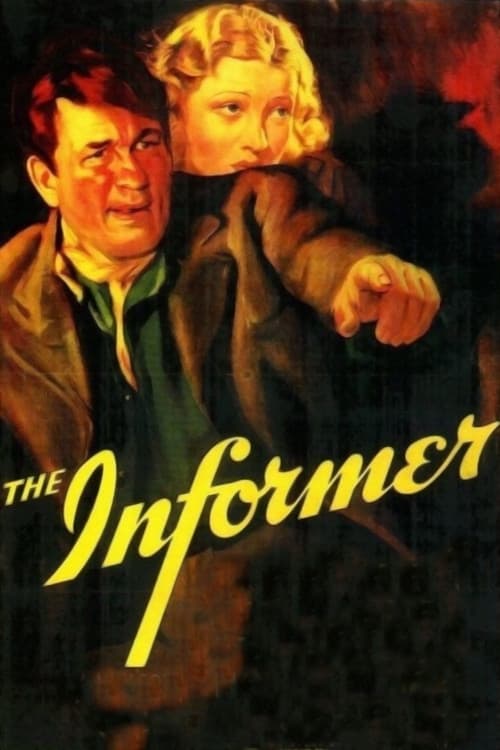
The Informer showtimes, refreshed every morning
Pick your cinema, get a nudge before it leaves screens.


don't snitch!!!(incredible fog)

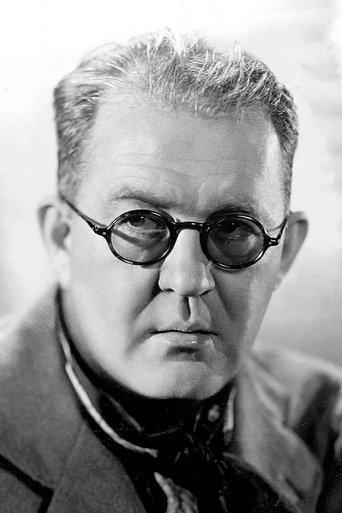
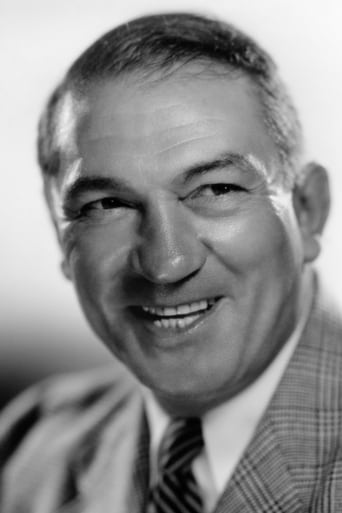
I've always found this movie incredibly fascinating - it was shopped around to six studios and turned down, before being accepted by the not-yet-major RKO for a third of the intended budget, and was expected to be a complete loss for the studio, seeing it only as a director's vanity project. Instead, it made more than three times the budget, established Ford as a prestige director and enabled him to have more control over which projects he would now choose to direct. Much contemporary criticism regarding this film considers it frankly - some weak-ass Ford - and this is true to an extent. But this is also one hell of a movie to watch when you're a little sleep deprived! It's less a narrative than a 90 minute stylistic experiment - far more bombastic than Ford would be either before or after. But for me, the only really annoying element I found here was the seriously intrusive score - which at times makes one feel like they're watching a cartoon (Max Steiner, surely the most overrated fiend of the Classical Hollywood era - and also one the laziest, his 'The Searchers' score is 80% reused themes from his score for 'They Died With Their Boots On') But what is still surprising here is the sheer amount of formal abandon - and how opposite it is to Ford's usual preoccupations (done consciously, I think) - Gypo is everything a pre-war Ford hero is not - blustering, cynical, falls pray to his ego - he was not made in the image of God. For these reasons, many of what I (and I think many others) find great about John Ford's films is not on display here - but for these same reasons it is what makes it a striking, affecting movie on its own terms (I would say this is also true of The Long Voyage Home). The world is terrifying, cloistered - but to take the same position as some of the best academics and writers on Ford and say that it does not fully display a world or its politics would be lying! What Ford does - with this stylization - is rather keep the dynamics at the forefront, but make them less 'Irish,' that is to say - keep the ideas prominent but strip away things extraneous to its universality. Perhaps this is an issue, but it also makes the film a more emotional experience. We are in fog and shadows, there is a resistance army, there is the British, there is proprietary and there is prostitutes.This movie is not perfect - quite far from it. There is the aforementioned score, and there are also times when the movie becomes surprisingly conventional - employing a romance between two characters which has absolutely no impact on the film whatsoever - I can only imagine these sequences were included because of Ford's own uncertainty regarding such an 'unorthodox' project. Worth noting: Ford did have a very free hand here, with one exception - the ending, which was originally supposed to have McLagen dying alone on the docks.What I was really stricken by here on first glance was Ford's use of superimposition - I had recalled them feeling too bombastic and over-the-top for my tastes upon previous viewings, but this time I was immediately taken by the flashes of images - all guilt ridden yes, but illustrations of paranoia - the superimpositions seem to capture a sort of hyperconscious, paranoid series of visions - a crumbling mental state. But the big surprise came when I realized what I really liked about the movie wasn't its stark visual style, but the more languid dialogue scenes! This is where Ford is at his true best, and where I was most affected. We watch Gypo blunder around drunkenly, make mistakes, waste his money, be taken advantage of - the pity we feel for him is ultimately immeasurable - this culminates in the most unusual, but possibly best scene in the entire film - where Gypo blunders into a party held by people from a class that wouldn't dare mingle with his. But there are no shadows, no coarse angles - everything is dead on & it is the most uncomfortable sequence in the movie. Even with a masterpiece like Pilgrimage behind him - it's perhaps here where Ford realizes that watching a person think is perhaps the key to it all.Frankly, on the whole its mostly a case of Ford being like "Damn, I really miss when we made silent films," and then maybe going a bit too far. But whatever - its best moments are still spectacular. Oh, and Victor McLagen is truly incredible here - one of the best performances Ford ever directed - even if he had to trick him to get it!

A fever dream through foggy Dublin streets. Victor McLaglen is a walking disaster, betrays his friend Frankie for twenty pounds and spends the rest of the night drinking and stumbling around the city, slowly realizing the money hasn’t solved anything. McLaglen makes him pathetic. He’s drunk and selfish, but also painfully human, with guilt eating him alive in almost every scene. I watched Odd Man Out last night, and this isn’t much different from it. It also doesn’t mention the IRA by name... both leads are trying hard to survive, ending is a bit similar too. The biblical parallels are obvious -- Gypo is basically a Judas figure -- but the movie treats him less like a bad guy and more like a weak man crushed by poverty and desperation. Gypo keeps trying to convince himself the money will solve his problems -- that he and Katie can leave for America, start over... but every scene after Frankie’s death is the opposite. The expressionist lighting is years ahead of its time... the shadows, Lang-esque paranoia, the way the city tries to close in on Gypo as the night goes on... almost plays like a psychological thriller, probably the closest Ford came to making one. There’s one scene where he drunkenly throws money around buying food and drinks for strangers, and instead of feeling fun, it’s sad, he’s trying to drown out his conscience with noise.It’s unusually intense compared to some of his later films... barely any sentimentality. Everything is harsh. Ford is a little heavy handed here with the religious imagery, especially near the end, but the final church sequence is so good, "Frankie, your mother forgives me" he says and dies... strangely peaceful. A great bridge between silent-era expressionism and the film noirs that came later. Amazing Steiner score as well.⏩ john ford, ranked
The film follows a guilt-ridden former IRA man in 1920s Dublin who betrays his friend to British authorities for money and subsequently descends into paranoia.
John Ford directed The Informer in 1935, utilizing a distinct expressionist visual style that helped define his early prestige work.
Yes, it won several Academy Awards, including Best Director for John Ford, Best Actor for Victor McLaglen, and Best Screenplay.