In winter the villages around Konitsa have half-empty squares. In August the emigrants come home, the grills are lit and the clarinet plays until morning - peaking on the Feast of the Assumption.
Panigiria · Konitsa
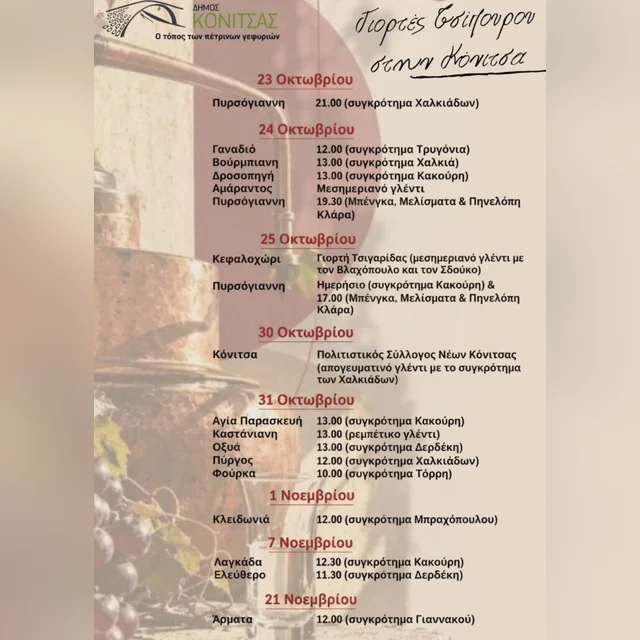
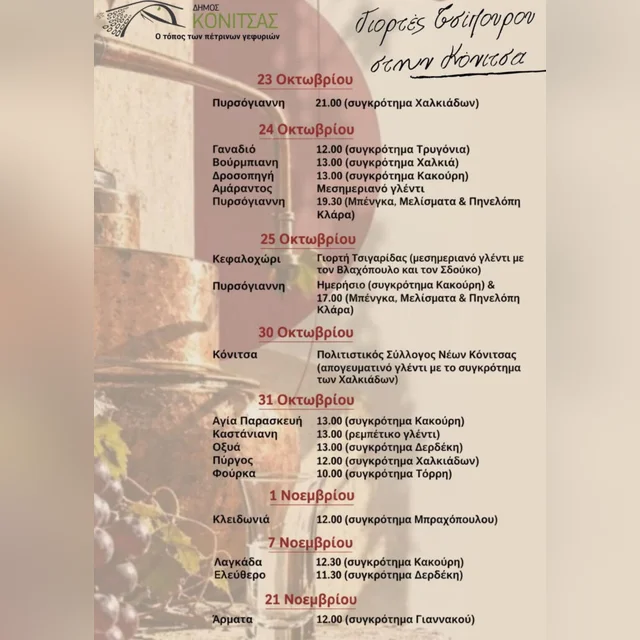
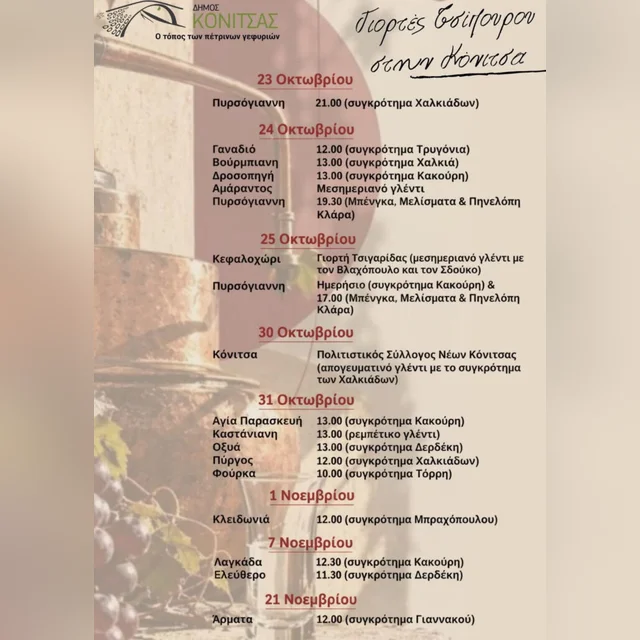
The calendar moves from village to village. On August 6, the Transfiguration, it is Monastiri, Klidonia and Elefthero. Around August 12-13 it is the turn of Gorgopotamos, Armata, Plikati and Plagia. On the eve and day of the Assumption, August 14 and 15, almost everyone celebrates at once: Pyrsogianni, Vourbiani, Ganadio, Distrato, Amarantos, Drosopigi, Kastaniani and Aetomilitsa. Fourka, Agia Varvara, Aidonochori, Oxya and Pades follow in the days after. Many of these are Mastorochoria, the stone 'master villages' whose builders travelled across Greece and the Balkans raising houses, bridges and churches - Gorgopotamos was known for its carvers of wooden iconostases.
Aetomilitsa, a Vlach village at 1,430 metres on the slopes of Mount Grammos, is the highest in the Konitsa area. It empties almost completely in winter, the flocks come up in summer, and its August 15 feast at the church of the Virgin is the gathering of every family from the village, with manouri cheese and meat from the surrounding pastures. In Molista the village brotherhood moved its feast to the first Saturday after August 15 so that emigrants on holiday could be there: liturgy at Agios Nikolaos, giomatia (a stuffed offal dish) in the houses, and in the afternoon the big circle dance in the square, traditionally opened by the priest with a tsamiko.
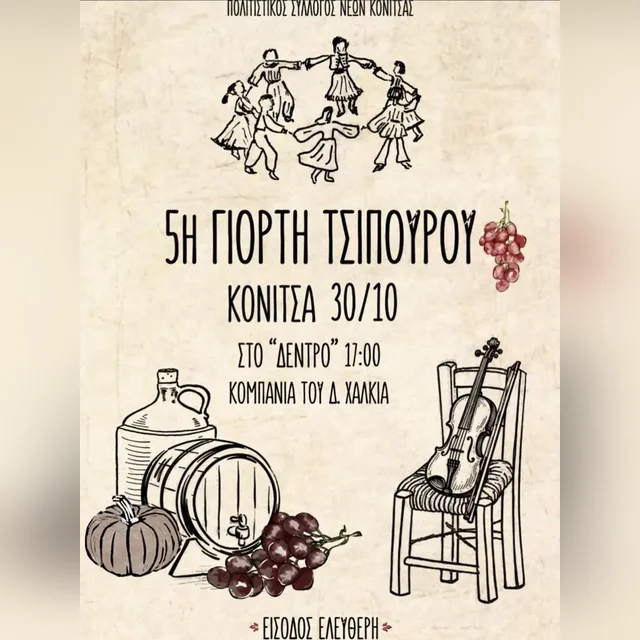
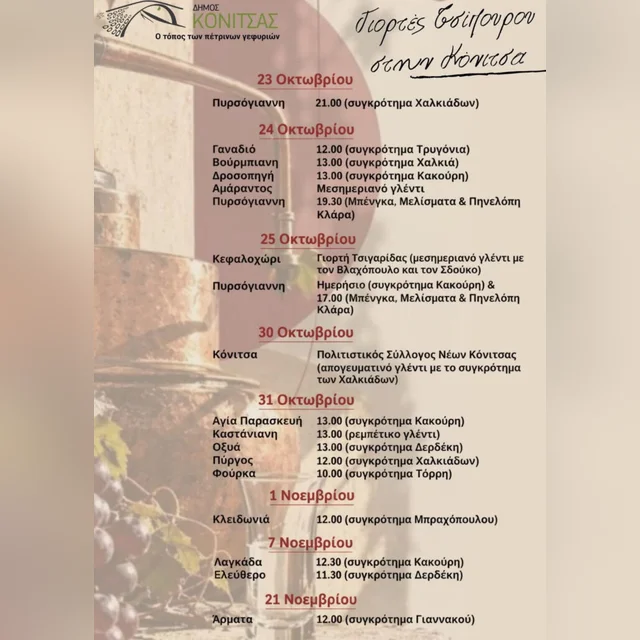
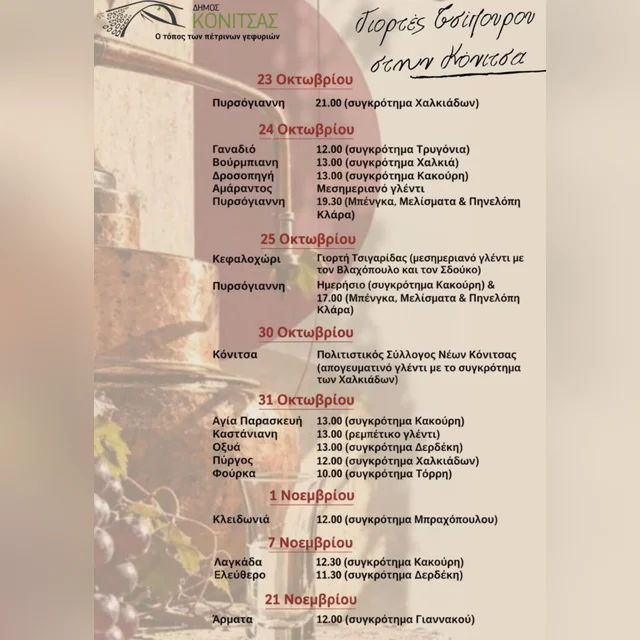
The music is Epirote: clarinet in front, with violin, laouto and frame drum behind it, sometimes an accordion. Konitsa sits at the crossroads of Epirus and Western Macedonia and has its own families of musicians, such as the Halkias clan, and the band follows the style of whoever leads the dance. The town itself, entered over the single-arch stone bridge on the Aoos river built in 1871, holds summer events with dance groups in the central square, and in November it distils its tsipouro.
Mostly from late July to mid-August, peaking on August 14 and 15, when Pyrsogianni, Vourbiani, Ganadio, Distrato and Aetomilitsa all celebrate. Check Mood for the current calendar.
An Epirote band with clarinet, violin, laouto and frame drum. People dance tsamiko, syrto and the slow circle dances of Epirus, and the musicians follow the lead dancer. Mood lists who is playing where.
Yes. Panigiria are open, outdoor and free to walk into - you sit at the long tables, order food and wine, and join the circle when a dance you know starts. The current programme is on Mood.